
Edible Gardening
Services in Karachi
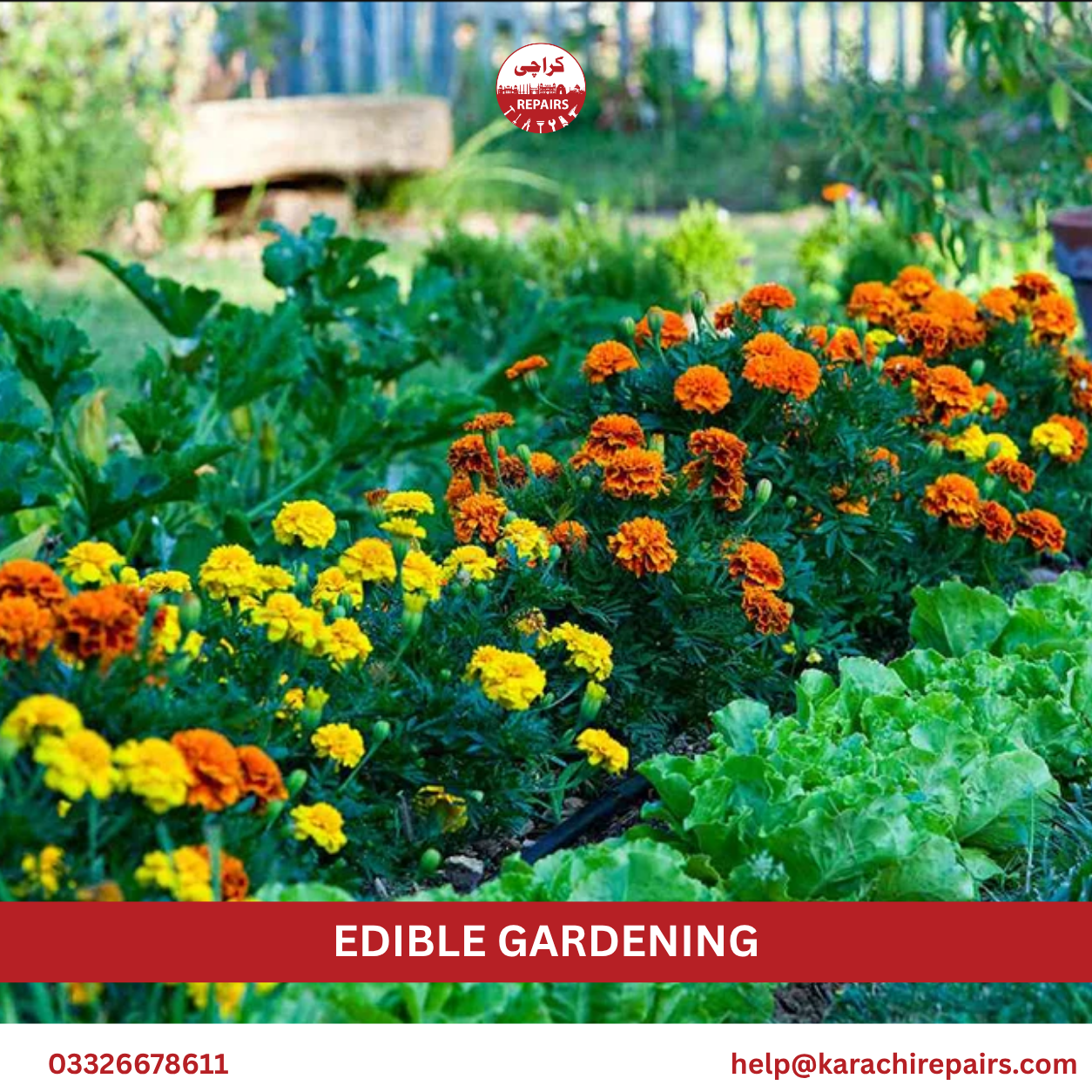
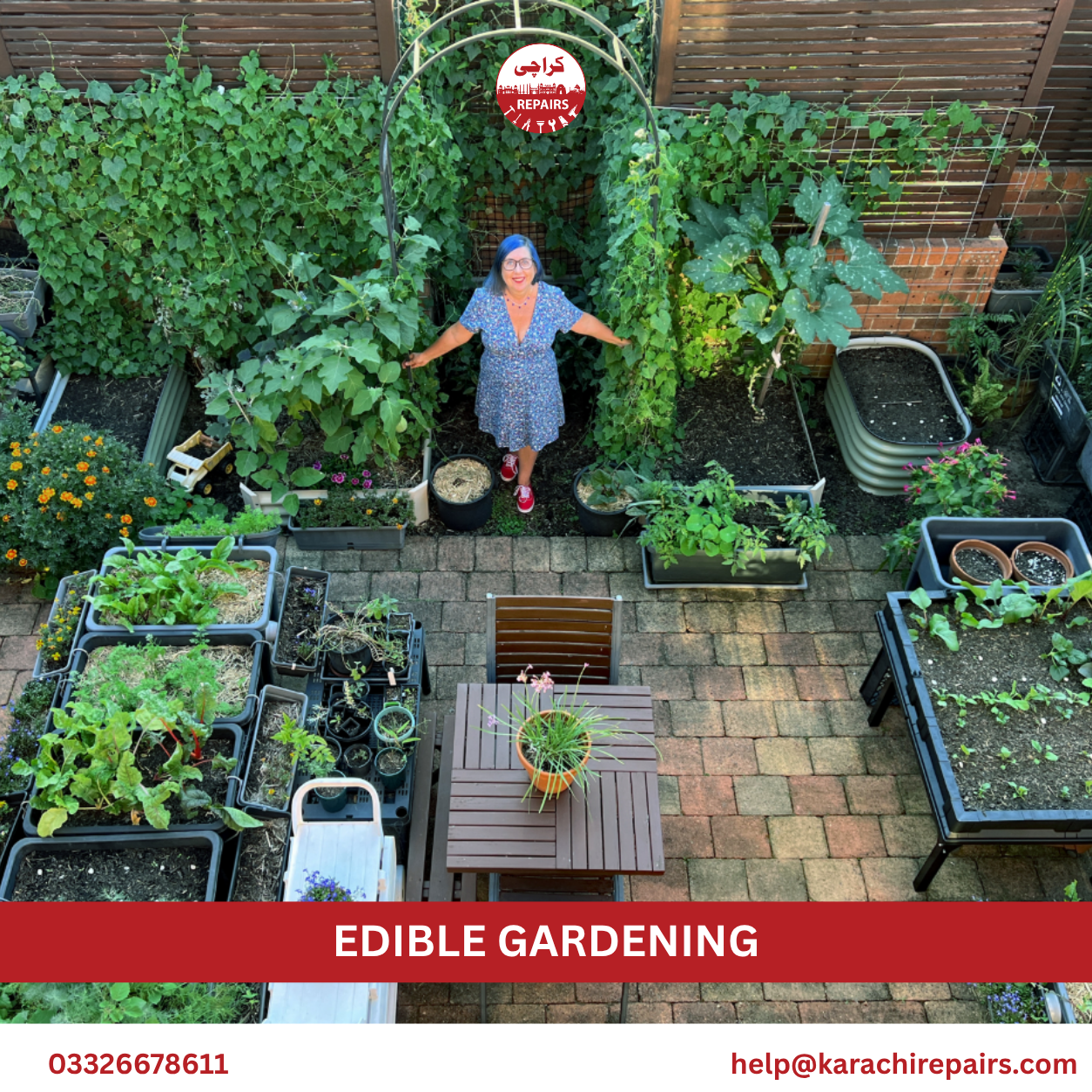
Edible gardening in Karachi is no longer just a hobby for people with big plots. More families are growing coriander on a balcony, chillies in a few pots and tomatoes along a side wall. The reason is simple. Fresh vegetables and herbs from your own space taste better, cost less over time and you know exactly what went into them.
Many people still struggle to start. They buy seeds, plant them in poor soil, water them wrongly and lose everything in the first heat wave. Karachi Repairs helps you avoid that. Our teams design, set up and maintain vegetable gardens, herb corners, fruit plants and kitchen gardens at homes, schools, offices and farmhouses. This page is part of our wider gardening services in Karachi, and it explains what we do, what grows well in our climate and how to book a team.
Same-Day Response Edible Gardening
Want to set up a vegetable patch, herb corner or rooftop garden? Tell us the address and your available space. Our gardening teams usually reach you quickly anywhere in Karachi to plan and set up your new garden.
REQUEST A FREE VISIT
Why Edible Gardening
Makes Sense in Karachi
Karachi has one big advantage for growing food: a long growing season. Winters are mild, and you can grow leafy greens, root crops and tomatoes from about October to February. Summers are hot, but many local crops, such as okra, bottle gourd and chillies, grow well in the heat.
There are also practical reasons to start. Vegetable prices go up and down, and quality in the market varies. A few pots of coriander, mint and green chillies can save you many small trips and extra spending every month. Children enjoy picking their own tomatoes, and it teaches them where food comes from.
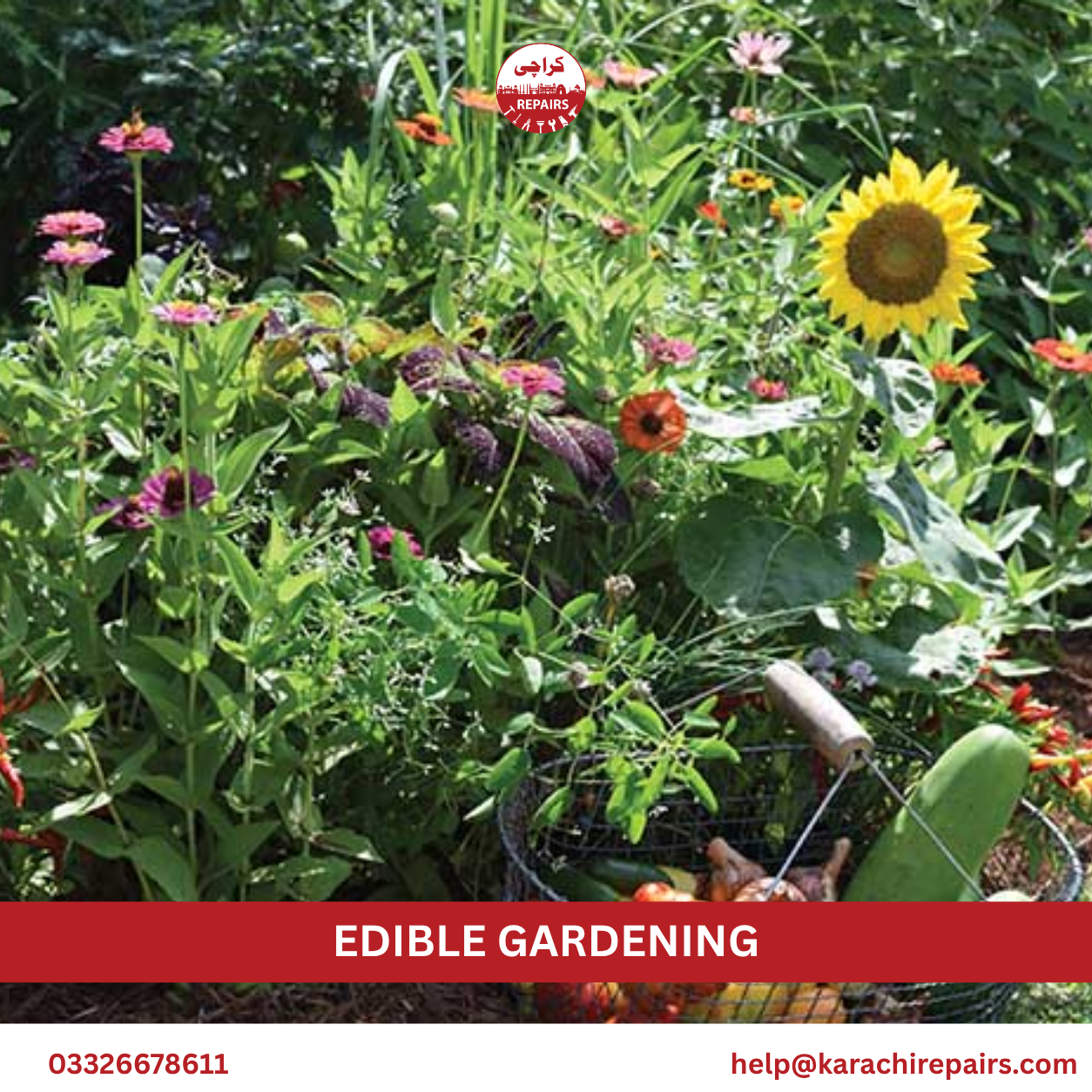
Then there is the matter of what goes into your food. When you grow it yourself, you decide the fertiliser, the water and the care. You can avoid heavy chemicals, and you can pick the vegetables at the right time instead of buying produce that has travelled for days.
Edible Gardening Services We Offer
Every household has different space, time and goals. We offer several services, so you can pick what suits you.
Kitchen Garden Design and Setup
We visit your home, check sunlight and space, and plan a layout. Then we build the beds, prepare the soil, plant seedlings and set up watering. You get a working garden, not just a plan on paper.
Raised Bed Construction
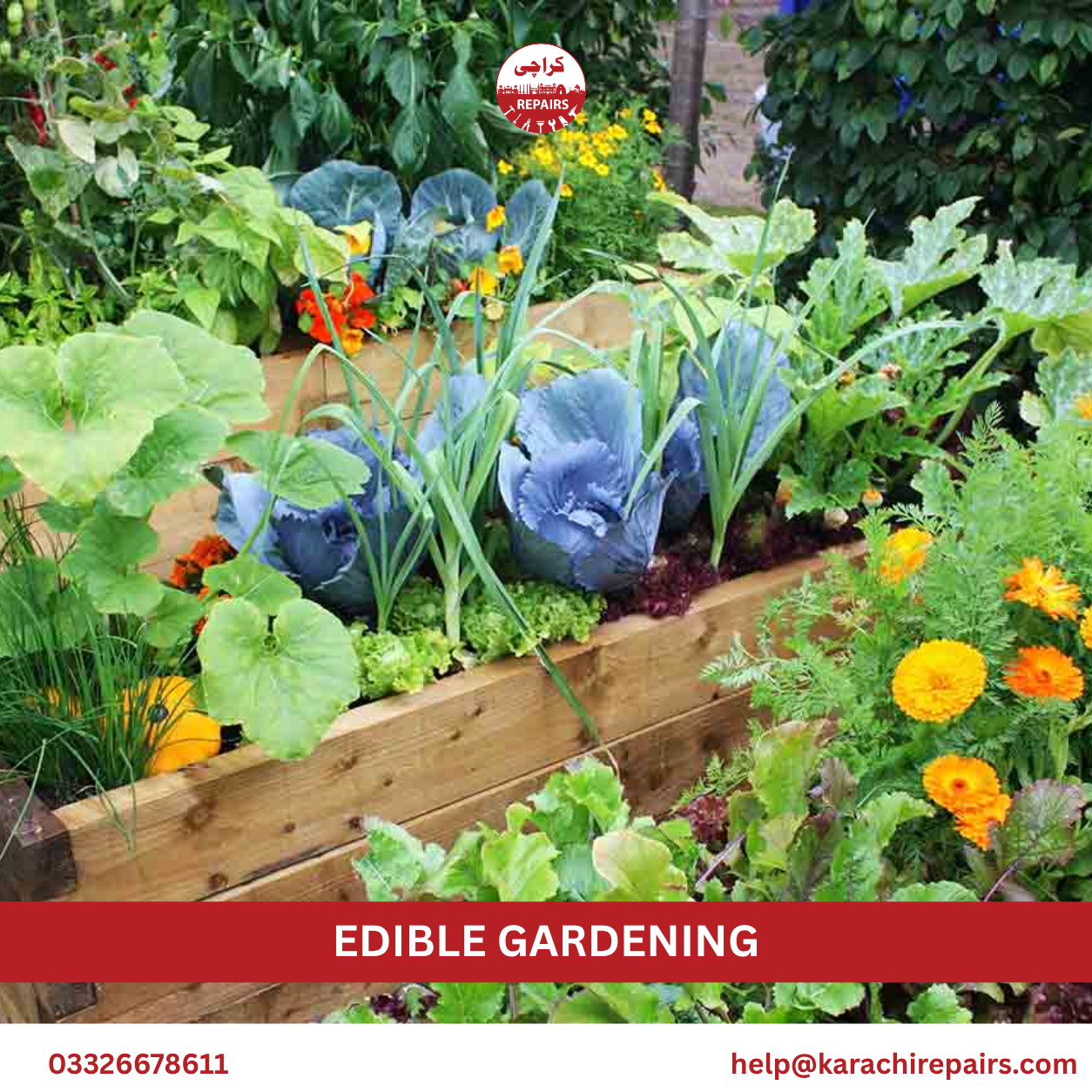
Raised beds give you better drainage, loose soil and easy access. We build them from suitable material and fill them with a rich soil mix. They are especially useful in areas with hard or salty ground.
Balcony and Terrace Edible Gardens
For apartments, we use pots, grow bags and railing planters. We choose compact plants, such as chillies, herbs, cherry tomatoes and leafy greens, and we pay attention to weight, drainage and water runoff.
Rooftop Vegetable Gardens
Rooftops get full sun, which vegetables love. We use lightweight soil mixes with cocopeat and compost, and we protect the slab with proper drainage layers.
Herb Gardens
Mint, coriander, basil, curry leaves, lemongrass and fenugreek are easy to grow and used almost daily. We set up a small herb corner near your kitchen door or window.
Fruit Plant and Small Orchard Setup
We plant lemon, guava, papaya, mulberry, pomegranate, fig and other fruit plants that suit Karachi. Fruit trees need more space and patience, but they reward you for years.
Seasonal Replanting and Maintenance
Vegetable beds need new crops through the year. We replant according to the season, refresh the soil and keep the garden productive.
Edible Garden Training and Guidance
If you want to look after the garden yourself, our team can show you how to water, feed and harvest. We keep the advice simple and practical.
What You Can Grow in Karachi, Season by Season
Planting at the right time decides whether a crop succeeds or fails. Here is a simple seasonal guide for Karachi.
Winter Crops (October to February)
Winter is the best season for vegetables in Karachi. The weather is cool, and most crops grow strongly.
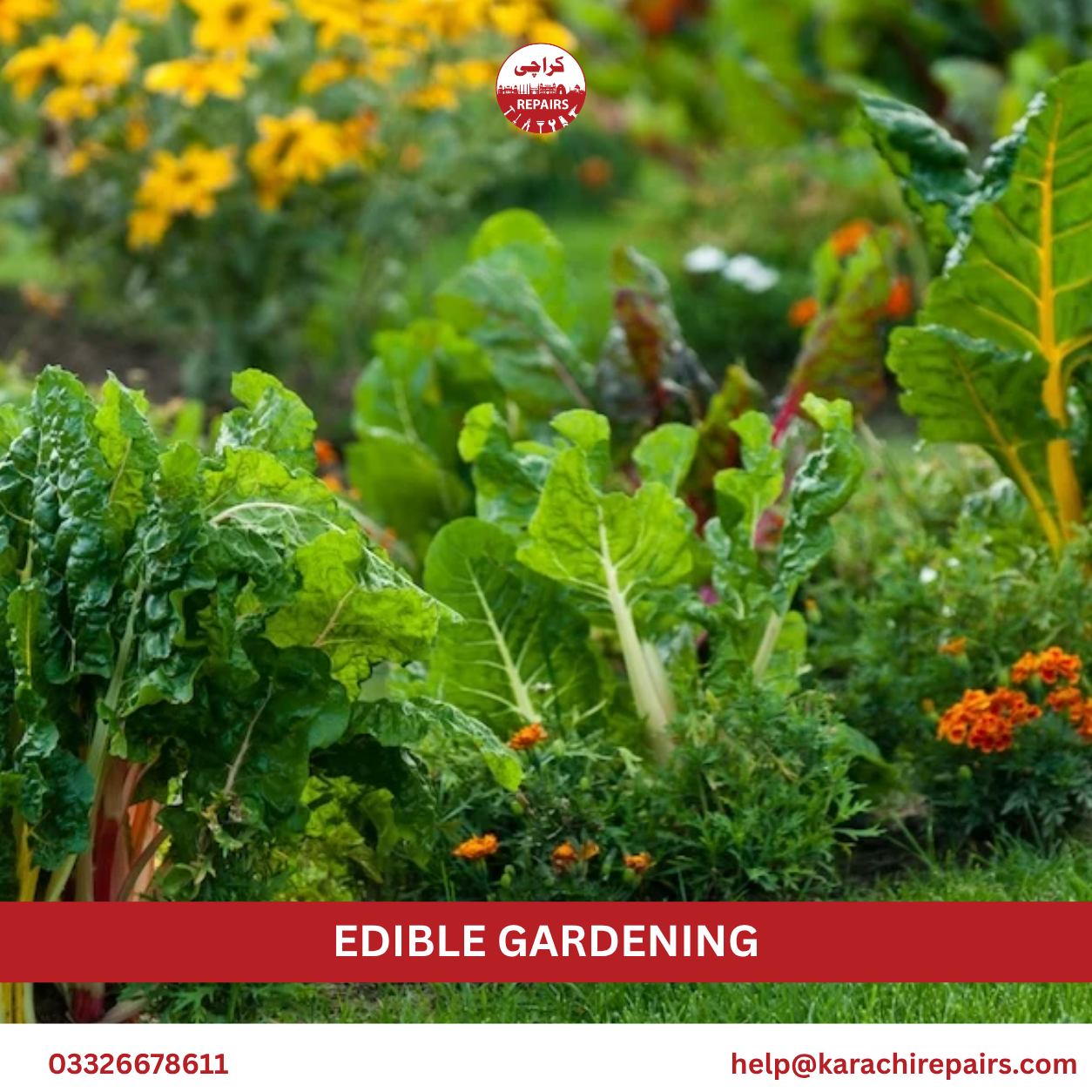
- Leafy greens: Spinach, lettuce, fenugreek, mustard greens and coriander
- Root vegetables: Radish, carrot, turnip and beetroot
- Fruiting vegetables: Tomato, brinjal, capsicum and green peas
- Cabbage family: Cabbage, cauliflower and broccoli
- Others: Spring onion, garlic and green chillies
Summer Crops (March to September)
Summer is harder, but many local vegetables handle heat well when watered properly.
- Heat lovers: Okra (bhindi), bottle gourd (lauki), ridge gourd (torai) and round gourd (tinda)
- Climbers: Bitter gourd (karela), cucumber and long melon (kakri)
- Chillies and peppers: Green and red chillies grow well in pots
- Herbs: Mint, basil, curry leaves and lemongrass
- Others: Sweet potato and amaranth (chaulai)
Year-Round Plants
Some plants grow through most of the year with proper care. These include mint, curry leaves, lemongrass, aloe vera, lemon, papaya and moringa (sohanjna).
If you want to plant something specific, tell us. We will say honestly whether it suits your location and the current month.
Soil Preparation:
The Most Important Step
Most failed vegetable gardens in Karachi fail because of the soil. The ground in many areas is sandy, salty or full of construction waste. Vegetables need loose, rich soil that drains well and holds enough moisture.
For ground beds, we clear stones and debris, loosen the soil to a good depth and mix in compost and well-rotted manure. If the soil is too poor, we replace the top layer. For raised beds and pots, we prepare a custom mix of garden soil, compost, sand and cocopeat.
For heavy clay areas, we add coarse sand and organic matter, so water can pass through. For sandy areas, we add compost to hold moisture and nutrients. You can learn more about our soil work on our gardening services page.
Good soil takes a little time and money at the start. It saves you a lot of disappointment later.
Our Edible Gardening Process, Step by Step
We keep the process simple, so you know what to expect.
Step 1: Call or Message Us
Tell us your location, the space available and what you would like to grow. Send photos of the area on WhatsApp. This helps us prepare before the visit.
Step 2: Site Visit and Sunlight Check
Our team visits and checks how many hours of direct sun the area gets. Most vegetables need at least five to six hours. We also look at the water source, wind exposure and soil condition.
Step 3: Planning
We suggest a layout and plant list that match your space and the current season. We also discuss how much time you can give each week, so the plan stays realistic.
Step 4: Clearing and Soil Work
We clear the area, prepare the soil and build raised beds or set up containers where needed.
Step 5: Planting
We plant healthy seedlings or sow seeds at the right depth and spacing. Crowded plants compete and produce less, so spacing matters.
Step 6: Watering Setup
We arrange the watering method. This can be a simple hose routine, a drip line or a self-watering system, depending on your space and budget.
Step 7: Mulching and Support
A layer of mulch holds moisture and keeps weeds down. We also add stakes, nets or frames for climbers such as tomatoes and cucumbers.
Step 8: Handover and Care Plan
We walk you through watering, feeding and harvesting. You also get a simple schedule for the next few weeks, and we can arrange regular visits if you prefer.
Edible Gardening on a
Balcony or Terrace
Many Karachi families live in apartments and think they cannot grow food. In reality, a balcony with four to five hours of sun can produce a surprising amount.
The key is choosing the right containers and plants. We use pots that are at least ten to twelve inches deep for most vegetables, and larger ones for tomatoes and brinjal. Grow bags are lighter and drain well. Railing planters work for herbs and leafy greens.
Weight and water are the main concerns. A full pot can be heavy, and runoff can annoy the neighbours below. We place trays under the pots, use light soil mixes and arrange the layout, so water drains safely. If you are on the top floor, we also protect your roof from moisture.
A good balcony garden might include coriander, mint, green chillies, cherry tomatoes, spinach, lettuce and curry leaves. These are easy to harvest, and they suit most cooking needs.
Common Edible Gardening Mistakes in Karachi
We have fixed many failed vegetable gardens over the years. These are the mistakes we see most often.
Planting winter crops in summer
Spinach and lettuce bolt and die in strong heat.
Using plain construction soil
It has few nutrients and drains badly.
Choosing a shady spot
Most vegetables need at least five to six hours of direct sun.
Watering at midday
The water evaporates fast, and wet leaves can burn in the sun.
Using small pots for big plants
Tomatoes and brinjal need deep, wide containers.
Skipping mulch
Bare soil dries fast and grows weeds.
Overusing fertiliser
Too much nitrogen gives lots of leaves and very little fruit.
Most of these can be fixed with simple changes, and a good start makes the next season much easier.
Why Choose Karachi Repairs for Edible Gardening
There are many nurseries in Karachi, but few offer complete setup and ongoing support in one place. That is where we try to help.
Fast response
Local teams that reach most areas within 30 minutes.
Local knowledge
We know what grows well in Karachi's soil, water and weather.
Complete service
Design, soil, planting, watering and maintenance.
Clear pricing
You know the cost before work starts.
Natural methods
Compost, manure and low-risk pest control wherever possible.
Full garden support
Hedge trimming, soil work, cleaning and lawn care from one company.
We would rather help you grow a small garden that works than a big garden that fails. That approach has helped many customers keep their gardens going season after season.
How to Book Edible Gardening in Karachi
Booking takes about two minutes. Call or message 03326678611, share your location and send two or three photos of your space. We will confirm a time, send the nearest team and keep you updated until they arrive.
You can also visit Karachi Repairs to see our other home services, or go back to our gardening services page for more garden care options.
Call now: 03326678611
Frequently Asked Questions About Edible Gardening
What is edible gardening?
Edible gardening means growing plants you can eat, such as vegetables, herbs, fruits and leafy greens, in beds, pots or containers at home.
What vegetables grow best in Karachi?
In winter, spinach, coriander, radish, carrot, tomato, cabbage and peas do well. In summer, okra, bottle gourd, bitter gourd, chillies and cucumber are good choices.
How much does edible gardening cost in Karachi?
The cost depends on the garden size, setup type, soil work, plants and watering system. Send photos and your location, and we will give you a clear estimate before starting.
Can you reach my area within 30 minutes?
We have teams in many parts of Karachi, including DHA, Clifton, Gulshan, North Nazimabad, PECHS and Malir. In most cases, we reach you within 30 minutes, though heavy traffic can cause delays.
Can I grow vegetables on a balcony?
Yes. With four to five hours of sun and suitable pots, you can grow herbs, chillies, cherry tomatoes and leafy greens on a balcony.
How much sunlight do vegetables need?
Most vegetables need at least five to six hours of direct sunlight each day. Leafy greens and herbs can manage with a little less.
How long before I can harvest?
It depends on the crop. Coriander and fenugreek take three to four weeks. Radish takes about a month. Tomatoes and okra take two to three months.
Do you use chemical pesticides?
We prefer natural methods, such as neem oil, compost and companion planting. We avoid strong chemicals on vegetables you plan to eat soon.
Can you set up a rooftop vegetable garden?
Yes. We use lightweight soil mixes, proper drainage and shade nets where needed to protect your roof and the plants.
Do you offer other gardening services?
Yes. We provide hedge trimming, garden soiling, waste removal, garden cleaning and more. Visit our gardening services in Karachi page for details.
Areas We Cover
Across Karachi
Our teams are spread across the city rather than run from one workshop, which is how same-day response stays possible in Karachi traffic.