
Transplanting in Karachi:
Transplanting is one of the most delicate jobs in any garden. Dig a plant out at the wrong time or in the wrong way, and it may never recover. Karachi Repairs provides careful transplanting for homes, bungalows, farmhouses, societies, schools and offices across Karachi. We move plants, shrubs, palms and young trees with the root ball intact, and we plant them in their new spot the right way. To book a visit, call 03326678611.
This page is part of our Gardening Services. Below, we explain when transplanting makes sense, the best season in Karachi, how our team does the work, and how you can help your plants settle into their new place.
What Is Transplanting?
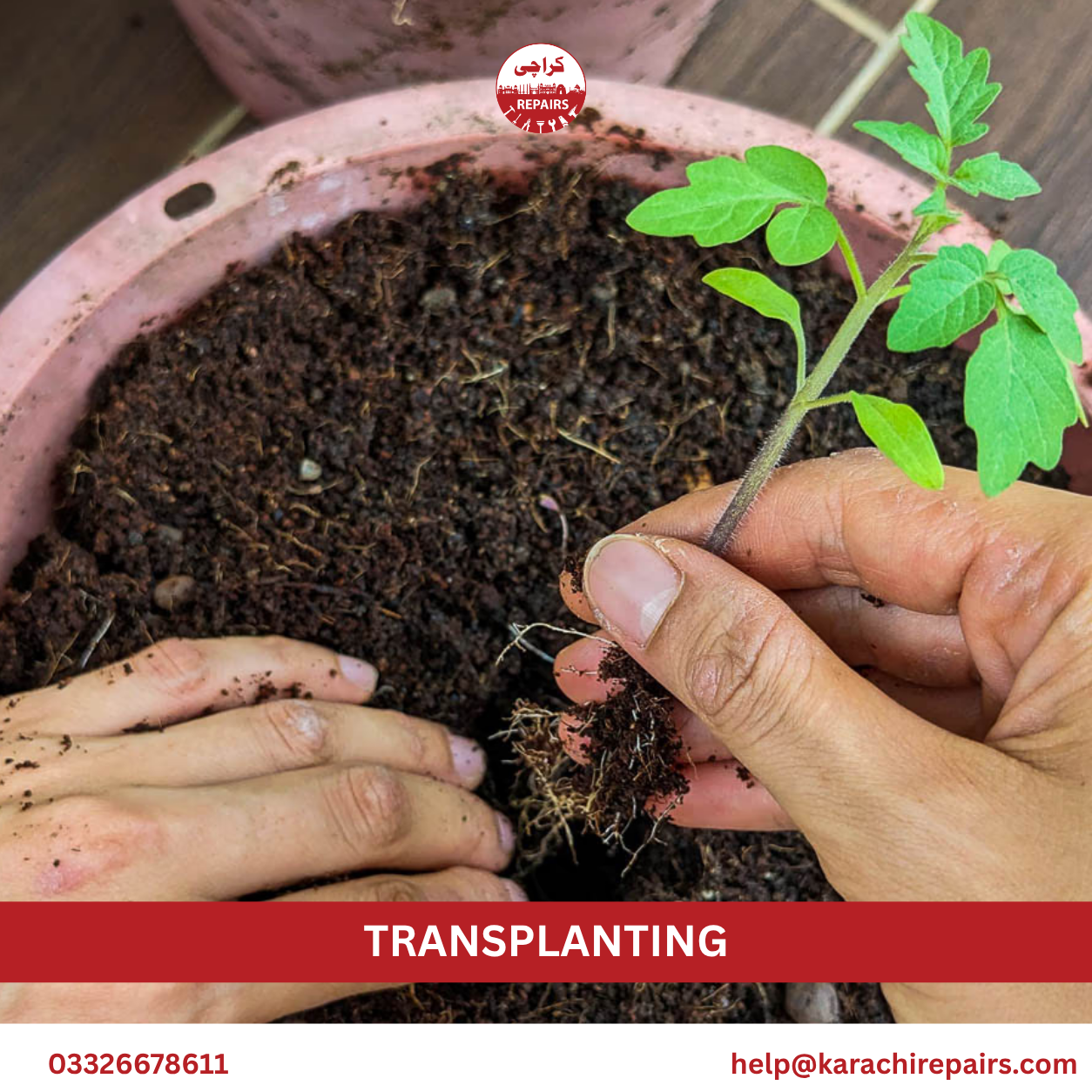
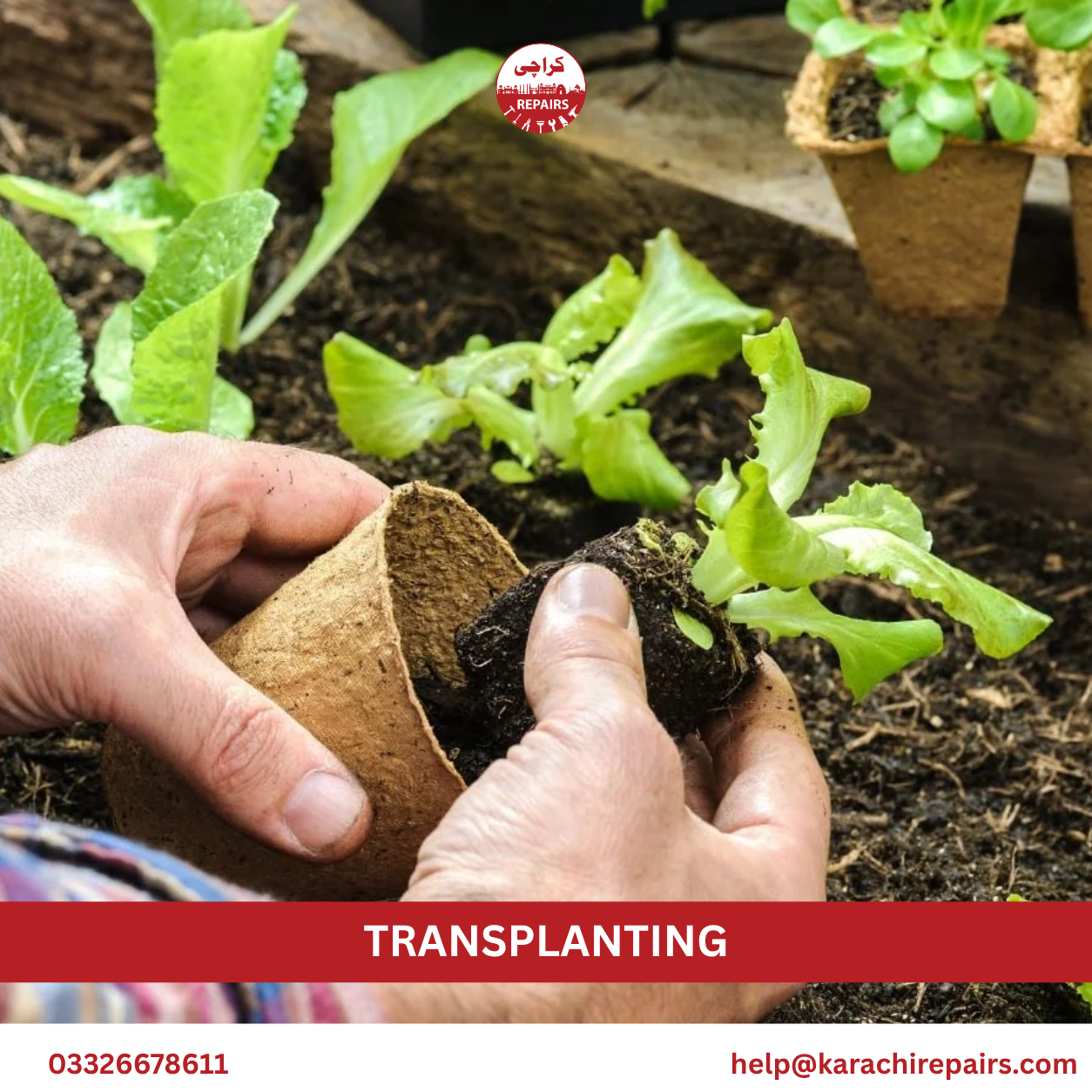
Transplanting means moving a growing plant from one place to another. The plant can go from a pot to the ground, from the ground to a bigger pot, or from one corner of your garden to a completely different property. The goal is simple: keep the roots alive and the plant healthy through the move.
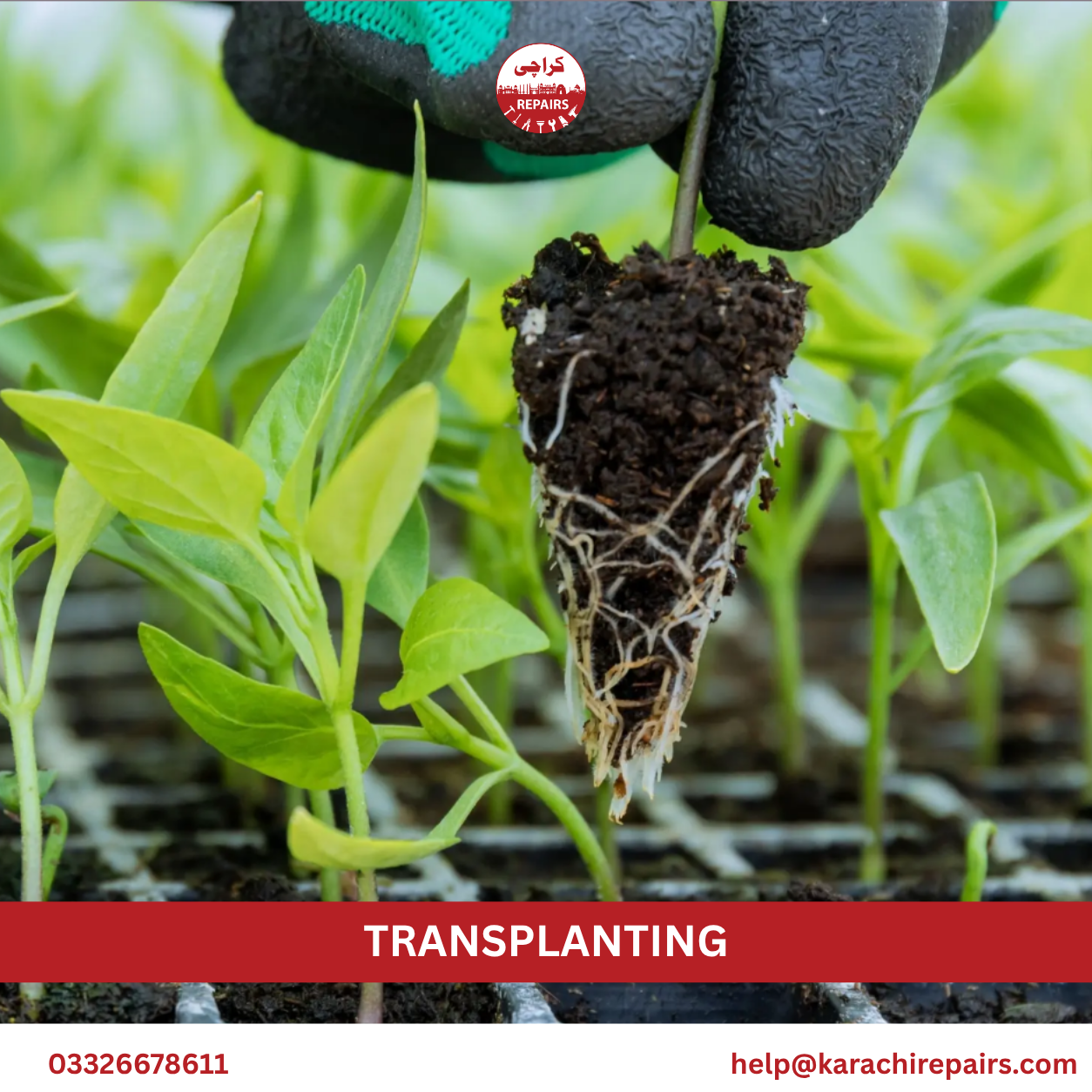
That sounds easy, but it is not. A plant takes in water and food through fine root hairs. These are the first things to get damaged when you dig. If too many are lost, the plant cannot drink, and the leaves start to drop. This is called transplant shock.
Good transplanting reduces this shock. It does this with proper timing, a correctly sized root ball, quick handling and the right aftercare.
REQUEST A FREE VISIT
Best Time for Transplanting
in Karachi
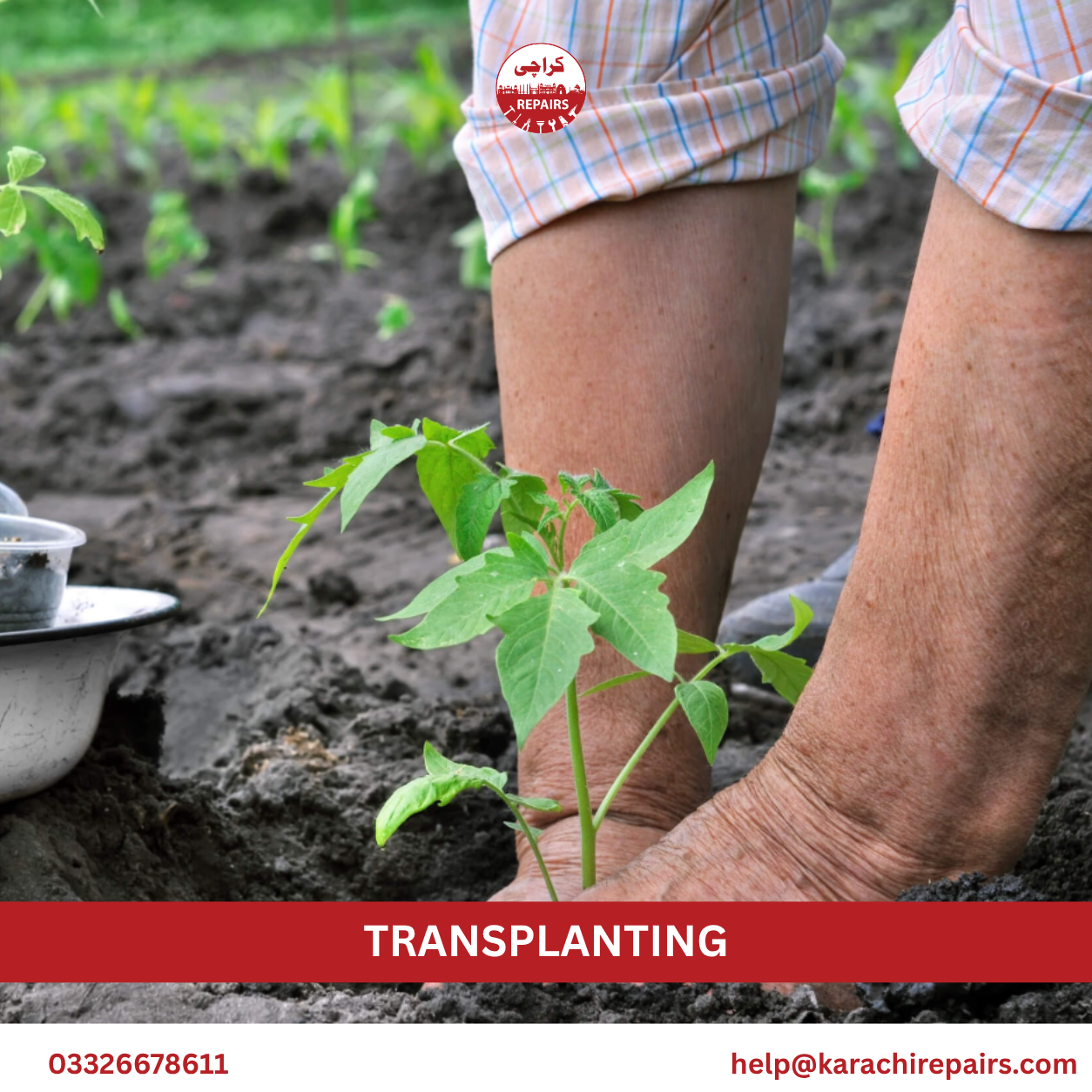
Timing matters more than most people think. Karachi has mild winters and very hot summers, so the best window is different from colder cities.
October to February: The Best Window: These cooler months are the safest time for transplanting. The sun is softer, the soil stays cool, and the plant loses less water through its leaves. Roots get time to grow into the new soil before summer arrives. If you can plan your project in this period, do it.
Monsoon Season: Some plants handle transplanting well when the rains begin, because the air is humid and the soil is moist. But heavy rain can flood the new hole and rot the roots. We move only hardy plants in monsoon, and we check drainage first.
March to April: This is the transition period. Many plants can still be moved, but you must water carefully and give shade for the first few weeks.
May to September: Extreme Heat: Hot weather is hard on a freshly moved plant. We avoid non-urgent transplanting in peak summer. If the job cannot wait, we work in the early morning or late evening, shade the plant and give extra water.
Time of Day: Even in the right season, we prefer to transplant in the morning or late afternoon. Midday sun dries out exposed roots in minutes.
What Can Be Transplanted?
Most garden plants can be moved if the work is planned well. Here are the main groups we handle.
- Flowering and Seasonal Plants: Marigold, petunia, salvia, verbena and similar seasonal plants are easy to move. We usually shift them in small groups with a bit of soil around the roots.
- Shrubs and Hedge Plants: Hibiscus, bougainvillea, jasmine, ixora, duranta, kaner and conocarpus hedges are common in Karachi. They are strong and recover well when the root ball is cut and wrapped correctly.
- Fruit Plants: Lemon, guava, pomegranate, mango and papaya plants can be transplanted, especially when they are young. Older fruit trees need more care and a larger root ball.
- Palms: Date palms, areca palms, ponytail palms and ornamental palms are popular in Karachi homes. Palms have a single growing point at the top, so they must be handled gently. They also need extra support after planting.
- Young and Medium-Sized Trees: Neem, ashoka, gulmohar, amaltas, ficus and other landscape trees can be transplanted when they are small or medium-sized. Large mature trees are possible in some cases, but it needs planning and sometimes machinery. We tell you honestly if a tree has a low chance of survival.
- Indoor and Pot Plants: We also help with repotting indoor plants and moving balcony plants into larger pots or garden beds.
Our Teams Reach You Within 30 Minutes
Across Karachi
Karachi is a large city with heavy traffic. Waiting days for a gardener is not practical, especially when a plant is already out of the soil or a construction crew is waiting. For this reason, Karachi Repairs keeps teams in different areas of the city. When you confirm your booking, the nearest team is sent to you, and in most cases it can reach you within 30 minutes.
A quick arrival helps with transplanting in a real way. The less time a root ball spends in the open air, the better. For urgent jobs, such as a tree that must be moved before demolition or a garden that has to be cleared for a new floor, fast response makes a difference.
Our teams are available in areas including:
- DHA and Clifton
- Gulshan-e-Iqbal and Gulistan-e-Jauhar
- North Nazimabad and Nazimabad
- PECHS and Bahadurabad
- Saddar and Karachi city centre
- Korangi and Landhi
- Malir and Model Colony
- Scheme 33 and Gulshan-e-Maymar
- Federal B Area and North Karachi
- Bahria Town Karachi
If you live in a different neighbourhood, call us anyway. We cover most parts of the city and will tell you honestly how soon we can arrive.
Transplanting From Pot to Ground and Ground to Pot
Two jobs come up very often in Karachi homes, so they deserve their own section.
Moving a Plant From a Pot to the Ground: Plants grown in nurseries are often tightly packed in small bags. When you plant them in your garden, loosen the outer roots gently. If the roots circle around the bag, we tease them out so they grow outward into the soil. We dig a hole about twice as wide as the container, but only as deep as the root ball.
Moving a Plant From the Ground to a Pot: This is useful if you are shifting house or want to keep a plant on a balcony or terrace. We choose a pot with drainage holes and a size that fits the root ball with a little room to grow. A pot that is too large keeps the soil wet for too long and can rot the roots.
Repotting to a Larger Pot: When a potted plant outgrows its home, we move it to a bigger one with fresh soil. We use a light mix that drains well. In Karachi's humid weather, soil that stays soggy is one of the most common reasons plants die in pots.
Understanding Transplant Shock
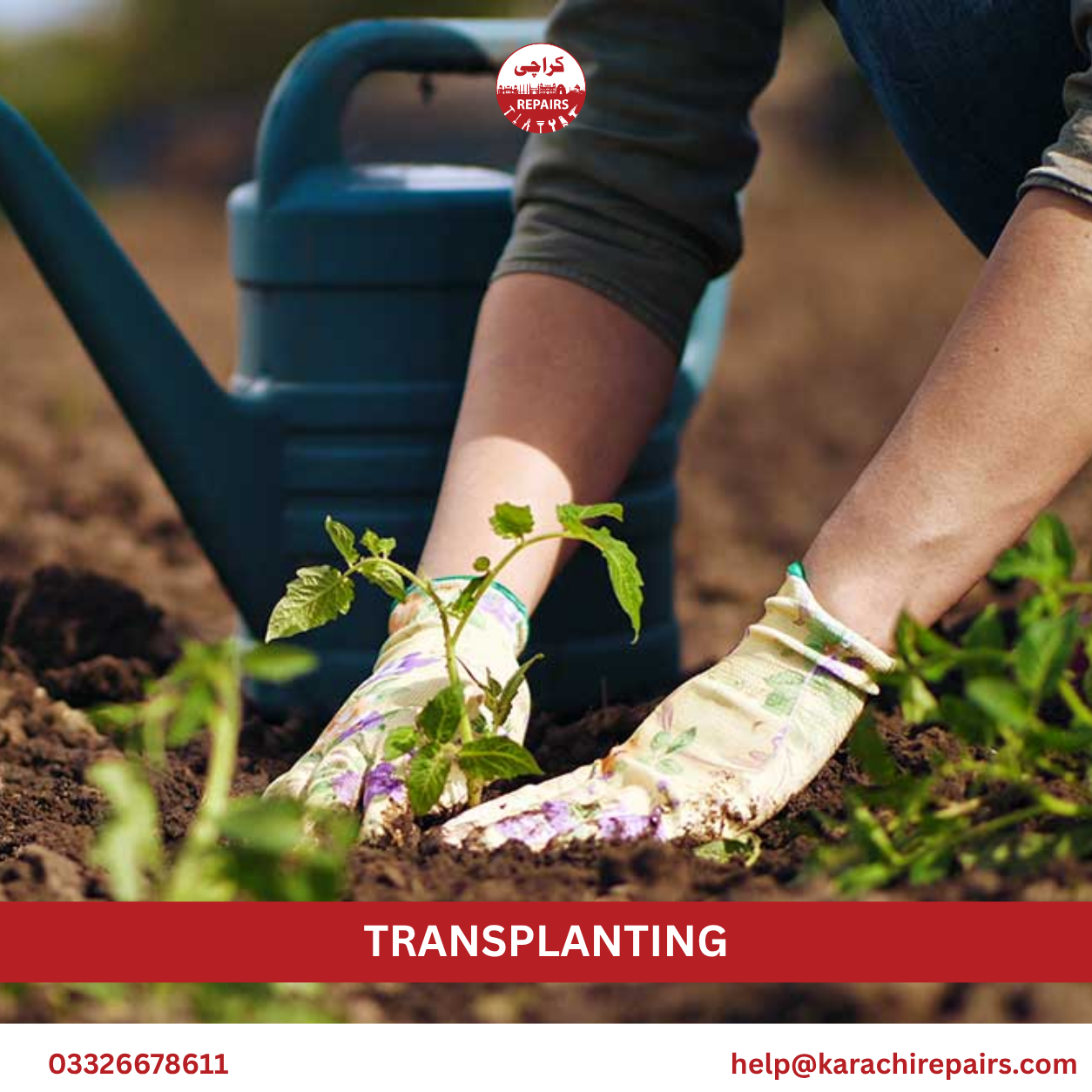
Almost every plant shows some stress after a move. The key is to know what is normal and what is not.
Normal Signs
- A few leaves turn yellow or drop in the first two weeks
- Slight drooping in the afternoon heat
- No new growth for a few weeks
Warning Signs
- Most leaves dry out and turn brown within days
- Stems turn black or mushy at the base
- The plant leans badly and the root ball moves when touched
- Soil stays wet for days and smells bad
What To Do
If you see warning signs, call us early. A quick visit can often fix a drainage or support problem before it kills the plant.
Aftercare: What to Do
After Transplanting
The first weeks decide whether the plant survives. Here is a simple routine.
Water Deeply, Not Daily: Give the plant a deep soak right after planting. After that, water when the top few inches of soil feel dry. Small daily sips of water only wet the surface and encourage shallow roots.
Mulch the Soil: Spread a layer of dry leaves, straw or compost around the plant. Keep it a few centimetres away from the stem. Mulch keeps the soil cool and reduces water loss in Karachi's heat.
Give Shade in Hot Weather: A shade net or a simple cloth screen helps a lot during the first two or three weeks. Remove it slowly as the plant settles.
Do Not Fertilise Too Early: Heavy fertiliser can burn tender roots. Wait until you see new growth, then use a light organic feed.
Stake Tall Plants: Wind can rock a young tree and break the new roots. Stakes hold the plant steady until the roots grip the soil.
Avoid Heavy Pruning: The plant needs its leaves to make food. Remove only dead or broken parts.
Check the Plant Often: Look at the plant every few days. Touch the soil, watch the leaves and note any change. Early action is easier than late rescue.
Common Transplanting Mistakes
These are the mistakes we see most often. Avoiding them improves your chances.
Moving at the wrong time.
A plant moved in May or June has a much harder time than one moved in December.
Cutting the root ball too small.
Many roots are lost, and the plant cannot drink.
Letting roots dry out.
Even a short time in sun and wind can harm fine roots.
Planting too deep.
The stem rots when buried. Plant at the same depth as before.
Leaving air pockets.
Gaps around the roots dry them out. Water and press the soil gently.
Overwatering.
Wet soil without oxygen rots the roots.
Using poor soil.
Sandy or salty soil needs compost before planting.
Skipping support.
A loose plant rocks and breaks new roots.
Why DIY Transplanting Often Goes Wrong
Moving a small flowering plant is easy. But once you deal with shrubs, palms or trees, the job gets heavy and delicate. A palm root ball can weigh many kilograms. A young tree can be hard to lift without breaking the soil.
Hiring a team helps in four ways.
Proper tools.
Spades, cutters, wraps and lifting aids make the work cleaner and safer.
Right technique.
Our staff knows how big the root ball should be and how to cut it.
Speed.
A trained team moves the plant fast, which protects the roots.
Safety.
Heavy lifting and digging near walls, pipes and cables is risky without experience.
It also saves money in the long run. Replacing a well-grown plant costs far more than moving it correctly.
Transplanting Challenges Specific to Karachi
Karachi gardens have a few special conditions that affect transplanting. A good team plans for them.
Sandy and Salty Soil
Many areas have light soil that dries quickly. Some have salt in the groundwater. We mix compost into the planting hole and, where needed, improve the soil so the roots can take in water properly.
Strong Sun and Wind
Wind and sun dry out leaves quickly. We prefer to work early or late in the day, and we recommend shade nets for the first weeks.
Limited Space
Many Karachi homes have small gardens, tight gates or narrow lanes. We plan the route in advance so that the plant can be moved without damage to walls or floors.
Construction Dust and Debris
New buildings leave behind cement, bricks and rubble in the soil. We remove these from the planting area before we plant. Otherwise, roots cannot spread.
Water Quality
Some areas receive salty or hard water. When possible, we advise you to use cleaner water for newly moved plants.
Transplanting for Homes, Societies and Businesses
Different properties have different needs, and we adjust to match.
Properties We Serve
Houses and Bungalows
Most home owners ask us to move a few plants during renovation or garden redesign. We handle the digging, moving, planting and cleaning in one visit.
Apartments and Terraces
We help with repotting balcony plants and shifting terrace gardens into better containers.
Housing Societies and Parks
For larger projects, we move many plants in a planned order. This keeps the work organised and reduces the time plants spend out of the soil.
Schools, Hospitals and Offices
We plan the work so that daily activity is not disturbed. Safety around children and visitors is a priority.
Farmhouses and Large Gardens
Bigger sites often need larger transplanting jobs, including palms and young trees. We prepare a schedule so that the work is spread across the right season.
Transplanting Plants Safely Around Walls, Pipes and Cables
Many Karachi gardens are small, and the soil around the boundary wall hides drains, water pipes and sometimes electric cables. Before we dig, our technician checks the area and asks you about any known lines. Digging blindly can cause leaks and costly repairs.
We also think about the new location. Large roots can lift paving and crack walls over the years. So transplanting a tree or palm too close to a building is not a good idea. We usually suggest a safe distance based on the plant's expected size, and we keep it away from septic tanks, drains and underground tanks.
A little planning at this stage saves you from a second move later.
What Affects the Cost of Transplanting?
We do not give fixed prices without seeing the plant. The cost depends on several things:
- The type and size of the plant or tree
- The size and weight of the root ball
- The distance between the old and new location
- Access to the site, such as narrow gates or stairs
- The number of plants being moved
- Whether soil improvement, stakes or shade nets are needed
- Whether we also need to remove debris or prepare the new bed
After the first visit, we give you a clear estimate. If you have many plants, a combined plan usually works out better.
Why Choose Karachi Repairs for Transplanting?
There are many people who offer garden work in Karachi. Here is what we try to do well.
- Local experience. Our team knows Karachi soil, heat and the plants that grow best here.
- Fast arrival. Nearby teams mean you do not wait long.
- Honest advice. If a plant is unlikely to survive, we tell you before we start.
- Clear pricing. You know the cost before work begins.
- Careful handling. We protect the roots, your lawn and your property.
- Clean work. We remove debris and leave the area neat.
- Aftercare support. We stay in touch if you have questions after the job.
We also offer lawn care, planting, garden maintenance and tree care. You can see the full list on our gardening services page.
Book Transplanting in Karachi Today
If you need to move a plant, shrub, palm or young tree, do not wait for the last moment. A short inspection can tell you the best time, the best method and the real chance of success.
Call Karachi Repairs on 03326678611 and book your transplanting visit. You can also visit karachirepairs.com to learn more about our work. For other garden needs, see our main Gardening Service page.
Frequently Asked Questions About Transplanting
What is transplanting in gardening?
Transplanting means moving a plant from one place to another, such as from a pot to the ground, from one garden bed to another or from one property to a new one. The aim is to keep the roots healthy so the plant keeps growing.
What is the best time for transplanting in Karachi?
The best months are October to February, when the weather is cooler. Early morning and late afternoon are the best hours. We avoid non-urgent transplanting in peak summer.
How much does transplanting cost in Karachi?
The cost depends on the size and type of the plant, the root ball, the distance and the access to the site. After an inspection, we give you a clear estimate. Call 03326678611 to book a visit.
Can large trees be transplanted?
Some can, but it is harder. Large trees need a very big root ball, special equipment and careful planning. Young and medium-sized trees have a much better chance. We tell you honestly if a tree is unlikely to survive.
Can you transplant palm trees?
Yes. We transplant date palms, areca palms, ponytail palms and ornamental palms. They need careful handling, a strong root ball and support after planting.
How long does a plant take to recover after transplanting?
Small plants may settle in two to four weeks. Shrubs and palms can take a few months. Young trees may need a full season. Some leaf drop is normal during this time.
How do I know if transplant shock is serious?
A few yellow or dropping leaves are normal. If most leaves dry out quickly, stems turn black or the plant becomes loose in the soil, call us for a check.
How often should I water after transplanting?
Water deeply right after planting. After that, water when the top few inches of soil feel dry. In hot weather, this may be every two to three days, but always check the soil first.
Can you transplant plants during summer?
We can if the job is urgent, but the risk is higher. We work early or late in the day, shade the plant and give extra care. If the job can wait, it is better to move the plant in the cooler months.
Can you move my garden plants when I shift house?
Yes. We dig, wrap and move your plants, and we can plant them at your new home as well. Tell us the new area when you book.
How soon can your team reach my area?
Karachi Repairs has teams in different areas of Karachi. In most areas, a team can reach you within 30 minutes of confirmation, depending on traffic and weather.
Do you clean up after the work?
Yes. We remove extra soil, cut roots and waste, and leave both the old and the new area tidy.
Do I need to be at home during the work?
Someone should be there at the start to show us the plants and the new location. After that, our team can continue as agreed.
Areas We Cover
Across Karachi
Our gardeners are spread across the city rather than run from one workshop, which is how same-day response stays possible in Karachi traffic.