
Water Tank
Installation in Karachi
Whether you're building a new house, converting to a bigger tank because your current one can't keep up with the household, or replacing a tank that's finally given up after years of patch repairs, getting the installation right the first time saves you a lot of headache later. A badly installed water tank isn't just an inconvenience — it means pressure problems, premature cracking, contamination risk, and in some cases a stand that can't actually hold the weight it's carrying. Karachi Repairs installs water tanks across Karachi for homes, apartments, and commercial properties, and this page covers exactly what goes into doing it properly.
This isn't a copy-paste guide. It's based on installations we've actually done across Gulshan, Defence, North Nazimabad, Malir, and other parts of the city, working with the specific water pressure issues, rooftop layouts, and building types that are common here — not generic advice written for a different climate or a different kind of housing stock.
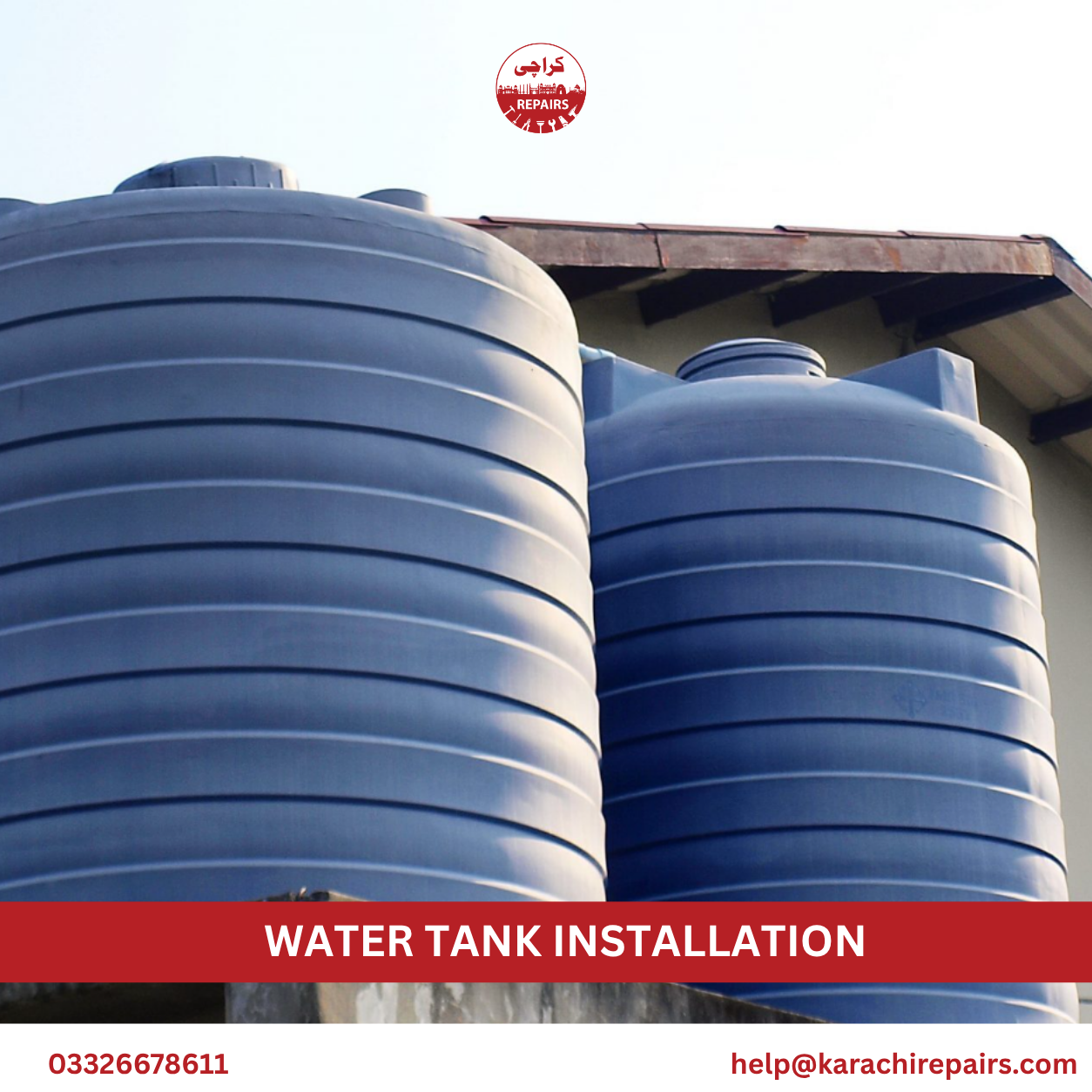
Same-Day Response Water Tank Installation
Need a new water tank installed safely and correctly? Tell us the address and the requirement. Our teams usually reach you within 1 to 2 hours anywhere in Karachi, seven days a week.
REQUEST A FREE VISIT
Choosing the Right
Tank Size and Capacity
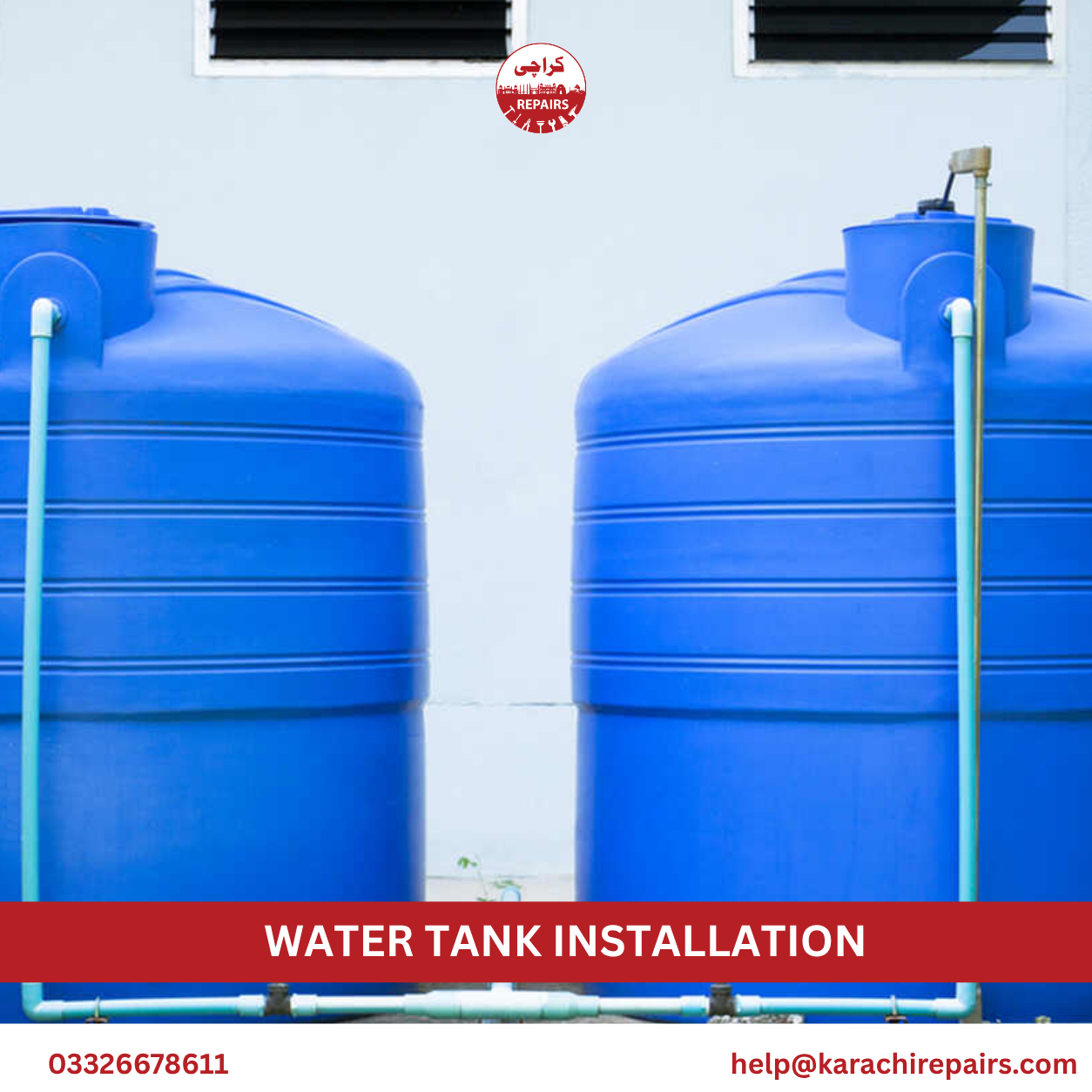
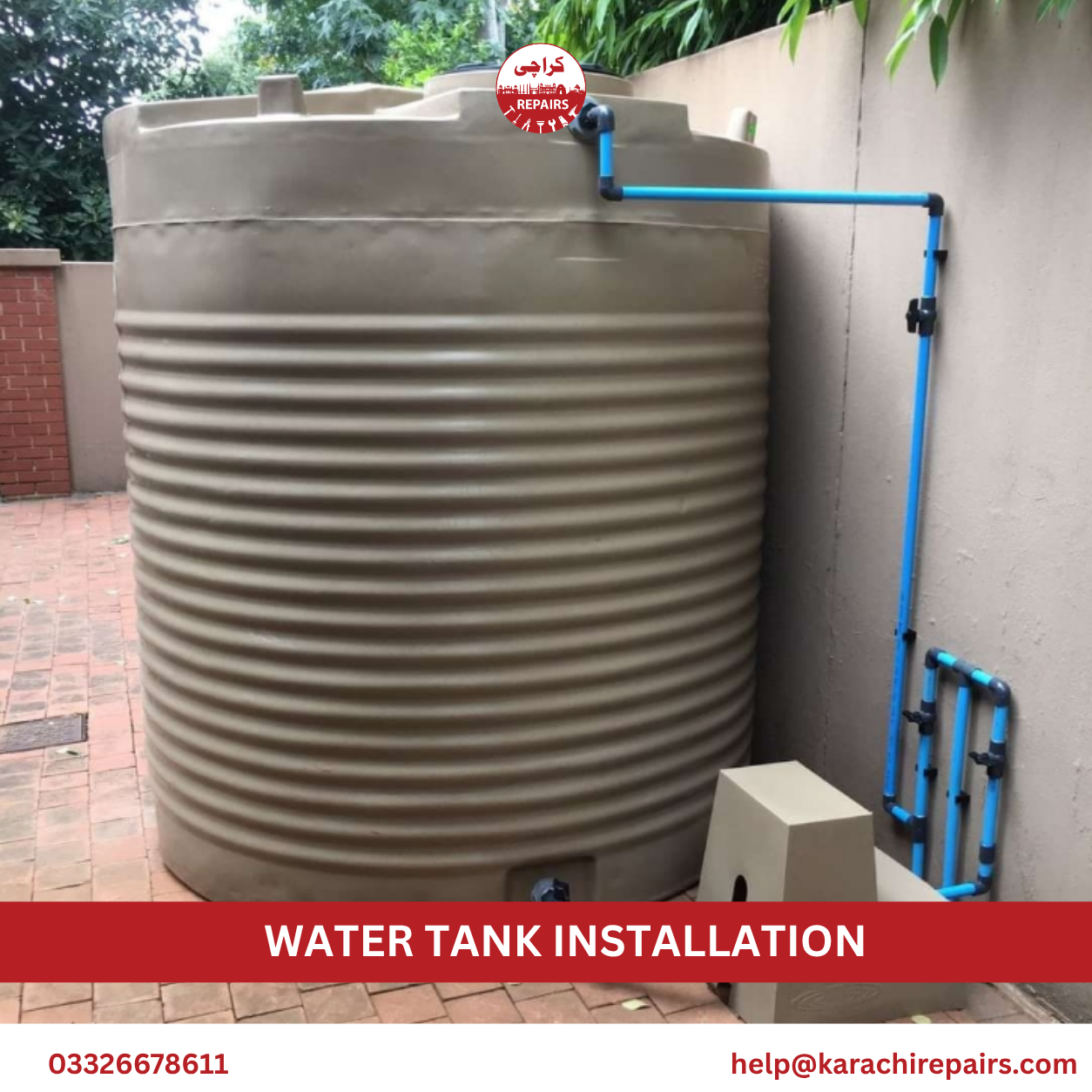
This is one of the most common questions we get, and getting it wrong in either direction causes problems. Too small, and you're running out of water or refilling constantly, which wears down your motor pump from overuse. Too large, and you're paying for capacity you don't need, plus adding unnecessary weight load on your rooftop or stand.
As a general guide for household use:
1-2 person household: Roughly 500 to 700 litres is usually sufficient for daily needs plus a reasonable buffer.
3-5 person household: Somewhere around 1000 to 1200 litres tends to work well, covering daily use with room for supply gaps.
6+ person household or joint family setup: 1500 litres or more, sometimes split across two tanks for redundancy so the household isn't without water if one tank needs servicing.
Commercial properties: This varies significantly based on the business type — a small office needs far less than a restaurant, clinic, or factory, and we calculate this based on actual daily usage patterns rather than a flat formula.
We also factor in how reliable your area's municipal or tanker supply is. If your area regularly deals with supply gaps of two or three days, sizing up slightly gives you a safety buffer that a strictly "by the numbers" household calculation wouldn't account for.
Karachi Repairs Teams Across Karachi
Reaching You Within 30 Minutes
Installation work, especially for a new construction or an urgent tank replacement, isn't something you want to wait days for. That's why Karachi Repairs keeps dedicated teams positioned across different zones of the city, so a technician can typically reach your site within 30 minutes of your call, not hours after fighting through traffic from one central office.
We currently have teams covering:
- Gulshan-e-Iqbal and Gulistan-e-Jauhar
- North Nazimabad and Nazimabad
- Defence (DHA) and Clifton
- PECHS, Bahadurabad, and Tariq Road
- Malir and Model Colony
- Korangi and Landhi
- North Karachi and Federal B. Area
- Saddar and surrounding central areas
Since these teams are already stationed close to you instead of being dispatched from a single office across town, site visits, quotes, and installation scheduling move a lot faster than what most people expect from a service call in Karachi. If your area isn't listed above, call us anyway on 0332-6678611 — coverage is expanding regularly, and we'll confirm the nearest available team and realistic timing.
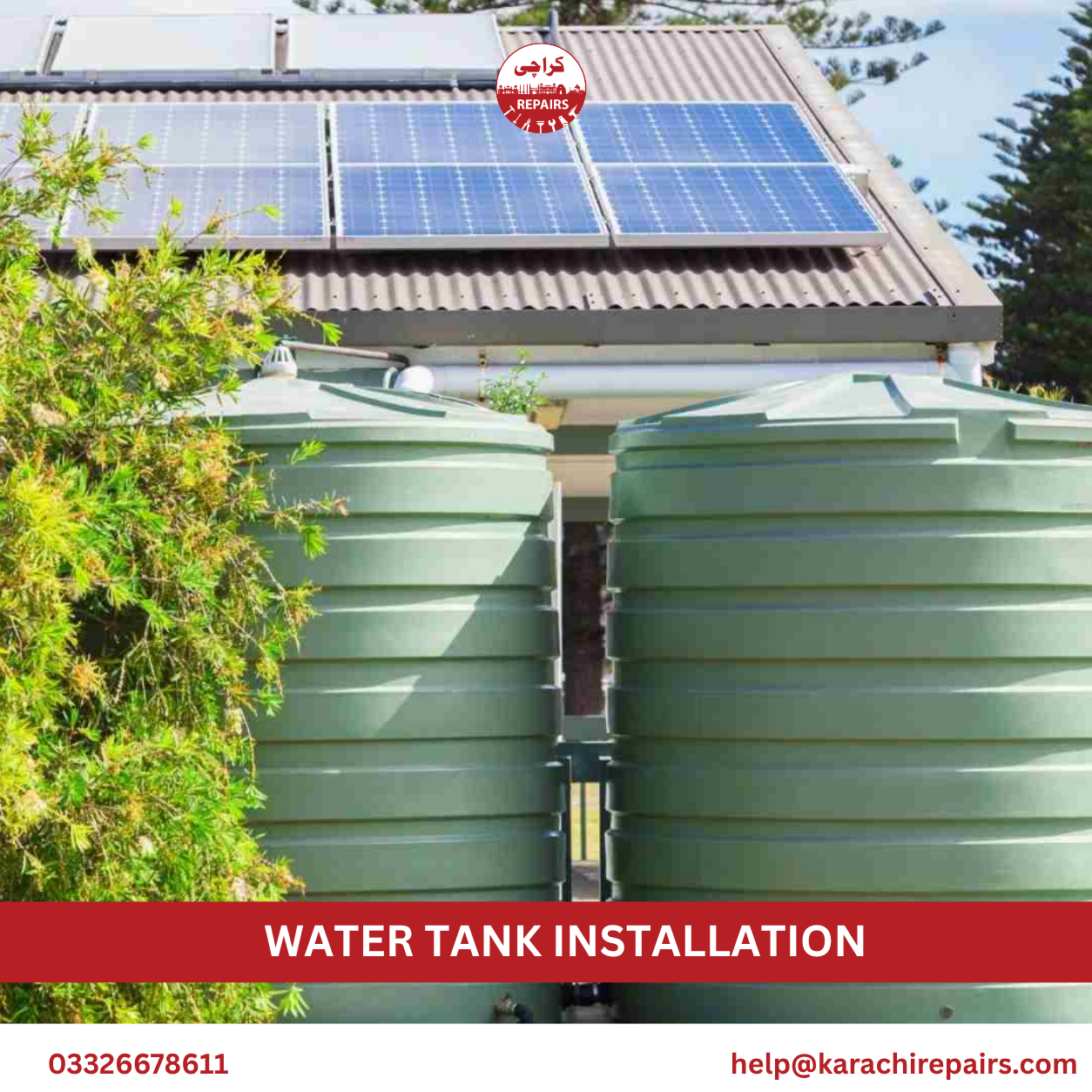
Overhead Tank vs. Underground Tank — Which Should You Install?
This depends heavily on your property layout, budget, and water supply reliability. Here's a practical comparison:
Many of our clients end up choosing both — an underground tank for bulk reserve storage, pumped up into a smaller overhead tank for daily gravity-fed household use. This combination gives you the best of both: a large buffer against supply interruptions and consistent pressure at every tap without relying on the motor running constantly.
Installation for New Construction
vs. Existing Homes
If you're building from scratch, this is genuinely the best time to plan your water storage system properly, since pipe routing, tank positioning, and structural load calculations can all be designed in from the start rather than worked around afterward. We coordinate with contractors and builders on new construction projects to make sure the tank system integrates cleanly with the rest of the plumbing plan, rather than being an afterthought bolted on once everything else is finished.
For existing homes, installation is more about working within what's already there — an existing rooftop layout, existing pipe runs, and sometimes limited access if you're upgrading from a smaller tank to a larger one in a tight space. We assess this honestly during the site visit and let you know if any adjustment to existing plumbing will be needed, rather than promising a straightforward swap that turns into a bigger job once work starts.
One situation we run into fairly often is a household wanting to upgrade tank size without disturbing the existing stand or rooftop layout too much. Sometimes this works fine, but other times the existing stand simply wasn't built for the extra weight a larger tank would add once filled. We'll always flag this honestly rather than installing a bigger tank on a stand that isn't rated for it, even if that means a slightly bigger job than originally expected. It's a lot cheaper to reinforce a stand upfront than to deal with a collapsed or cracked one later.
Water Tank Services & Types We Install
We install a variety of water tanks tailored to your property's specific needs, budget, and space constraints across Karachi, along with all supporting components.
Plastic Rooftop Tanks (HDPE / LDPE)
The most common choice for homes across Karachi because they're affordable, lightweight, and relatively easy to install. We work with different grades depending on your budget and how much sun exposure the installation spot gets, since a cheaper, thinner-walled tank in direct afternoon sun will need replacing far sooner than a UV-treated, thicker-walled version.
Fibreglass Tanks
A step up from standard plastic, fibreglass tanks handle heat and UV exposure noticeably better and tend to last longer without cracking. They cost more upfront but for a rooftop spot with heavy sun exposure, the extra durability often pays for itself over the years by avoiding repeat repair calls.
Steel and Galvanized Tanks
Less common now for residential use but still requested for certain commercial setups or older-style construction. These need careful attention to rust-proofing at installation, since Karachi's coastal humidity accelerates corrosion faster than it would in a drier climate.
Underground Concrete Tanks
Common in houses that want a larger reserve capacity without taking up rooftop space, or for commercial buildings that need a substantial water buffer. This is the most technically demanding installation type since it involves excavation, structural reinforcement, and waterproofing membrane application, all of which need to be done correctly before the tank is sealed underground.
Overhead Tanks for Multi-Storey and Apartment Buildings
For apartment blocks and taller commercial buildings, tank installation often means multiple tanks feeding different floors or sections, sometimes with a booster pump system to maintain pressure at the top floors. This requires planning around how the building's plumbing is already laid out, not just placing a tank and connecting a pipe.
Slim and Space-Saving Tanks
For properties with limited rooftop or side-yard space, slim-profile tanks are becoming a popular request, especially in denser parts of the city where every square foot of rooftop matters. These sacrifice a bit of capacity for a smaller footprint, and we help clients weigh whether that trade-off actually makes sense for their household size before committing to it.
Insulated and Double-Layer Tanks
Some households, particularly those concerned about stored water heating up excessively in peak summer, opt for insulated or double-layer tanks that keep internal water temperature more stable. This is a smaller segment of what we install, but for households in particularly sun-exposed rooftop spots, it's worth discussing during the site assessment.
Water Level Controller Installation
Automate your motor pump to turn on when the tank is empty and shut off when full, preventing dry runs and overflows seamlessly without manual intervention.
Tank Stand Fabrication
Custom-built, heavy-duty metal stands designed to safely bear the full weight of your filled tank on uneven rooftops, ensuring structural stability.
Booster Pump Integration
For households needing high pressure for rain showers or multiple bathrooms, we seamlessly integrate booster pumps with the tank installation.
Underground Tank Waterproofing
Professional application of waterproofing membranes to existing or newly built underground concrete tanks to stop seepage into foundations.
Tank Plumbing & Re-Routing
Complete replacement of old, corroded tank lines with new PPR or PVC pipes, routed cleanly along your walls and roof to ensure full flow and neat aesthetics.
Why Karachi Homeowners and Businesses Choose Karachi Repairs for Installation
Fast local response
Zone-based teams mean quicker site visits and quotes, not a technician crossing the whole city for a simple assessment.
Honest sizing and tank recommendations
We size the tank to your actual household or business needs, not the biggest or most expensive option available.
Materials suited to Karachi's climate
UV-resistant tanks and proper waterproofing membranes chosen for our heat and humidity, not generic products that fail early here.
Experience across all tank types
Plastic, fibreglass, steel, and underground concrete tanks, for both residential and commercial properties.
Proper structural assessment
We check stand and rooftop load capacity before installation, not after something goes wrong.
Clear, upfront pricing
You'll know the full cost, including materials and labour, before work begins.
Common Water Tank Problems in Karachi
Most tank faults we attend trace back to poor initial installation or lack of maintenance. Recognising which one you are dealing with helps prevent total failure.
Overflowing Tanks
The float valve fails to shut off water when the tank is full, causing water to spill over the roof and leading to structural damage over time.
Tell-tale sign: Water continuously pouring down from the rooftop overflow pipe.
Sun Degradation (Cracking)
Plastic tanks placed in direct sunlight without UV protection become brittle and develop hairline cracks that slowly leak water.
Tell-tale sign: Faded tank color and wet patches forming at the top or sides.
Leaking Inlet/Outlet Joints
Poorly sealed connections between the PVC pipes and the tank body start dripping under pressure, slowly emptying the tank.
Tell-tale sign: Constant moisture around the lower fittings even when no taps are open.
Low Water Pressure
Incorrect pipe routing or inadequate tank elevation prevents gravity from providing enough pressure to the showers and taps below.
Tell-tale sign: Weak trickle at the tap despite a completely full rooftop tank.
Algae Growth
Lids that don't seal properly allow sunlight and dust inside, creating a breeding ground for algae that contaminates the household supply.
Tell-tale sign: Greenish water or a foul smell coming from the taps.
Stand Collapse
Heavy tanks placed on weakened or uncalculated metal stands eventually tilt or collapse, breaking the connected plumbing and causing massive flooding.
Tell-tale sign: Visible rust on the stand or the tank resting at a slight angle.
Our Installation Process, Step by Step
Step 1 — Site Assessment
Before recommending anything, we check the intended installation spot — rooftop structural capacity for overhead tanks, or soil and space conditions for underground tanks. We also look at existing pipe routing, sun exposure, and how the tank will connect to your motor and household supply lines.
Step 2 — Tank and Material Selection
Based on the assessment, household size, budget, and exposure conditions, we recommend the tank type and capacity that actually fits your situation, not just whatever's easiest to install. We'll explain the trade-offs between options honestly, including why a slightly more expensive tank might save you money over the next five years.
Step 3 — Stand Construction or Excavation
For rooftop tanks, this means building or verifying a stable stand that can bear the full filled weight, positioned to minimise direct afternoon sun where possible. For underground tanks, this means excavation to the correct depth and dimensions, with proper base preparation before any structural work begins.
Step 4 — Structural and Waterproofing Work
For underground tanks specifically, this is the step that determines whether you'll deal with seepage problems later. Proper waterproofing membrane application, correctly cured concrete work, and careful joint sealing all happen here, done right the first time rather than something to patch up after the fact.
Step 5 — Tank Placement and Fitting Connections
The tank is positioned, levelled, and connected to inlet, outlet, and overflow pipes. We install a properly rated float valve here, sized to handle your specific motor pump's pressure rather than a generic one-size-fits-all valve that wears out faster than it should.
Step 6 — Testing and Final Checks
Once connected, we fill the tank and test the float valve shut-off point, check for leaks at every joint and fitting, and confirm outlet pressure is consistent through your household supply. We don't consider the job done until we've actually run water through the full system and watched it perform.
Signs Your Household Needs a New Tank Installation
Maintaining a Newly Installed Tank
A proper installation gives your tank the best possible start, but a bit of ongoing attention keeps it performing well for years:
If you ever notice cracking, seepage, or fitting issues down the line, our Water Tank Repair service covers exactly that, handled by the same teams positioned across the city.
Warranty and After-Installation Support
Installation work isn't something we walk away from the moment the tank is filled and tested. If a fitting develops an issue, a joint needs adjustment, or something doesn't perform quite as expected within the initial period after installation, we come back and sort it out as part of the job, not as a separate paid callout. We'd rather build a relationship where you trust us for your next plumbing need than nickel-and-dime you over something that should have been right the first time.
This matters especially for underground tank installations, where waterproofing sometimes needs a settling period before you can be fully confident there's no seepage. We recommend a follow-up check a few weeks after installation for underground tanks specifically, just to confirm everything has settled and sealed the way it should.
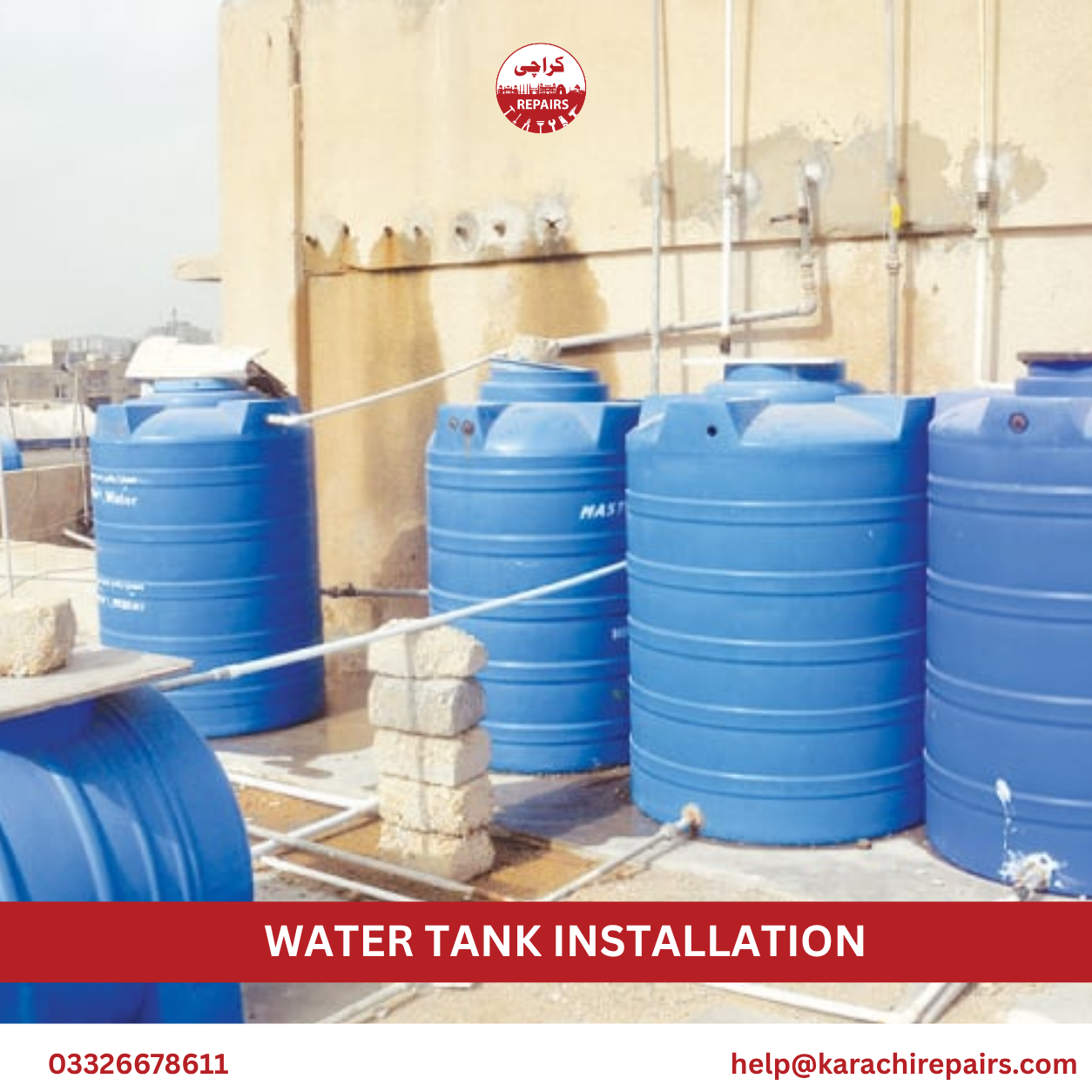
Book a Water Tank Installation Today
Whether you're setting up water storage for a new home, upgrading to a bigger tank, or finally replacing one that's outlived its usefulness, getting the installation done properly the first time saves you money and hassle for years to come. Our teams are already positioned across Karachi's major areas, ready to assess your site fast and install a system that actually fits your needs.
Call Karachi Repairs now at 0332-6678611, or explore our full range of Plumbing Services for anything else your home or office might need, from pipe leakage to water tank repair.
Frequently Asked Questions
The questions our Karachi customers ask most often, answered plainly.
How much does water tank installation cost in Karachi?
It depends on the tank type, capacity, and whether it's an overhead or underground installation. An underground tank naturally costs more due to excavation and structural work, while a standard rooftop plastic tank installation is more affordable. Call 0332-6678611 with your household size and rough requirements, and we'll give you a realistic estimate before scheduling a site visit.
How long does a typical water tank installation take?
A standard rooftop tank installation, including stand setup and fitting connections, is usually completed within a few hours in a single visit. Underground tank installation takes considerably longer due to excavation, structural work, and waterproofing curing time, often spanning a couple of days depending on tank size and site conditions.
What size water tank do I need for my household?
As a general guide, 500 to 700 litres suits a 1-2 person household, 1000 to 1200 litres works well for 3-5 people, and 1500 litres or more is recommended for larger households. We also factor in how reliable your area's water supply is when giving a final recommendation.
Is an underground tank better than a rooftop tank?
Neither is universally better — it depends on your priorities. Underground tanks offer larger capacity and better protection from heat, while rooftop tanks provide natural gravity-fed pressure without needing a pump. Many households choose to install both for a combination of large reserve capacity and consistent daily pressure.
Can you install a tank on any rooftop?
Most rooftops can support a standard-sized tank, but we always assess structural capacity first, especially for larger tanks or older buildings. A full tank is significantly heavier than an empty one, and we won't recommend a size that risks the rooftop's structural integrity.
Do you handle both the tank supply and installation?
Yes, we can supply the tank itself along with full installation, or install a tank you've already purchased if you prefer to source it yourself. Either way, our installation standards and fitting quality remain the same.
What areas of Karachi do you cover for water tank installation?
We have teams positioned across Gulshan, North Nazimabad, Defence, Clifton, PECHS, Malir, Korangi, North Karachi, Saddar, and several other zones, generally reaching your site within 30 minutes. If you're unsure whether we cover your area, call 0332-6678611 and we'll confirm right away.
Do you also repair existing water tanks?
Yes, if your current tank has cracks, leaks, or other issues rather than needing full replacement, our dedicated Water Tank Repair service handles that, along with the rest of our broader Plumbing Services.
Can you replace my old cement tank with a new plastic one?
Yes, we can safely dismantle and remove old concrete or asbestos tanks and replace them with lightweight, hygienic plastic or fibreglass alternatives.
Do you provide the tank stand or do I need to get it fabricated separately?
We provide end-to-end solutions, including the fabrication and installation of properly rated steel stands for your rooftop tank.
Is there a warranty on the installation work?
Yes, we provide a service warranty on all our fitting and plumbing work. If a joint leaks shortly after our installation, we fix it free of charge.
How do I know if my roof can handle a 1000-litre tank?
Our technicians perform a site assessment before installation to check the slab's structural integrity and recommend the safest placement and capacity.
Can I connect my RO filter directly to the new tank?
Absolutely. We can provide a dedicated, clean output line from the tank specifically routed to your kitchen's water filtration system.
Do you also clean tanks before transferring the connections?
Yes, if you are keeping an existing tank and adding a second one, we can thoroughly clean and disinfect the old one before integrating the system.
What is the best material for a tank in Karachi's heat?
Fibreglass and multi-layered, UV-stabilised HDPE plastic tanks perform best in Karachi, as they resist cracking and limit algae growth under harsh sunlight.
Areas We Cover
Across Karachi
Our plumbers are spread across the city rather than run from one workshop, which is how same-day response stays possible in Karachi traffic.