
Off-Grid Solar
System Setup
Off-Grid Solar System Setup gives you full power independence. An off-grid system runs on solar panels, a battery bank, and an off-grid inverter. It does not connect to the utility grid at all. You make your own power in the day, store it in batteries, and use it at night. This setup suits farmhouses, remote homes, construction sites, tubewells, and any place where grid power is weak, costly, or missing. At Karachi Repairs, we design and install off-grid systems around Karachi, and our nearest team usually reaches you within 30 minutes. This page explains how the system works, what it includes, how we size it, and what you should check before you buy. To see all our solar services, visit our main Solar Systems page.
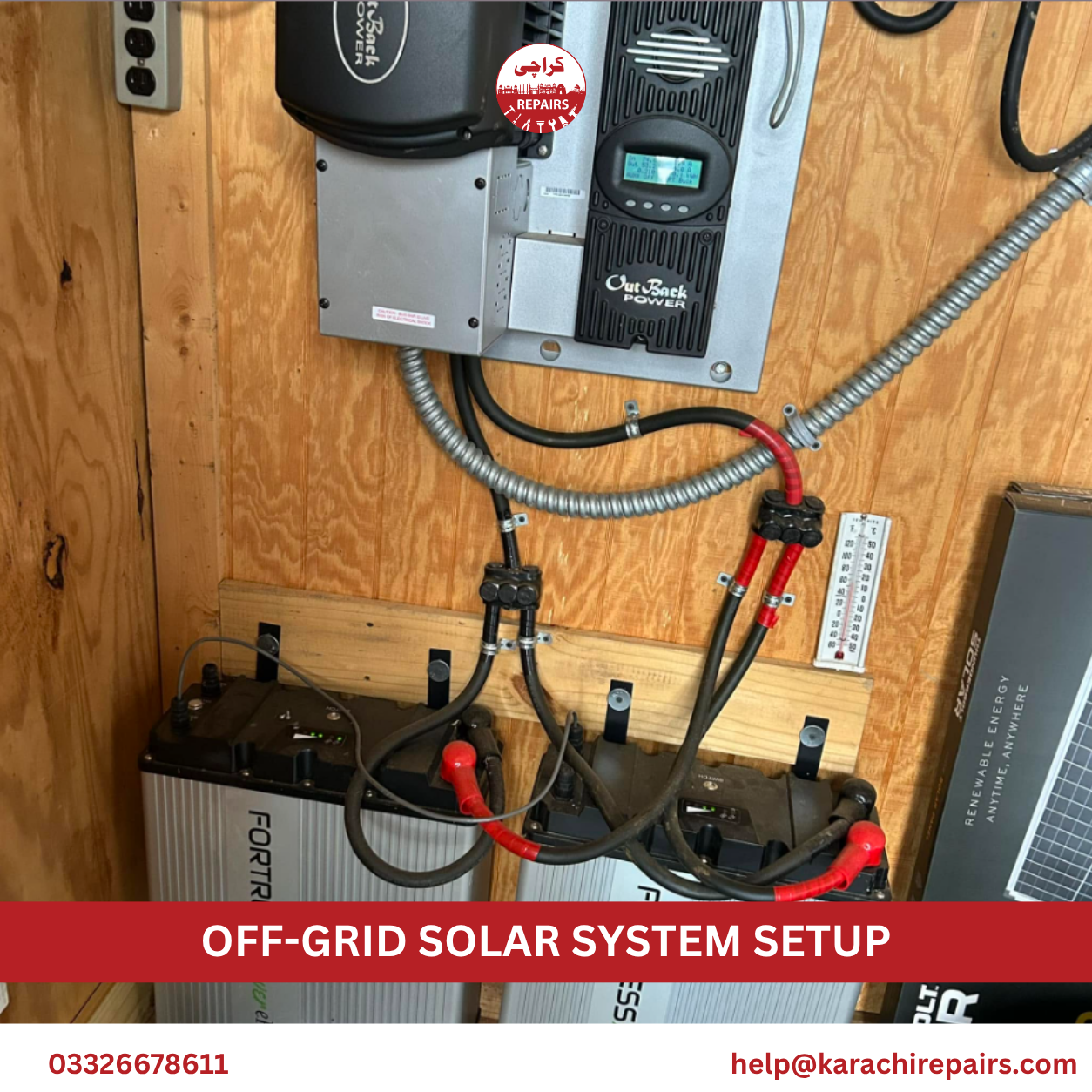
Off-Grid Solar System Setup in Karachi
Not every property in Karachi has a reliable grid connection. Farmhouses on the city outskirts often wait years for a line. Weekend huts, workshops, and warehouses may sit far from the nearest pole. Some owners also tire of long outages and rising bills and want a source they control.
An off-grid system solves these problems. It works on its own, so you do not depend on a utility, a meter, or a generator. The sun fills your batteries, and the batteries run your home.
This freedom comes with a responsibility. You must size the system correctly, because there is no grid to fill the gap. A small error in design leaves you without power at night or during cloudy days. For that reason, careful planning matters more here than in any other solar setup.
Our team handles the full job. We visit your site, study your load, design the system, and install it with proper wiring and protection. We also teach you how to use and care for it. Call us on 03326678611 to book a free site visit.
REQUEST A FREE VISIT
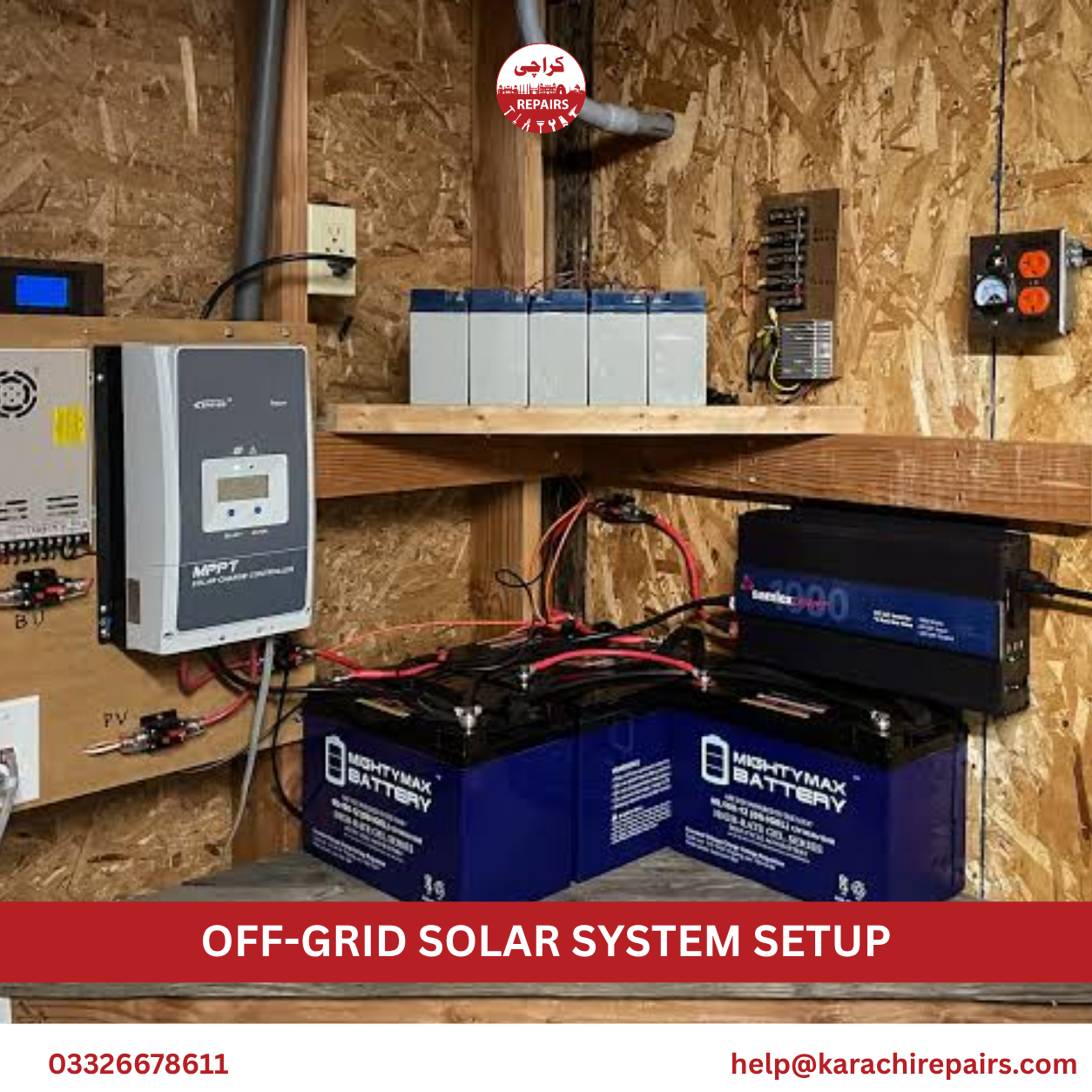
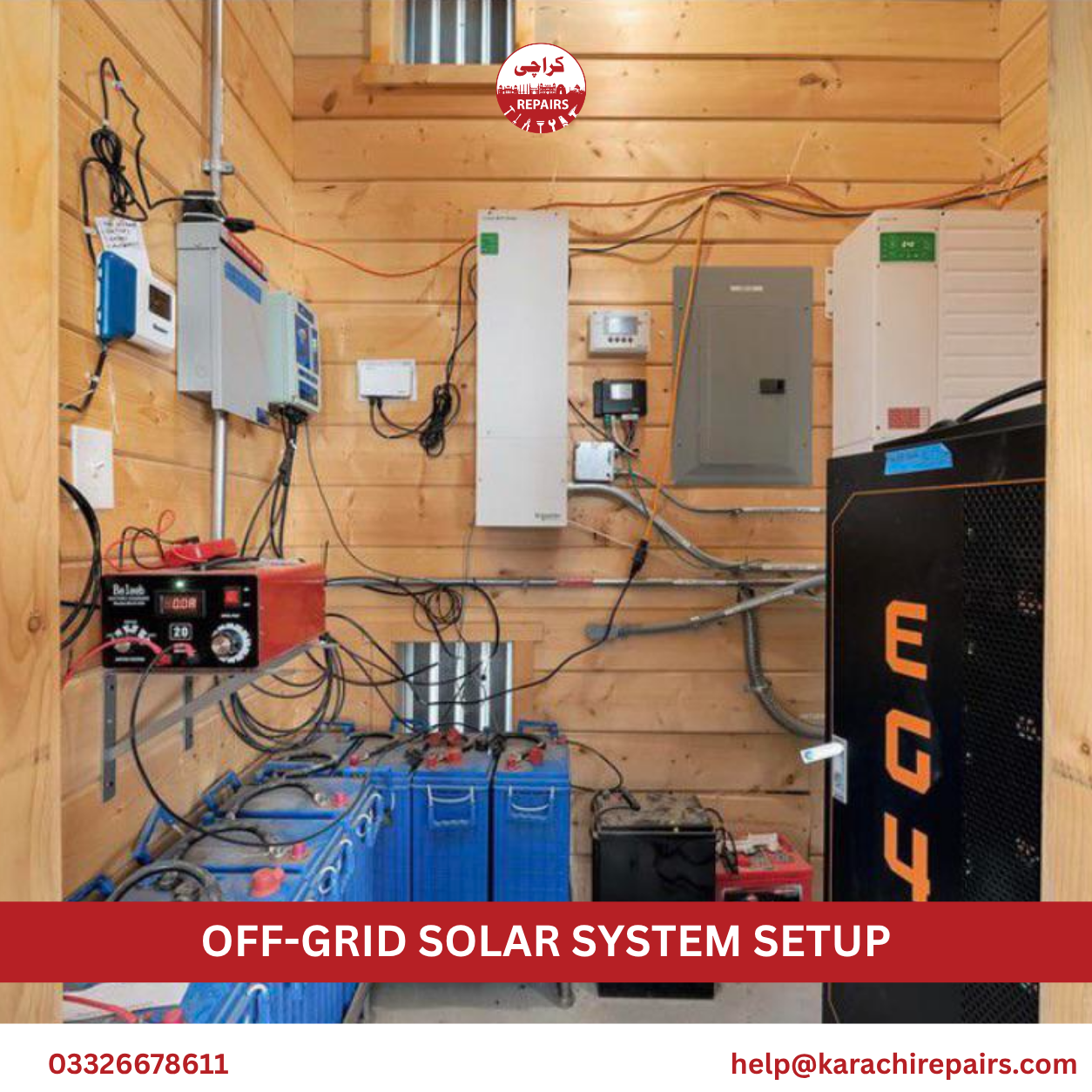
How an Off-Grid System
Works Day and Night
Let us follow a normal day at an off-grid farmhouse near Karachi.
At sunrise, the panels start to produce power. The charge controller sends that power to the batteries and, at the same time, to the loads that are running. By late morning, solar output grows, and the batteries charge faster.
Around noon, output peaks. This is the best time to run heavy loads such as a water pump, a washing machine, or an iron. The batteries keep charging while those loads run, if the system is sized well.
In the evening, output falls. The inverter now draws energy from the batteries to run the lights, fans, fridge, and TV. During the night, the battery bank carries the whole house.
By morning, the batteries have dropped to a safe level, and the cycle starts again. A well-designed system never drains the batteries below their safe limit. If clouds reduce solar input for a few days, a backup generator can recharge the bank.
Who Should Choose an
Off-Grid Solar System Setup?
Off-grid solar fits some situations better than others. Check whether any of these points match your case.
- Your property has no grid connection, or the connection is far away.
- Getting a new connection costs too much or takes too long.
- You own a farmhouse, a weekend home, or a hut outside the main city.
- You run a tubewell, a water pump, or a small farm operation.
- You need power at a construction site or a temporary location.
- You want full independence from outages and tariff changes.
- You currently depend on a diesel or petrol generator and want to cut fuel costs.
If you live in a covered area with a working grid connection, think carefully before you go fully off-grid. A hybrid system often costs less and gives the same comfort. We will explain both paths and let you decide.
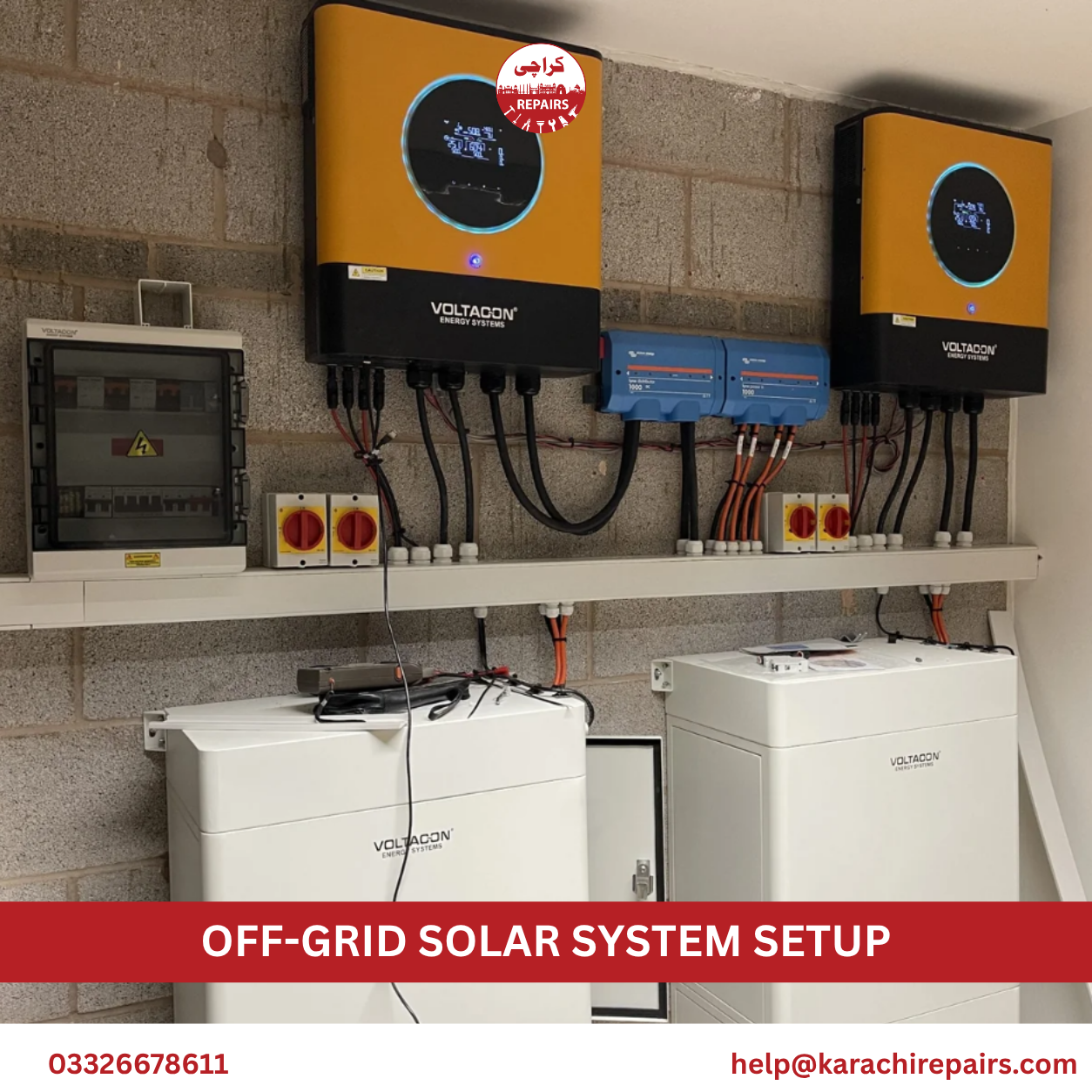
The Main Parts of an Off-Grid Solar System
An off-grid system has several parts. Each one has a clear job, and the quality of each part affects the whole system.
Solar Panels
Panels capture sunlight and produce DC power. We use mono-crystalline panels because they perform well in heat and use limited space well. Because off-grid systems depend fully on the sun, we often install slightly more panel capacity than a grid-tied system of the same load.
Charge Controller
The charge controller sits between the panels and the batteries. It controls the charging current and protects the batteries from overcharge. We prefer MPPT controllers, because they squeeze more energy from the panels, especially in changing light.
Battery Bank
The battery bank is the heart of the system. It stores the energy you use at night and on cloudy days. We install lithium or tubular batteries, depending on your budget and use. The bank size depends on your night load and your backup needs.
Off-Grid Inverter
The inverter turns battery power into AC power for your appliances. It must handle your peak load and the surge from motors, pumps, and compressors. We choose a pure sine wave inverter, since it protects sensitive electronics and runs motors smoothly.
Mounting Structure, Cables, and Protection
We use strong galvanized or coated steel structures, sun-rated DC cables, breakers, isolators, surge protection, and proper earthing. These parts keep the system safe and long-lasting.
Backup Generator Connection
If you want a generator as a last-resort source, we can add the connection and the automatic control. It starts only when needed, so you use very little fuel.
How We Size Your
Off-Grid Solar System
Sizing is the most important step in an off-grid setup. A grid-tied system can fall back on the utility. An off-grid system cannot. So we plan every watt carefully.
First, we list every appliance you plan to run, along with its wattage. We include lights, fans, fridge, TV, pump, air conditioner, and any machine. Next, we ask how many hours you use each item, in the day and at night. This gives your daily energy use.
Then we separate day loads from night loads. Day loads run on direct solar power. Night loads must come from the batteries, so they decide your battery size. After that, we decide how many cloudy days the system should cover. This is called autonomy. More autonomy means bigger batteries and a higher cost. We help you pick a balance that fits your budget and risk comfort.
Finally, we match the panel capacity, controller, inverter size, and battery bank to your numbers. We also add a safety margin, because real conditions always differ slightly from calculations. If your budget is tight, we can design in stages. You start with essential loads and add more panels and batteries later.
Choosing the Right Battery
for an Off-Grid System
Batteries make up the largest part of an off-grid budget, so this choice needs care. Two main types are common in Pakistan.
Lithium batteries cost more at the start. However, they last longer, need no regular maintenance, and handle deep daily use well. They are light and take less space. For homes that use a lot of power at night, lithium usually gives better value over the years.
Tubular lead-acid batteries cost less. They work well when you can accept a larger bank and some upkeep. They need water top-ups, regular checks, and a well-ventilated space. Their life is shorter, especially if you drain them deeply every day.
In an off-grid system, batteries cycle every single day. So their cycle life matters a lot. A cheap battery that fails in two years can cost more than a quality one that lasts much longer. We also check compatibility between the battery, the inverter, and the charge controller. Not every part works with every other part, so we match them carefully. This protects your warranty and your investment.
Our Off-Grid Solar System Setup Process
We follow a clear process so the job stays safe, neat, and on schedule. A home system often takes two to four days to install. Larger systems take longer. We confirm the timeline before we begin.
Site visit
First, our engineer checks the location, the roof or ground space, and any shading.
Load study
Next, we list your appliances and work out your day and night energy use.
System design
After that, we choose the panels, controller, inverter, and batteries and prepare a layout.
Quotation
We share a clear quote with the equipment list, so you know what you pay for.
Structure and panel installation
Our team builds the structure and fixes the panels firmly.
Battery room setup
We prepare a safe, ventilated place for the battery bank and connect it.
Wiring and protection
Then we run the cables, install breakers and isolators, and set up earthing and surge protection.
Testing and handover
Finally, we test every part, run your loads, and explain daily use in simple words.
Site Assessment: Roof, Ground, and Battery Space
Off-grid sites vary a lot. A farmhouse may have an open field. A hut may have a small roof. A site office may have a shed. We study the site carefully before we design anything. We also plan access for cleaning and service. You or a technician must reach the panels and batteries easily.
Panel location
We choose a roof or ground area with clear sunlight and enough space.
Shading
Trees, walls, and tanks can block the sun. Even a small shadow can cut output.
Direction and tilt
In Pakistan, panels usually face south at a tilt that suits the location.
Ground mounting
For open land, we build a strong frame with a firm foundation.
Battery room
Batteries need a cool, dry, ventilated, and secure space.
Cable route
A short and clean route reduces power loss and cost.
Security
At remote sites, we plan for theft protection, such as locked enclosures and anti-theft fasteners.
Common Mistakes People Make With Off-Grid Solar
Many off-grid problems come from avoidable mistakes. Keep these in mind before you sign any deal.
Undersizing the battery bank
This is the most common error. The system then runs out of power at night or on cloudy days.
Buying by price alone
A very low quote usually hides weak batteries, a poor inverter, or thin cables. You end up paying twice.
Skipping the load study
Without it, the system may not match your real use. Always ask how the installer chose the size.
Ignoring surge loads
Pumps and compressors need extra power at startup. A weak inverter trips under that load.
Mixing old and new batteries
Batteries of different ages or types in one bank fail early.
Using poor earthing
Weak earthing puts people and equipment at risk. Insist on proper earthing and protection.
Choosing an installer without local support
Off-grid systems need service. Pick a company that can reach you quickly.
Maintenance & Safety For Your Off-Grid System
An off-grid system needs a little more attention than a grid-tied one, because batteries need care. A few habits keep everything in top shape. Also, watch your battery level and daily solar production. A sudden drop in output often points to dirty panels, shading, or a fault. Early action saves money. If you notice a burning smell, unusual heat, or repeated shutdowns, turn the system off safely and call us right away.
Maintenance Tips for Your Off-Grid Solar System
Clean the panels every few weeks, and more often after dust storms. Use water and a soft cloth, and clean early in the morning.
Check the inverter display for error messages and low battery alerts.
Keep the battery room cool, dry, clean, and well ventilated.
For tubular batteries, check the water level on schedule and top up with distilled water.
Look for loose cables, damaged insulation, or signs of corrosion at the terminals.
Do not add heavy new loads without checking the system capacity.
Avoid draining the batteries to zero, because deep discharge shortens their life.
Schedule a professional inspection once or twice a year.
Safety Standards We Follow
How Karachi's Weather Affects Off-Grid Systems
Ways to Lower the Cost of Your System
Off-grid systems cost more than grid-tied ones, mainly because of batteries. The good news is that smart habits can bring the cost down without hurting comfort.
- Use efficient appliances. Inverter air conditioners, LED lights, and DC fans use far less power. A lower load means a smaller system.
- Shift heavy work to daytime. Run pumps and washing machines when the sun is strong, so you use less battery energy.
- Separate essential loads. Keep a short list of must-run items for cloudy days.
- Plan in stages. Start with a core system and add panels or batteries later.
- Choose the right autonomy. You may not need three days of backup if you keep a small generator for rare cases.
We review these options during the design stage. Often, a few small changes reduce the total cost by a meaningful amount.
Why Choose Karachi Repairs for Off-Grid Solar System Setup
You have many solar vendors to choose from, so what sets us apart? We focus on what matters after installation day.
- Local teams: We keep teams across Karachi, so support reaches you quickly.
- Careful sizing: We design every system from your real load, because off-grid has no room for guesswork.
- Clear quotes: You see the equipment list and the costs before work starts.
- Neat, safe work: We follow safe wiring, earthing, and battery practice.
- Honest advice: If hybrid suits you better, we say so.
- Support after installation: If something feels wrong, you call us, and we check it.
We also respect your property. Our team protects your roof or land, cleans the site, and removes waste after the job. You will not find loose cables or scattered tools when we leave.
Many customers also need related work, such as wiring, water pump setup, or lighting. Because we handle many home and business services, we can coordinate these jobs in one visit.
What Affects the Cost of an Off-Grid Solar System
People often ask for one fixed price. We understand why, but the cost depends on your needs. A site visit gives the most accurate quote.
These factors change the price:
- Daily energy use: More load means more panels, batteries, and a larger inverter.
- Battery type and capacity: Batteries usually form the biggest share of the budget. Lithium costs more than tubular.
- Days of autonomy: More backup days mean a bigger battery bank.
- Heavy loads: Air conditioners and pumps raise the inverter and panel size.
- Equipment brand and quality: Better brands often cost more, but they offer stronger support and longer life.
- Site conditions: Ground mounting, long cable runs, and remote locations add to the cost.
- Backup generator: An optional generator and its control add to the total.
Start with your needs, not with the lowest price. A cheap system with weak batteries often costs more later through repairs and replacements. We will show you two or three options, explain the trade-offs, and let you decide.
For a quick estimate, send us a list of your appliances and a photo of your site on WhatsApp at 03326678611.
Book Your Off-Grid Solar System Setup Today
Booking is simple. Call or message us, share your location, and tell us about your power needs. We arrange a site visit, prepare a design, and give you a clear quote. Once you approve it, we schedule the installation at a time that suits you.
Call 03326678611 or visit karachirepairs.com to learn more about our services. For other solar options, see our solar system services.
Take Control of Your Power Supply
An off-grid system gives you power that no outage can touch and no tariff can change. The key is a correct design and a careful installation. If you want a system that works well for years, choose a team that measures first and installs with care.
Karachi Repairs is ready to help in your area. Call 03326678611 today to book your Off-Grid Solar System Setup, and our nearest team will come to you.
Frequently Asked Questions
The questions our Karachi customers ask most often, answered plainly.
What is an off-grid solar system?
An off-grid solar system works without any grid connection. It uses solar panels, a charge controller, a battery bank, and an inverter to make, store, and deliver all your power.
How long does off-grid solar system setup take?
A typical home system takes two to four days. Larger systems take longer. The exact time depends on system size, site type, and wiring distance. We confirm the timeline before we start.
Can an off-grid system run my air conditioner?
Yes, if we size the system for it. Air conditioners use a lot of power, so they raise the panel count, inverter size, and battery capacity. Inverter air conditioners work best, since they use less energy.
How many batteries do I need?
It depends on your night load and the number of backup days you want. We calculate this from your appliance list during the site visit. We never guess the battery size.
What happens on cloudy or rainy days?
The panels produce less power, and the batteries carry more of the load. We design the battery bank to cover a set number of cloudy days. You can also add a small backup generator for long spells.
Which battery is better, lithium or tubular?
Lithium batteries last longer and need less care, but they cost more at the start. Tubular batteries cost less but need maintenance and have a shorter life. The better choice depends on your budget and daily use.
Do I need net metering for an off-grid system?
No. An off-grid system has no grid connection, so net metering does not apply. You use only the power you produce and store.
How fast can your team reach me in Karachi?
We keep teams in different areas of Karachi. In most cases, the nearest team reaches you within 30 minutes. Traffic and your exact location can change the time, especially in far outskirts.
How do I get a quote for my property?
Call us or send a list of your appliances and a site photo on WhatsApp at 03326678611. We then arrange a site visit and share a clear quote based on your real needs.
Karachi Repairs Teams Near You:
Reach in 30 Minutes
Off-grid users depend fully on their own system, so quick support matters even more. If your inverter shows an error or your battery bank misbehaves, you cannot wait days for help. For this reason, Karachi Repairs keeps teams in different areas of Karachi. Our nearest team can usually reach you within 30 minutes.
We serve many areas, including:
- DHA and Clifton
- Gulshan-e-Iqbal and Gulistan-e-Johar
- North Nazimabad and Nazimabad
- PECHS and Bahadurabad
- Saddar and Tariq Road
- Korangi and Landhi
- Malir and Scheme 33
- Gulshan-e-Maymar and North Karachi
- Federal B Area and Liaquatabad
Arrival time depends on traffic and your exact location. For far outskirts and farmhouse areas, travel may take longer, so please tell us your location when you call. We will give you an honest estimate.
If your area is not on the list, call us anyway. We cover most neighborhoods in the city.