
On-Grid Solar
Installation
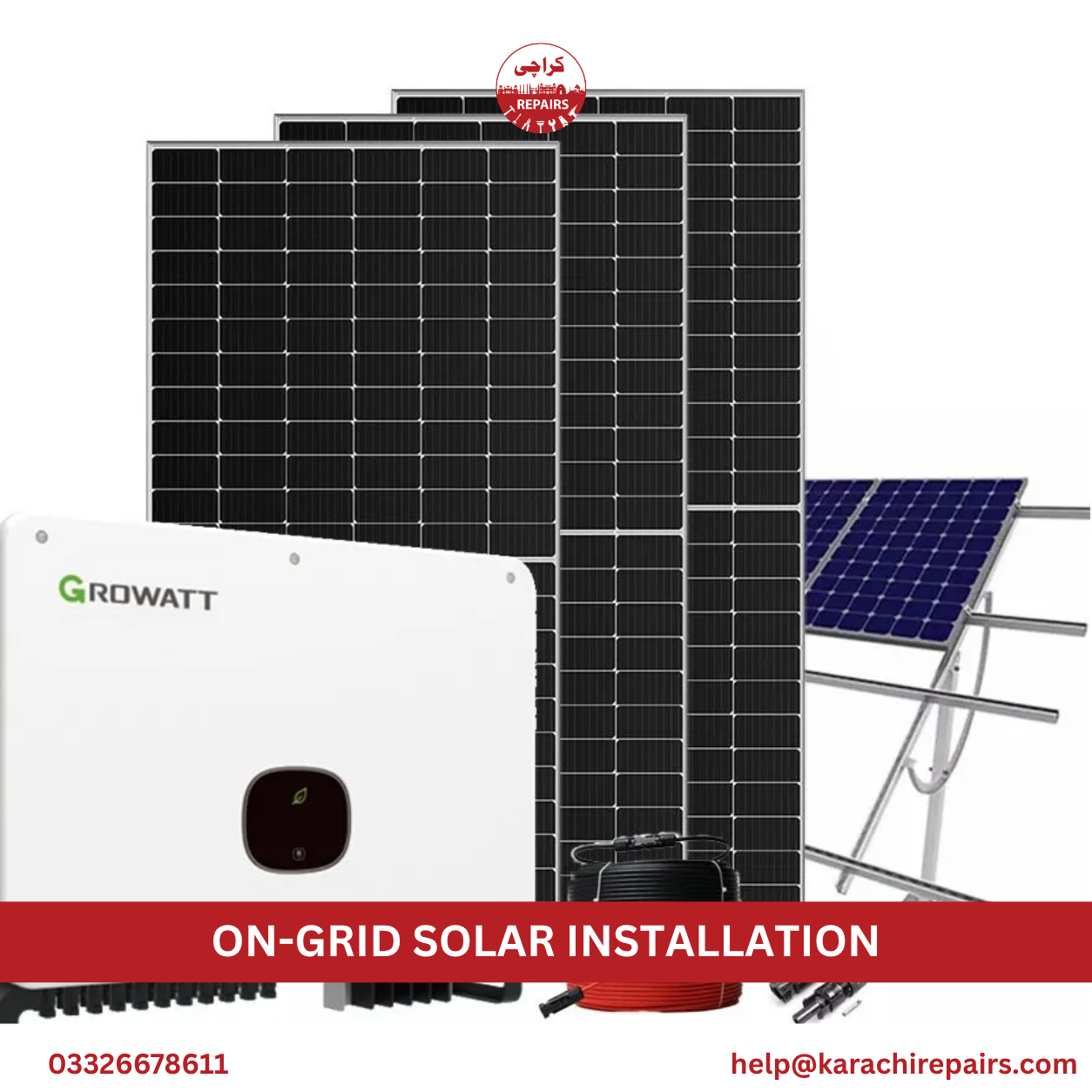
On-Grid Solar Installation is the most budget-friendly way to cut your electricity bill in Karachi. An on-grid system connects solar panels to the utility grid through a grid-tied inverter. It powers your home or business from the sun during the day and pulls from the grid when the sun goes down. There are no batteries, so the setup costs less and needs very little care. At Karachi Repairs, we design and install on-grid systems across the city, and our nearest team usually reaches you within 30 minutes. This page explains how the system works, who should choose it, how we install it, and what to check before you buy. To see all our solar services, visit our main Solar Systems page.
On-Grid Solar Installation in Karachi
Electricity bills in Karachi keep climbing. Summer months hurt the most, because air conditioners run for long hours. Many families now spend a large part of their monthly income on power. Business owners feel the same pressure, since every unit adds to their running cost.
An on-grid solar system attacks this problem directly. Your panels produce power while the sun shines, and your appliances use that power first. As a result, you draw fewer units from the grid and your bill goes down.
The design is simple. It has fewer parts than a hybrid system, so it costs less to buy and less to maintain. If your area has fairly stable power and your main goal is lower bills, this system often gives the best return.
Our team handles the full job. We visit your site, study your bills, plan the layout, and install the system with proper wiring and protection. We also guide you through the grid connection process. Call us on 03326678611 to book a free site visit.
REQUEST A FREE VISIT
How On-Grid Solar Works
Throughout the Day
Let us follow a normal day in a Karachi home with an on-grid system.
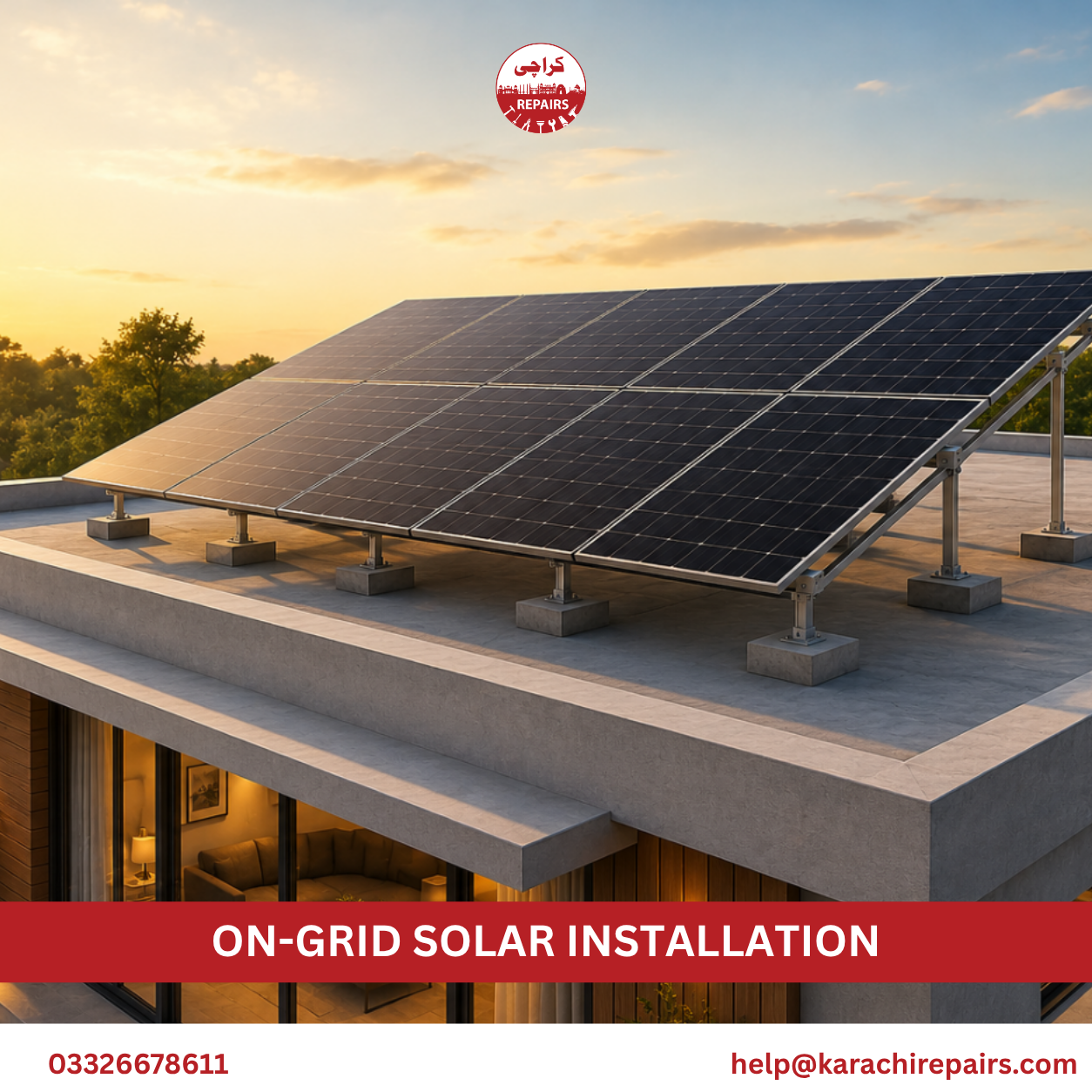
At sunrise, the panels start to produce small amounts of power. The grid still supplies most of your load. By mid-morning, solar output grows, and the inverter feeds more power into your home. The grid share drops.
Around noon, the panels reach peak output. In many homes, solar power now covers the full load, including the air conditioner. If the panels produce extra energy, it can go back to the grid.
In the afternoon, output stays strong for a few hours and then falls as the sun moves lower. In the evening, the grid takes over again. At night, the system produces nothing, and your home runs fully on grid power.
This pattern fits families and businesses that use most of their power in the daytime. Offices, shops, schools, and clinics benefit the most. Homes with heavy evening use can still save, but the savings depend on the net metering terms.
Who Should Choose
On-Grid Solar Installation?
On-grid solar works best in certain situations. Check whether these points match your case.
- Your area has fairly stable electricity with short or rare power cuts.
- Your main goal is to cut your monthly electricity bill.
- You use most of your power during the day, as shops and offices do.
- You want a lower upfront cost than a hybrid system.
- You prefer a system that needs very little maintenance.
- You have a roof or open space with good sunlight.
If long outages are your main problem, a hybrid system fits you better. During the site visit, we ask about your outage hours and daily routine. Then we give you an honest recommendation, even if it means a different system from the one you asked for.
The Main Parts of an On-Grid Solar System
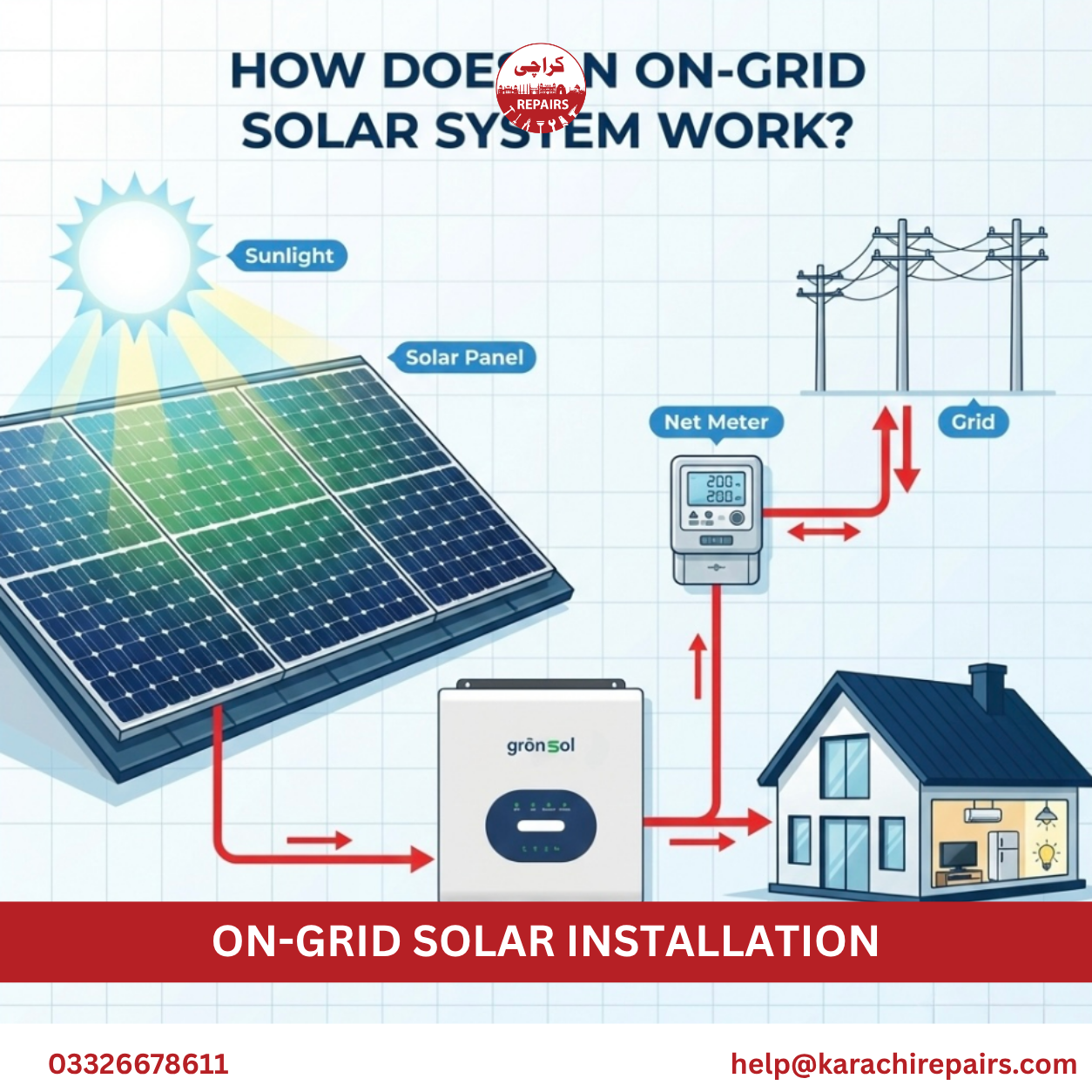
An on-grid system has fewer parts than other types, but each part matters. Here is what we install.
Solar Panels
Panels capture sunlight and produce DC power. We use mono-crystalline panels because they give strong output in limited space and handle Karachi's heat well. We choose the panel count based on your load and your roof area.
Grid-Tied Inverter
The inverter converts DC power to AC power and syncs it with the grid. It also shuts down safely if the grid fails. A good inverter offers high efficiency, stable output, and a clear display or app for monitoring.
Mounting Structure
The structure holds the panels at the right angle. It must resist strong wind and avoid damage to your roof. We use galvanized or coated steel that stands up to Karachi's salty air.
Cables and Connectors
Cables carry power from the panels to the inverter and then to your main board. We use sun-rated DC cables, proper connectors, and clean cable routing. Poor cables waste power and create fire risk, so we never cut corners here.
Protection Devices and Earthing
We install DC isolators, circuit breakers, surge protection, and proper earthing. These parts keep people and equipment safe from faults, surges, and lightning-related damage.
Meter and Monitoring
If you apply for net metering, the utility installs a bidirectional meter. We also set up inverter monitoring, so you can track daily output and spot problems early.
Why an On-Grid System Shuts Down
During a Power Cut
This point surprises many first-time buyers, so we explain it clearly. A standard on-grid system turns off when the grid goes down. It does this on purpose. The feature is called anti-islanding protection. Here is the reason. If the system kept pushing power into a dead grid, it could hurt utility workers who repair the lines. To prevent that risk, the inverter stops production the moment the grid fails.
So even on a bright, sunny day, your on-grid system gives no power during a cut. Your home goes dark like any other. If this is a problem for you, consider a hybrid system or a battery-ready inverter. If you face only short outages and you care mostly about bills, on-grid still makes sense. Many of our customers accept this trade-off because the lower cost matters more to them. We always explain this limit before you sign. You should never be surprised after the installation.
How We Size Your
On-Grid Solar System
Correct sizing decides how much you save. A system that is too small leaves you with high bills. A system that is too large may produce more than you can use or credit. First, we collect your electricity bills for the last twelve months, if you have them. These bills show your real usage and your peak months. Next, we list your major appliances, especially air conditioners, pumps, and machines.
Then we study your daytime load. On-grid systems give the best value when you use power while the sun shines. If your daytime use is low, we discuss net metering and other options. After that, we check your roof area and shading. The roof sets a limit on how many panels you can fit. Finally, we match the panel capacity and inverter size to your needs and your budget.
We also leave room for growth. If you plan to add an air conditioner or a new machine, tell us. We can design the system so you can expand later without replacing the main parts.
Net Metering and K-Electric
in Karachi
Net metering is a big part of the on-grid story. It lets you send extra solar energy to the grid and receive credit on your bill. In Karachi, the utility is K-Electric, and the process follows rules set by the regulator, NEPRA.
These rules can change from time to time. The credit rate, the approval steps, and the technical conditions may differ from what you read a year ago. For that reason, always check the current terms before you decide. Our team helps you in several ways. We design the system to meet the technical requirements. We prepare the details you need for the application. We also explain what to expect during inspection and meter installation.
We do not promise approval dates or credit rates, because those decisions belong to the utility and the regulator. What we promise is a correct installation and honest guidance. Even without net metering, an on-grid system still lowers your bill. It cuts your daytime grid use right away. Net metering simply adds extra value when you produce more than you consume.
Our On-Grid Solar Installation Process
We follow a clear process so the work stays safe, neat, and on schedule. A typical home system takes one to two days to install. Larger commercial systems take longer. We confirm the timeline before we begin.
Site visit
First, our engineer checks your roof, measures the space, and looks for shading.
Bill and load review
Next, we study your electricity bills and your appliance load.
System design
After that, we choose the panels and inverter and prepare the layout.
Quotation
We share a clear quote with the equipment list, so you know what you pay for.
Structure and panel installation
Our team builds the structure and fixes the panels firmly.
Wiring and protection
Then we run the cables, install breakers and isolators, and set up earthing.
Inverter setup
We connect the inverter to your main board and configure it for grid operation.
Testing and handover
Finally, we test every part, show you the monitoring screen, and explain daily use.
Roof and Site Assessment
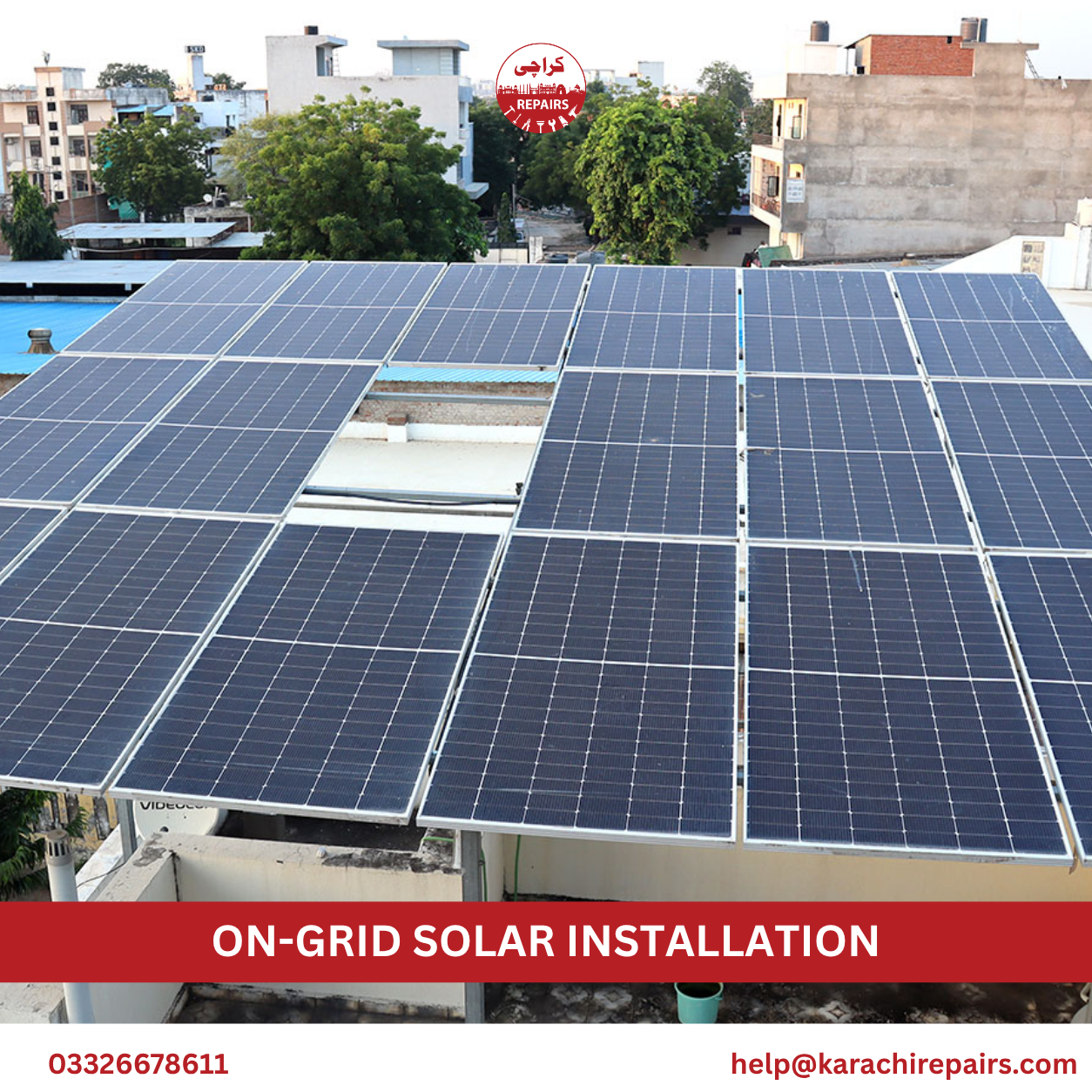
A good installation starts with a careful look at your roof. Panels need strong support, clear sunlight, and enough space. We check several points during the visit. We also plan for access. You or a technician must reach the panels for cleaning and checks. We leave walking space between rows, so maintenance stays simple.
Roof type
Concrete roofs are common in Karachi and work well. Sheet roofs need a different mounting method.
Roof strength
We confirm that the roof can carry the structure and the panels.
Shading
Water tanks, nearby buildings, and trees can block the sun. Even a small shadow can reduce output.
Direction and tilt
In Pakistan, panels usually face south at a tilt that suits the location.
Inverter location
The inverter needs a shaded, ventilated, and easy-to-reach spot.
Cable route
A short and clean route reduces power loss and cost.
Common Mistakes People Make With On-Grid Solar
Many solar problems come from avoidable mistakes. Keep these in mind before you sign any deal.
Buying by price alone
A very low quote usually hides weak panels, a poor inverter, or thin cables. You end up paying twice.
Expecting power during a cut
A standard on-grid system shuts down when the grid fails. Ask about this before you buy.
Skipping the load study
Without it, the system may be too small or too large. Always ask how the installer chose the size.
Ignoring shading
A small shadow can reduce the output of a whole row. Check the roof at different times of the day.
Using poor earthing
Weak earthing puts people and equipment at risk. Insist on proper earthing and protection.
Assuming net metering terms never change
Rules and rates can shift, so check the current policy.
Choosing an installer without local support
Solar systems need service. Pick a company that can reach you quickly.
Maintenance & Safety For Your Solar System
An on-grid system needs less care than a hybrid system, because it has no batteries. Still, a few habits keep it in top shape. Also, watch your daily energy numbers on the monitoring screen or app. A sudden drop in output often points to dirty panels, shading, or a fault. Early action saves money. If you notice a burning smell, unusual heat, or repeated shutdowns, turn the system off safely and call us right away.
Maintenance Tips for Your On-Grid Solar System
Clean the panels every few weeks, and more often after dust storms. Use water and a soft cloth, and clean early in the morning.
Check the inverter display for error messages and unusual alerts.
Keep the area around the inverter clear and well ventilated.
Look for loose cables, damaged insulation, or signs of corrosion.
Trim trees or remove objects that cast new shadows on the panels.
Do not add heavy new loads without checking the system capacity.
Schedule a professional inspection once or twice a year.
Safety Standards We Follow
How Karachi's Weather Affects Solar Panels
On-Grid Solar for Shops, Offices, and Factories
Businesses often gain the most from on-grid solar. They use power during the day, exactly when the panels produce the most. This match means they use almost all the solar energy directly and cut their bill sharply.
A shop can run its lights, fans, and air conditioners on solar during opening hours. An office can power its computers and cooling. A small factory can offset a large part of its machine load. In each case, the savings begin as soon as the system starts.
Commercial systems also bring a branding benefit. Many customers like to see a business that cares about clean energy and lower costs.
For larger systems, we plan the installation around your work schedule. We try to finish the heavy work outside peak hours, so your business keeps running. Tell us your timings, and we will adjust our plan.
Monitoring Your System And Tracking Savings
Modern grid-tied inverters come with monitoring features. You can view your solar output and daily production on a screen or a phone app, depending on the model.
This data helps in several ways. You see how much power your panels produce each day. You notice faults early, such as a sudden drop in output. You also learn when to run heavy loads, such as a water pump or washing machine, so you use more solar power directly.
Compare your electricity bills before and after installation. This simple check shows your real savings. If the savings look lower than expected, call us. We will inspect the system and look for the cause.
During handover, we set up the monitoring with you and explain each reading in simple words. You do not need technical knowledge to use it.
Why Choose Karachi Repairs for On-Grid Solar Installation
You have many solar vendors to choose from, so what sets us apart? We focus on what matters after the installation day.
- Local teams: We keep teams across Karachi, so support reaches you quickly.
- Proper design: We size every system from your real bills and load, not from guesswork.
- Clear quotes: You see the equipment list and the costs before work starts.
- Neat, safe work: We follow safe wiring, earthing, and protection practice.
- Honest advice: If hybrid suits you better, we say so.
- Support after installation: If something feels wrong, you call us, and we check it.
We also respect your property. Our team protects your roof, cleans the site, and removes waste after the job. You will not find loose cables or scattered tools when we leave.
Many customers also need related work, such as wiring checks or electrical repairs. Because we handle many home and business services, we can coordinate these jobs in one visit.
What Affects the Cost of On-Grid Solar Installation
People often ask for one fixed price. We understand why, but the cost depends on your needs. A site visit gives the most accurate quote.
These factors change the price:
- System size: More panels and a larger inverter raise the cost.
- Equipment brand and quality: Better brands often cost more, but they offer stronger support and longer life.
- Roof and structure type: Complex roofs need extra materials and labor.
- Cable length: A long distance between the roof and the inverter adds cost.
- Net metering needs: Extra equipment, such as a meter-related setup, and paperwork may add to the total.
- Single-phase or three-phase connection: This choice changes the inverter type.
Start with your needs, not with the lowest price. A cheap system with weak parts often costs more later through repairs and replacements. We will show you two or three options, explain the trade-offs, and let you decide.
For a quick estimate, send us your latest electricity bill and a photo of your roof on WhatsApp at 03326678611.
Book Your On-Grid Solar Installation Today
Booking is simple. Call or message us, share your area, and tell us about your power use. We arrange a site visit, prepare a design, and give you a clear quote. Once you approve it, we schedule the installation at a time that suits you.
Call 03326678611 or visit karachirepairs.com to learn more about our services. For other solar options, see our solar system services.
Lower Your Bills With The Right Solar Setup
An on-grid system gives you lower bills, a simple setup, and very little maintenance. The key is a correct design and a careful installation. If you want a system that works well for years, choose a team that measures first and installs with care.
Karachi Repairs is ready to help in your area. Call 03326678611 today to book your On-Grid Solar Installation, and our nearest team will come to you.
Frequently Asked Questions
The questions our Karachi customers ask most often, answered plainly.
What is an on-grid solar system?
An on-grid solar system connects solar panels to the utility grid through a grid-tied inverter. It powers your building from the sun during the day and uses the grid when solar power is not enough. It has no batteries.
How long does on-grid solar installation take?
A typical home system takes one to two days. Larger commercial systems take longer. The exact time depends on system size, roof type, and wiring distance. We confirm the timeline before we start.
Will my on-grid system work during a power cut?
No. A standard on-grid system shuts down when the grid fails, for safety reasons. If you need power during outages, a hybrid system with batteries is the better choice.
Do I need net metering for an on-grid system?
No. The system still lowers your bill without it. Net metering only lets you send extra energy to the grid for bill credits. The rules come from the utility and the regulator, and they can change, so we help you check the current terms.
Can an on-grid system run my air conditioner?
Yes, during sunlight hours, if we size the system for it. Air conditioners use a lot of power, so they affect the panel count and inverter size. During the site visit, we check which air conditioners you run and for how long.
Is on-grid cheaper than hybrid?
Yes, in most cases. An on-grid system has no batteries, and batteries make up a large part of a hybrid system's cost. However, it gives no backup during outages.
How fast can your team reach me in Karachi?
We keep teams in different areas of Karachi. In most cases, the nearest team reaches you within 30 minutes. Traffic and your exact location can change the time slightly.
Can I add batteries to my on-grid system later?
In some cases, yes. It depends on the inverter. A standard grid-tied inverter does not support batteries, so you may need to replace it. If you plan to add batteries later, tell us now, and we will suggest suitable equipment.
How do I get a quote for my home or business?
Call us or send your electricity bill and a roof photo on WhatsApp at 03326678611. We then arrange a site visit and share a clear quote based on your real needs.
Karachi Repairs Teams Near You:
Reach in 30 Minutes
Solar work needs quick support, not only a good installation. If your inverter shows an error or your output drops, you want help fast. For this reason, Karachi Repairs keeps teams in different areas of Karachi. Our nearest team can usually reach you within 30 minutes.
We serve many areas, including:
- DHA and Clifton
- Gulshan-e-Iqbal and Gulistan-e-Johar
- North Nazimabad and Nazimabad
- PECHS and Bahadurabad
- Saddar and Tariq Road
- Korangi and Landhi
- Malir and Scheme 33
- Gulshan-e-Maymar and North Karachi
- Federal B Area and Liaquatabad
Arrival time depends on traffic and your exact location. Even so, local teams cut travel time sharply compared with a single central office. When you call, tell us your area and street. We will send the closest team.
If your area is not on the list, call us anyway. We cover most neighborhoods in the city.