
Generator Cage
Fabrication in Karachi
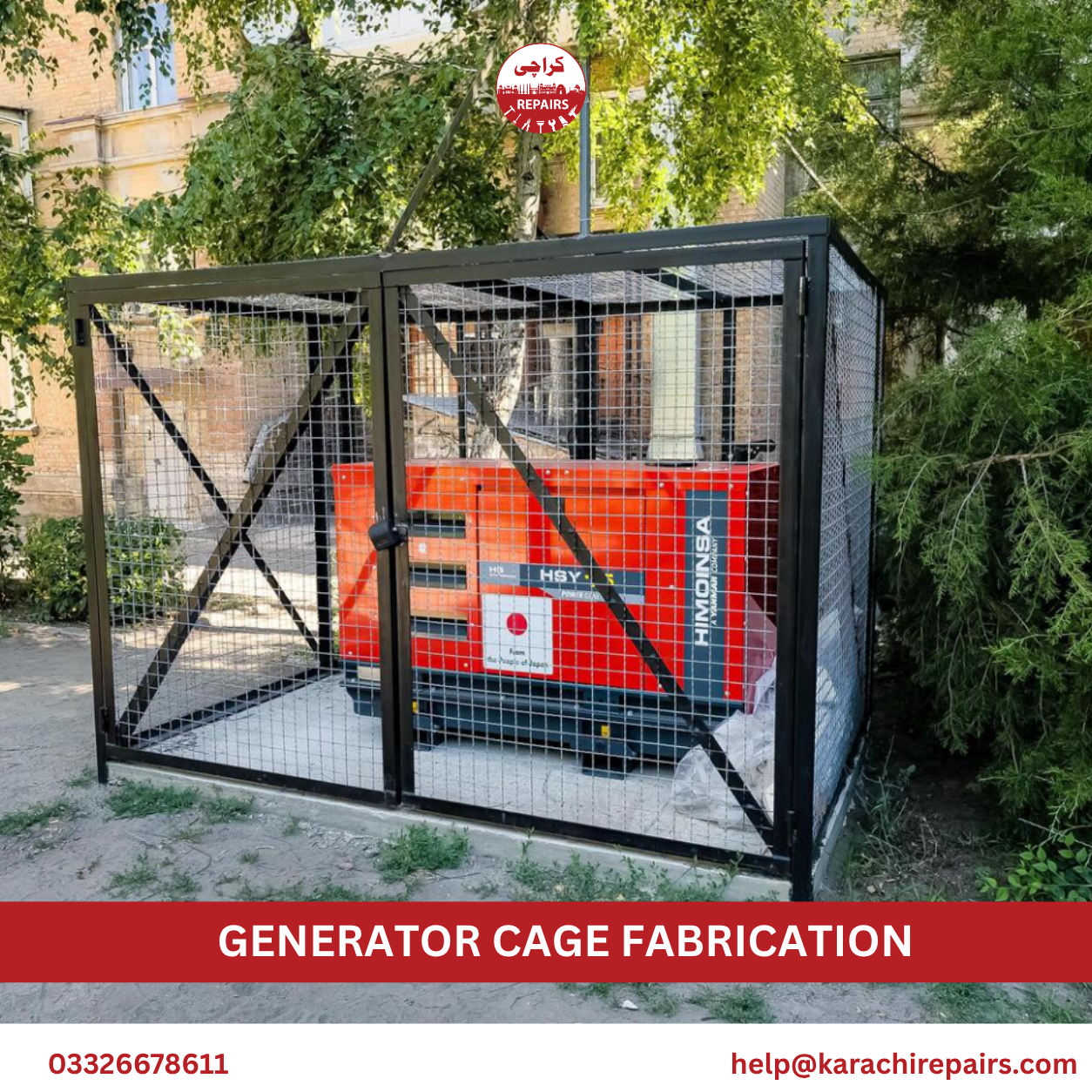
Generator cage fabrication protects one of the most expensive machines on your property. In Karachi, where load shedding and power cuts are a regular problem, a generator often runs for hours every day. It sits outside, faces the sun, rain and dust, and attracts thieves. A proper steel cage solves most of these problems at once.
Karachi Repairs designs, fabricates and installs generator cages and enclosures for houses, shops, offices, factories, hospitals, schools and residential buildings across the city. This work is part of our welding and fabrication service, so the same team handles measurement, steel work, painting and fitting.
This page explains the cage types, materials, ventilation rules and costs in plain words. If you want to talk right now, call 03326678611.
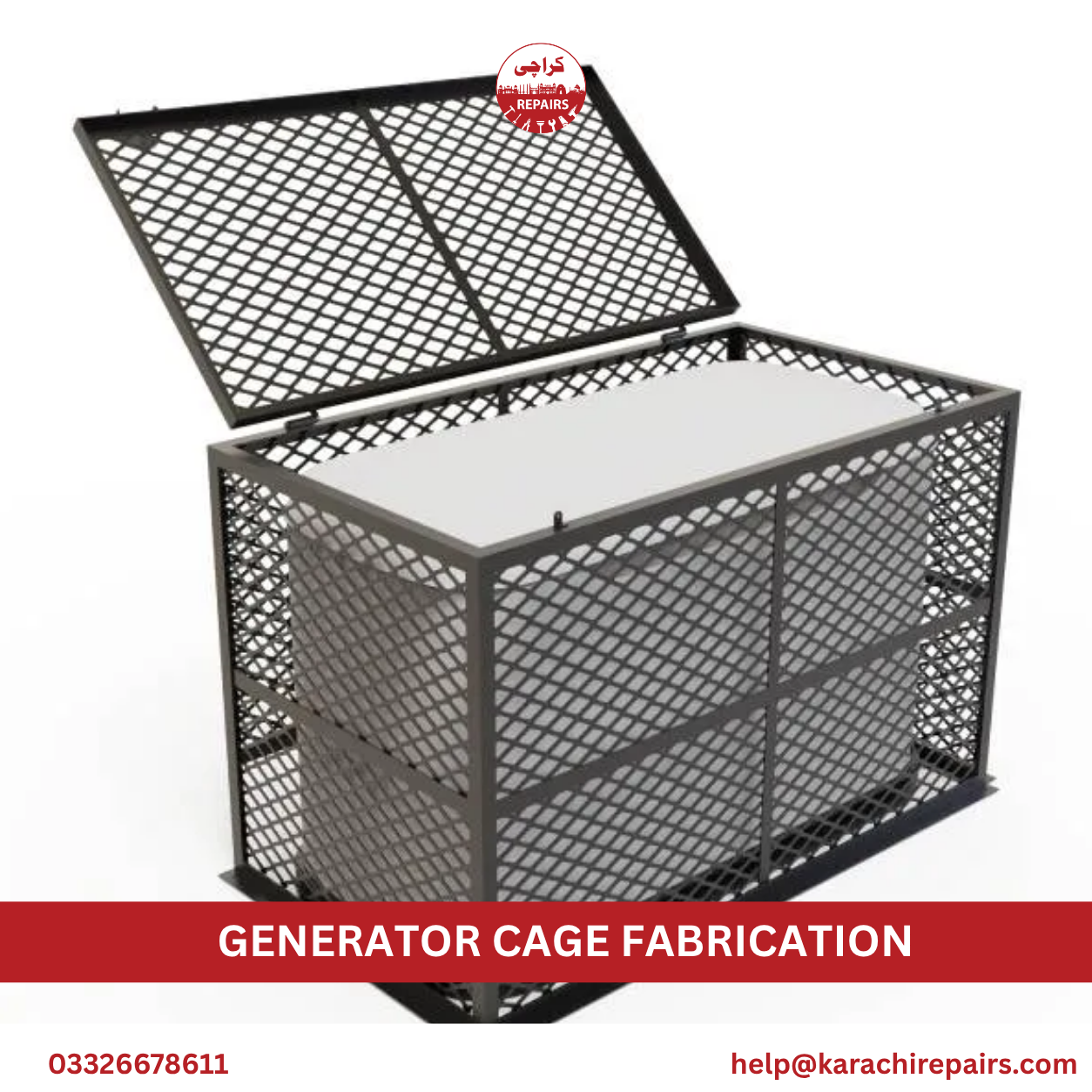
Fast Response Cage Fabrication
Need an open mesh cage, a weatherproof canopy, or a secure enclosure for your generator? Tell us the address and generator size. Our fabrication team usually reaches you within 30 minutes anywhere in Karachi.
REQUEST A FREE VISIT
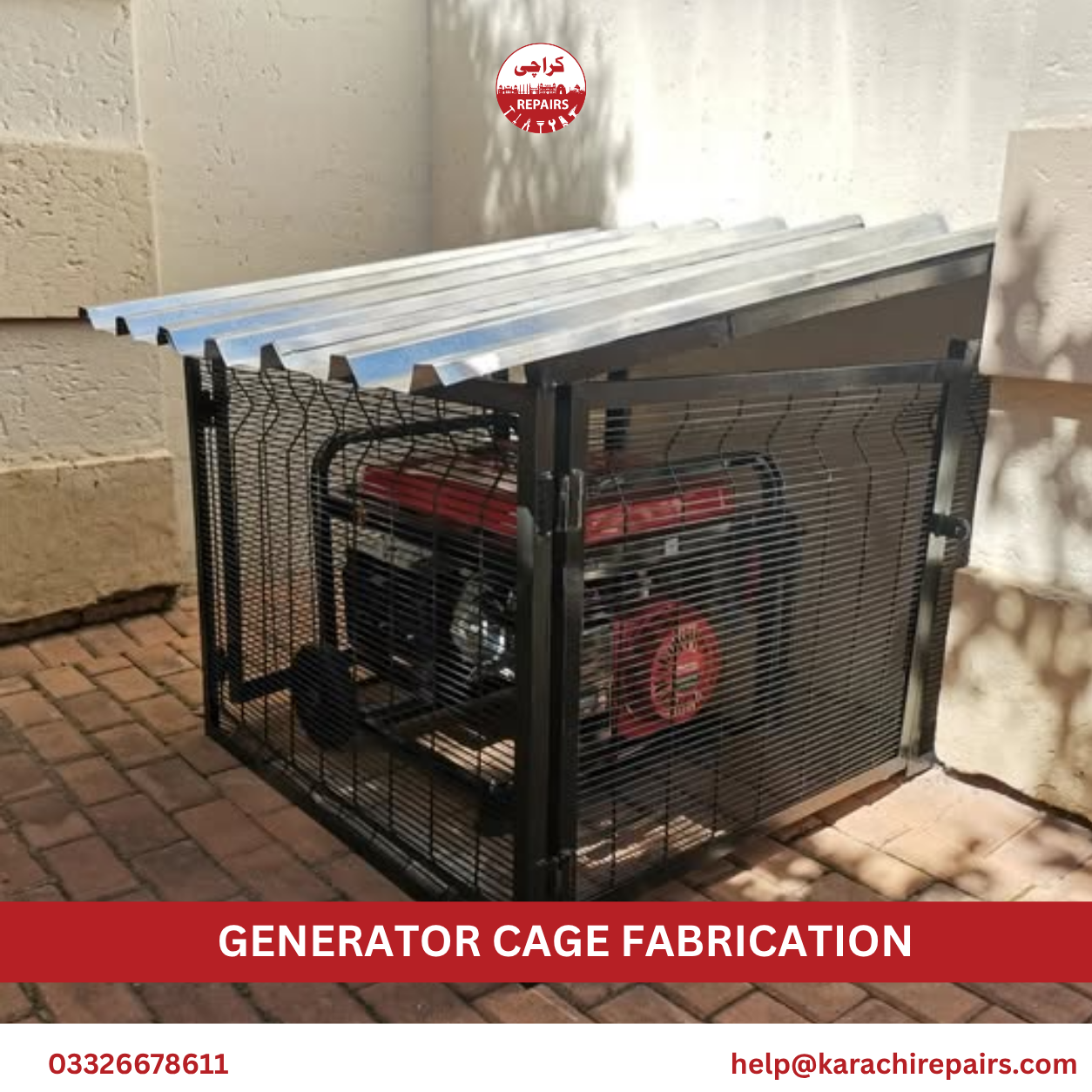
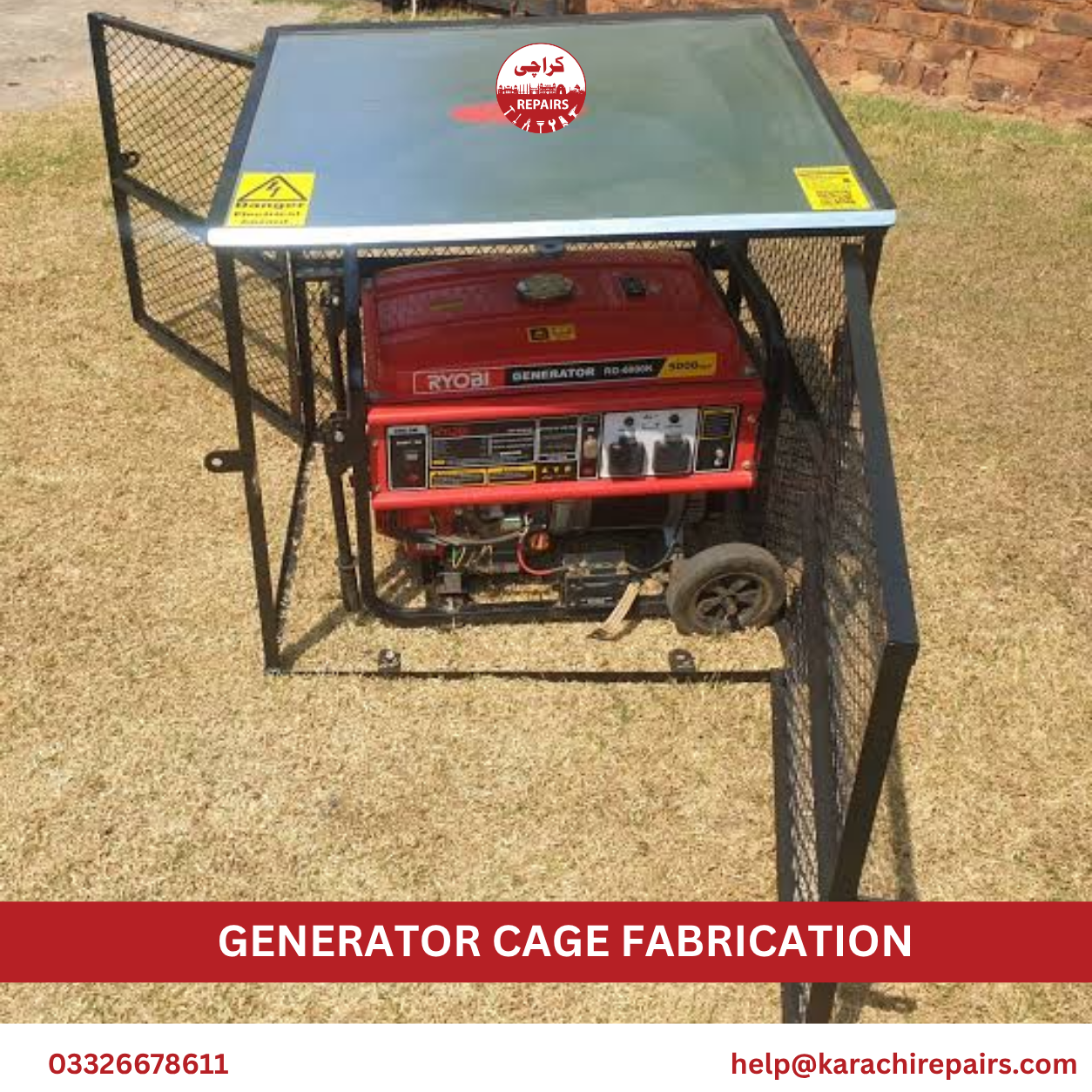
Why You Need A
Generator Cage in Karachi
Some owners skip the cage to save money. Later, they spend far more on repairs or replacement. These are the main reasons a cage is worth it.
Theft Protection: Generators, fuel, batteries and copper cables are all common theft targets. A locked steel cage makes theft slow, noisy and difficult. That alone stops many attempts.
Protection From Rain and Dust: Monsoon rain can damage the control panel, battery terminals and wiring. Dust clogs air filters and radiators. A cage with a roof and side cover keeps most of this out.
Protection From Heat and Sun: Direct summer sun raises the temperature around the machine. A shaded, ventilated cage keeps the surrounding air cooler, which helps the engine run better.
Safety for People and Children: A running generator has hot surfaces, moving parts and live electrical connections. A cage stops children, pets and passersby from touching them.
Noise Control: An enclosure with sound-absorbing lining lowers the noise level. This helps in residential areas, apartment buildings and offices, where neighbours often complain.
Neat Appearance: An open generator in the lane or courtyard looks messy. A tidy cage improves the look of your property and keeps cables and fuel cans in order.
Ventilation &
Security Features
Ventilation: The Most Important Part of the Design
Generators need a large amount of air to cool the engine and burn fuel. If the airflow is poor, the engine overheats. If the cage traps hot air, the machine loses power and its parts wear out sooner. We follow simple airflow rules while designing the cage:
- Fresh air enters from the side away from the radiator fan.
- Hot air leaves from the radiator side or the top.
- Openings are large enough for free airflow and not blocked by mesh that is too fine.
- Panels stay clear of the radiator and exhaust with proper spacing.
- Louvers face away from rain and direct dust where possible.
Always follow the clearance figures in your generator's manual or supplier's guidance. If your supplier gives specific airflow or spacing requirements, share them with us. We will build to them.
Security Features We Add: Theft is the main reason people build a cage. So, the security features matter a lot.
- Strong hinges with covered or welded pins
- Heavy-duty padlock hasps or built-in locks
- Mesh or bars that resist cutting
- Base frames anchored into concrete
- Small gaps that stop hands from reaching inside
- Separate locked compartments for batteries and fuel
A cage that can be lifted or unbolted easily gives little protection. We anchor the frame properly, so the whole cage cannot be moved without heavy effort.
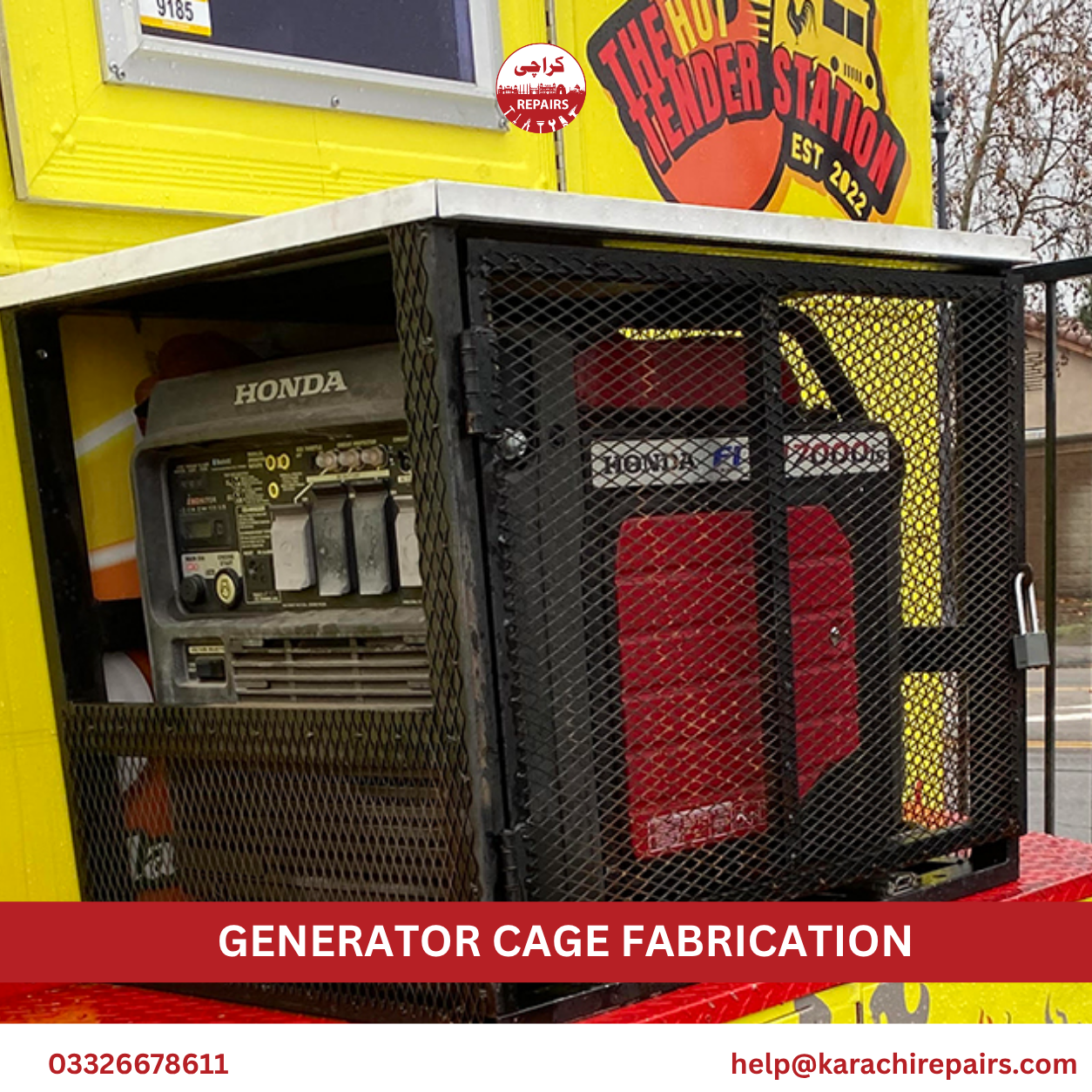
Materials We Use for Generator Cages
The right material keeps the cage strong and rust-free in Karachi's climate.
Mild Steel Angle & Tube Frames
Mild steel is the standard choice. It is strong and easy to weld. We choose the thickness based on the generator weight and the cage size.
Expanded Metal and Steel Mesh
These panels allow airflow and resist cutting. They also make the cage harder to break into than thin wire mesh.
Steel Sheet
Solid sheet is used for panels, doors and roofs on enclosed designs. Thicker sheet gives better strength and lower vibration noise.
Galvanized Steel
Galvanized steel resists rust better. It is a good choice near the coast or where water collects. We treat welded areas with extra protection.
Stainless Steel & Aluminium
These metals resist corrosion but cost more. They suit special locations, such as very humid or chemically exposed areas.
Insulation & Acoustic Lining
For noise control, we use sound-absorbing lining that suits engine heat and vibration. Materials must resist heat, so ordinary foam is not suitable.
Design Choices &
Safety Considerations
Open Cage or Enclosed Canopy: Which One Should You Pick?
This is the first question most owners ask. The right answer depends on your main concern. Pick an open mesh cage with a roof if theft and cost are your main worries and you have a covered or shaded spot. Airflow is excellent, and the price stays low. Pick an enclosed sheet metal canopy if the generator stands in the open and faces rain and dust every day. Pick an acoustic enclosure if noise upsets your family, your tenants or your neighbours.
If you cannot decide, our team can compare the options on site and explain the cost and benefit of each.
Protecting Fuel and Batteries
Thieves often target fuel and batteries before the generator itself. A diesel tank and a battery are easy to carry and easy to sell. We build a separate locked compartment for the battery and, where possible, for the fuel tank or cans. These compartments keep the parts safe and also keep them away from hot surfaces. The battery stays reachable for service, and the fuel stays easy to fill. This small detail saves a lot of trouble.
Fire Safety and Electrical Considerations
A generator cage sits close to fuel, heat and electricity. Safety must be part of the design. We keep panels and paint away from the exhaust and hot surfaces. We leave space around the machine as advised by the manufacturer. We keep fuel storage separate from hot and electrical parts. Cable entry points are sized and sealed properly so wires do not rub on sharp edges.
Proper earthing of the generator and cage is an electrical job. We recommend having a qualified electrician check it. We can leave the required openings and points during fabrication.
Types of Generator Cages & Cost Factors
Each site has different needs. Here are the designs we build most often. We do not give a fixed price without seeing the generator and the site. Two cages for the same kVA can cost very different amounts. These are the main factors.
Open Mesh or Grill Cage
This type uses steel angle frames with mesh, bars or expanded metal panels. Air passes through easily, so cooling is excellent. It gives strong theft protection at a lower cost. It offers limited protection from rain and noise unless a roof is added.
Cage With Roof Cover
Here, the mesh cage carries a sloped roof made of metal sheet or polycarbonate. The roof keeps rain off the machine while the sides stay open for airflow. This is a popular choice for houses and small shops.
Sheet Metal Enclosure
This design has solid steel panels on the walls and roof, with louvered openings for air. It protects better from weather and dust. The louvers must be sized and placed properly for airflow.
Acoustic Enclosure
Acoustic enclosures use insulated panels and sound-absorbing lining to reduce noise. They are heavier and more complex. They suit residential blocks, hospitals, clinics and offices.
Weatherproof Canopy
A canopy is a fitted housing that covers the generator closely and resists rain. It has service doors and vents. It is common for standby generators kept outdoors for long periods.
Rooftop Generator Cage
Some buildings place the generator on the roof or a terrace. The cage must be light enough for the structure and strong against wind. We plan the base, load path and access carefully for these jobs.
Skid or Trolley-Mounted Cage
If you need to move the generator, we can fabricate a cage on a skid or trolley base. This suits construction sites and temporary setups.
Generator Size
Larger generators need bigger cages, thicker steel and heavier doors. The price rises with the size and weight.
Cage Type
An open mesh cage costs less than a sheet metal enclosure. An acoustic enclosure with insulation costs the most.
Steel Thickness and Material
Thicker steel, galvanized sections and stainless steel raise the price. They also give longer life and better security.
Security Level
Extra locks, reinforced doors and anti-cut mesh add to the cost. You can choose the level that fits your risk.
Roof and Weather Protection
Adding a roof, gutters or rain guards increases the price but protects the machine much better.
Finish
Powder coating and heat-resistant paint cost more than simple enamel paint.
Site Conditions
Rooftop installations, tight access and long transport distances need more time and labour.
For a clear estimate, call 03326678611 and book a site visit.
Why Choose Karachi Repairs For Generator Cage Fabrication?
Karachi has many fabricators. Here is what you get when you work with us.
Cages Built Around Your Machine
We measure your generator and design the cage around it. There are no rough guesses and no forced fits.
Airflow Comes First
We treat ventilation as a design priority, not an afterthought. A protected generator that overheats is not protected at all.
Clean Welding and Strong Build
Our welds are ground and painted for a neat finish. The frame is built to handle vibration, weather and daily use.
Local Experience
We work in Karachi every day. We know the weather, the theft risks and the access issues in different areas.
Support After Installation
If a lock, hinge or panel needs adjustment, call us. We come back and fix it.
If you also need gates, sheds or railings, you can see our full range of welding and fabrication services.
Common Generator Cage Mistakes to Avoid
We often fix cages that were built badly. These mistakes appear again and again.
Poor Ventilation
A fully closed box traps heat. The engine overheats and loses power. Enough airflow is essential.
Thin Steel and Weak Welds
Thin sections vibrate, crack and rust quickly. They also give little security.
No Service Access
If the mechanic cannot reach the oil filter or battery, servicing gets skipped. That shortens the life of the generator.
Blocking Exhaust or Radiator
Panels too close to the exhaust can burn or warp. Panels too close to the radiator restrict cooling. Clearances must be planned.
Wrong Paint
Ordinary paint peels near hot areas. Heat-resistant paint is needed there.
Weak Anchoring
An unanchored cage can be moved or lifted. It also shifts under vibration. Proper anchoring solves both problems.
Our Generator Cage Fabrication Process
We follow the same clear steps on every job. It keeps the work organised and the result neat.
From Measurement To Final Inspection
Site Visit and Measurement
Our team visits your site and measures the generator. We check the available space, the ground, the wall positions and the access path. We also note where the exhaust and air will flow.
Design and Planning
We propose a cage type that fits your generator, budget and security needs. We explain the airflow plan, door positions and finish options. You approve the design before we begin.
Material Selection and Cutting
We select the steel sections, mesh and sheet. Each piece is cut to size, so the frame fits the generator well.
Fabrication and Welding
The frame, panels, doors and roof are welded in our workshop or on site. Welds are ground smooth. We check the fit of doors and hinges before moving to the next stage.
Rust Protection and Painting
We remove rust and oil, apply a primer and finish with a coating that suits the site. Good preparation protects the cage from Karachi's humid, salty air.
Installation and Anchoring
We place the cage around the generator or position the generator inside. The frame is anchored to the base. We check level, door movement and clearances.
Final Inspection
We test the doors and locks, confirm the airflow and inspect the exhaust path. We clean the site and walk you through the finished work.
Rust Protection for Karachi's Climate
A generator cage sits outside all year. Rain, humidity and salt air work on it every day. Fuel spills and engine heat add more stress. Our protection process has these steps:
- Clean the steel of rust, oil and scale.
- Apply an anti-rust primer with extra coats at welds and edges.
- Use heat-resistant paint near the exhaust and radiator areas.
- Seal open pipe ends and edges where water can collect.
- Raise the base slightly or add drainage so water does not sit.
Powder coating is available for detachable panels and doors. It gives a hard finish that resists chipping.
How to Maintain Your Generator Cage
A generator cage needs simple care. A regular routine keeps it strong and rust-free.
- Wash off dust, oil and salt from the cage regularly.
- Check the hinges, locks and bolts and tighten loose ones.
- Touch up chipped paint before rust starts.
- Keep the vents clear of leaves, dust and stored items.
- Look under the cage for standing water after rain.
- Repaint the cage every few years, depending on exposure.
Never store fuel cans, cloth or other items inside the cage. They block airflow and add fire risk.
Our Teams Reach You Within 30 Minutes Across Karachi
When a generator cage is broken or the generator is at risk, waiting for days is not an option. Karachi Repairs keeps teams in different areas of the city. When you call, we send the nearest team, and they can reach you within 30 minutes for a site visit or urgent work.
This helps you get quick measurements and faster quotes. It also helps if a cage is damaged by a storm or an attempted theft. We cover areas such as:
- DHA and Clifton
- Gulshan-e-Iqbal and Gulistan-e-Jauhar
- North Nazimabad and Nazimabad
- PECHS and Bahadurabad
- Saddar and Karachi Cantt
- Korangi and Landhi
- Malir and Airport area
- Federal B Area and North Karachi
- SITE Industrial Area
- Scheme 33 and Bahria Town Karachi
Your area is not on the list? Call 03326678611 and ask. We will tell you honestly how soon a team can reach you.
Installation & Maintenance Everything You Need To Know
Repair and Modification of Existing Generator Cages: Not every job is a new cage. Many Karachi properties already have a cage that is rusted, too small or badly designed. We repair rusted frames, broken doors, loose hinges and damaged mesh. We can add a roof, improve ventilation, fit a stronger lock or extend the cage for a bigger generator. If the old cage is beyond saving, we tell you honestly and build a new one.
What to Expect on Installation Day: Our team arrives at the agreed time and checks the marked position. We prepare the base, place the cage and confirm the clearances around the machine. Then we anchor the frame, fit the doors and test the locks. Some welding and drilling may happen at your site, so please keep fuel and flammable items away from the work area. We cover nearby surfaces to protect them from sparks. Once the work is complete, we clean the area and show you how everything opens and closes.
Planning for a Future Generator Upgrade: Many owners buy a larger generator after a few years. If the cage is built too tight, it becomes useless the day you upgrade. Tell us if you plan to move to a bigger machine. We can leave extra length and height in the frame, or build the cage in bolted sections that can be extended later. This costs a little more now and saves you a full rebuild later.
Neighbours, Societies and Local Rules: Generators create noise and exhaust, so neighbours sometimes complain. Some societies and buildings also have rules about where a generator can stand and how it must be enclosed. We suggest you check with your society or building management before starting. A well-ventilated enclosure with sound lining and a properly directed exhaust helps avoid problems. If you need dimensions or drawings to share, we can provide them.
Who We Build Generator Cages For: Homeowners want to protect the generator from theft and rain. Shop and office owners want a neat, secure setup at the back or roof. Factory owners need heavy-duty enclosures for large generators. Hospitals, schools and clinics need reliable, quiet backup power in safe housing. Apartment buildings and societies want tidy, secure cages that do not disturb residents. Whatever the property, our approach stays the same: measure properly, build strongly and finish well.
Book Your Generator Cage Fabrication Today: A generator is a costly machine, and you depend on it during power cuts. It deserves proper protection. Karachi Repairs gives you a clear plan, honest advice and careful workmanship from the first measurement to the final coat of paint. Call 03326678611 or visit karachirepairs.com to book your site visit. Our nearest team can reach you within 30 minutes.
Frequently Asked Questions About Generator Cage Fabrication
How much does generator cage fabrication cost in Karachi?
The cost depends on the generator size, cage type, steel thickness, security level and finish. We give a clear estimate after measuring your generator. Call 03326678611 to book a visit.
How long does it take to make a generator cage?
Small cages can be ready in a few days. Larger or acoustic enclosures take longer. We share a timeline after the site visit.
Can you make a cage for my exact generator model?
Yes. We measure the machine and design the cage around it. Sharing the make, model and kVA rating helps us plan faster.
Will the cage make my generator overheat?
Not if it is designed properly. We plan the airflow, radiator clearance and exhaust path so the engine gets enough cool air and hot air can leave.
Can a generator cage reduce noise?
An acoustic enclosure with sound-absorbing lining can reduce noise noticeably. A basic mesh cage will not. Tell us your noise concern and we will suggest a suitable option.
How do you protect the cage from rust?
We clean the steel, apply an anti-rust primer and finish with a suitable paint or coating. We also seal open pipe ends and use heat-resistant paint near hot areas.
Can you make a rooftop generator cage?
Yes. We design it to suit wind load and the roof structure. We coordinate with your engineer or contractor if the roof strength needs to be checked.
Do you serve areas across Karachi?
Yes. Karachi Repairs has teams placed in many areas of the city, and in most areas a team can reach you within 30 minutes. Call us with your location to confirm.
Areas We Cover
Across Karachi
When a generator cage is broken or the generator is at risk, waiting for days is not an option. Our teams can reach you within 30 minutes in these areas.