
Solar Panel Structure
Fabrication in Karachi
Karachi's electricity situation has pushed more homes, shops, offices and factories toward solar power than ever before, and every single one of those solar systems depends on something people rarely think about until it fails: the structure the panels sit on. A solar panel is only as good as the frame holding it up. Get the structure wrong, and you end up with panels that shake in strong wind, sag over time, or worse, come loose during a storm and damage themselves along with whatever is underneath them. At Karachi Repairs, solar panel structure fabrication is one of our most requested welding jobs, and we treat it with the seriousness it deserves.
Solar panel structures fall under our broader Welding and Fabrication Service, since a proper structure needs the same level of measuring, welding and finishing skill as any other heavy duty metal work. Whether you need a rooftop mounting frame for a home solar system, a ground mount structure for a larger commercial installation, or a custom elevated frame for a factory rooftop, our fabricators design and build it specifically for your site, your panel count, and Karachi's weather conditions.
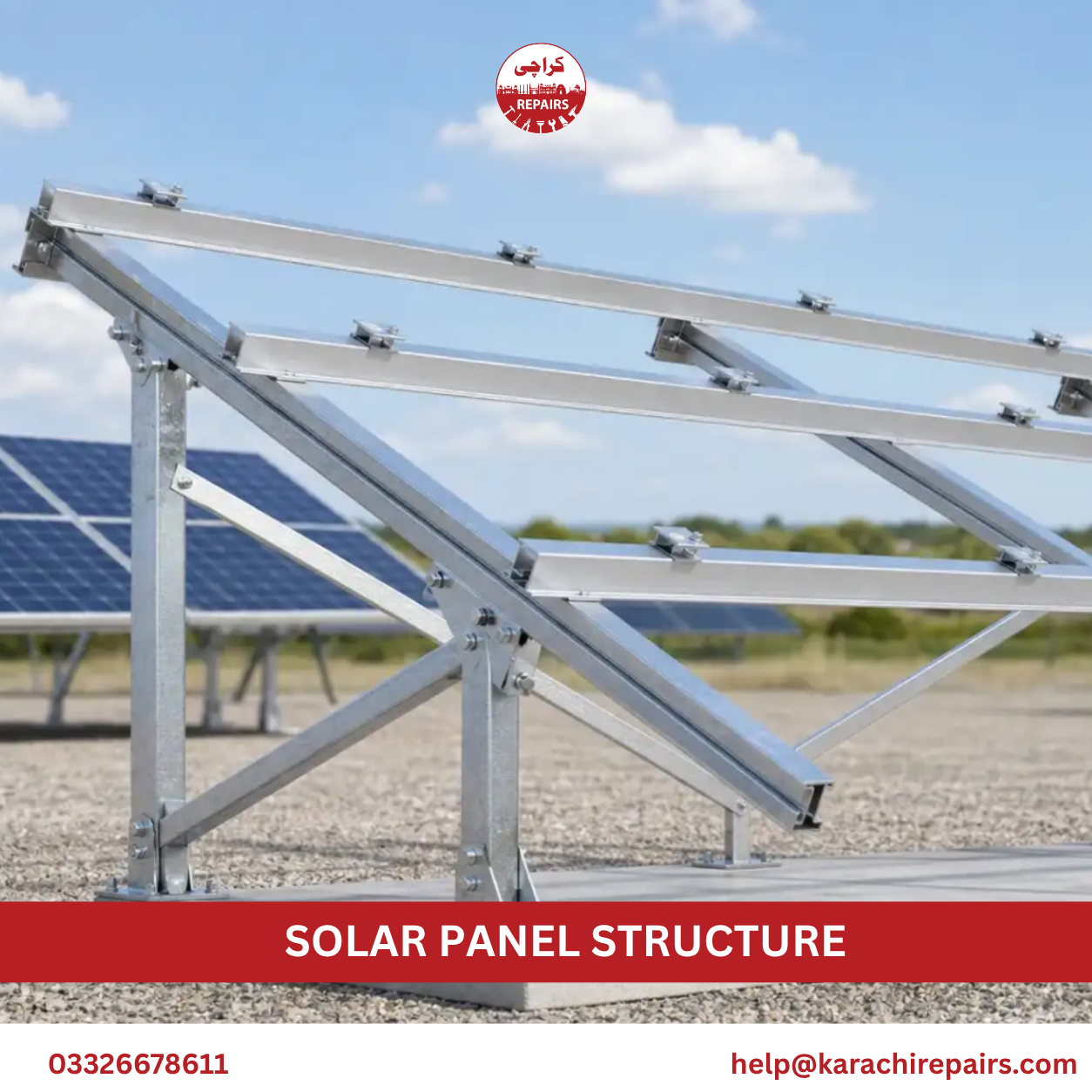
Fast Turnaround Structure Fabrication
Need a custom elevated frame, ground mount structure or rooftop installation for your solar setup? Tell us the address and panel count. Our fabrication team usually reaches you within 30 minutes anywhere in Karachi to inspect the site.
REQUEST A FREE VISIT
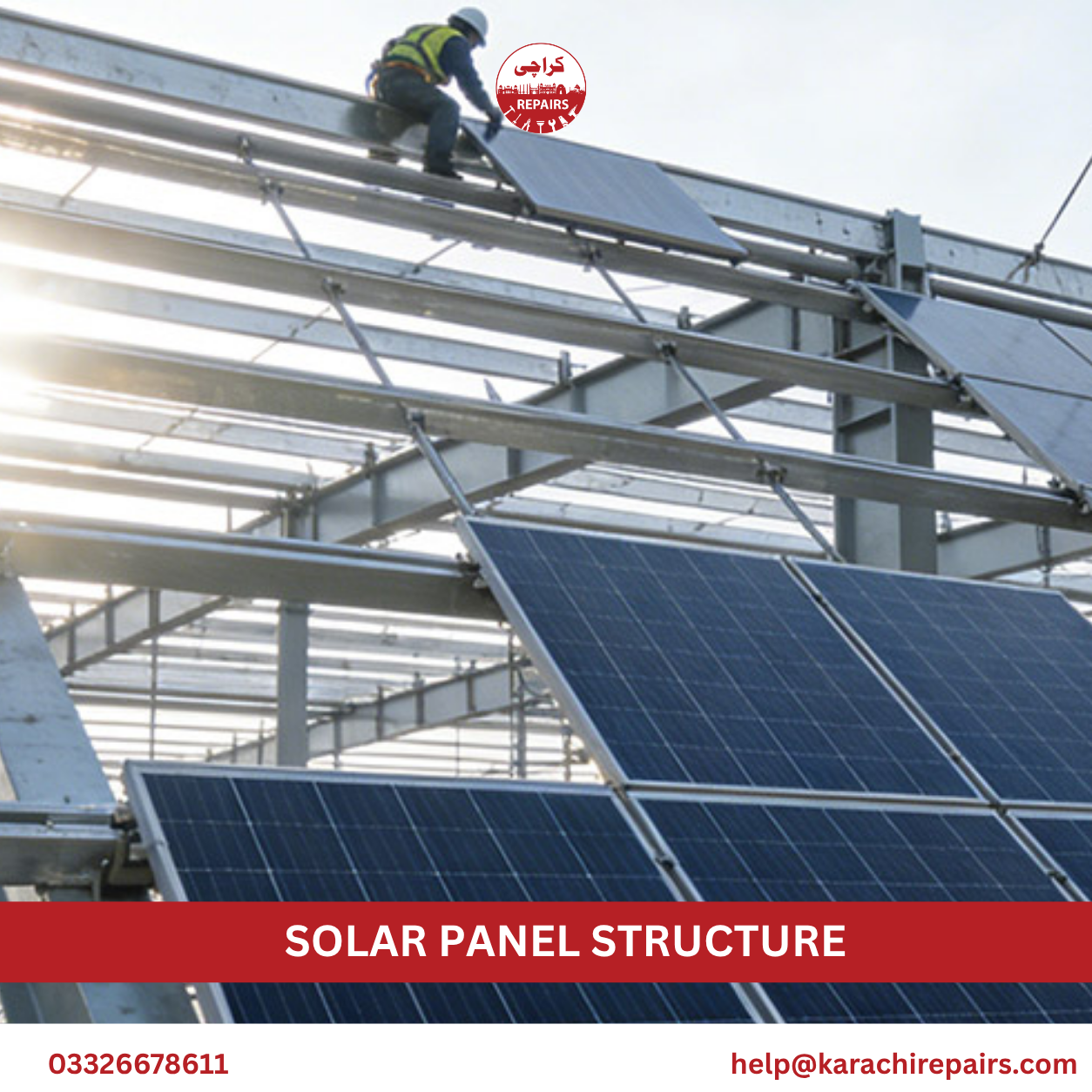
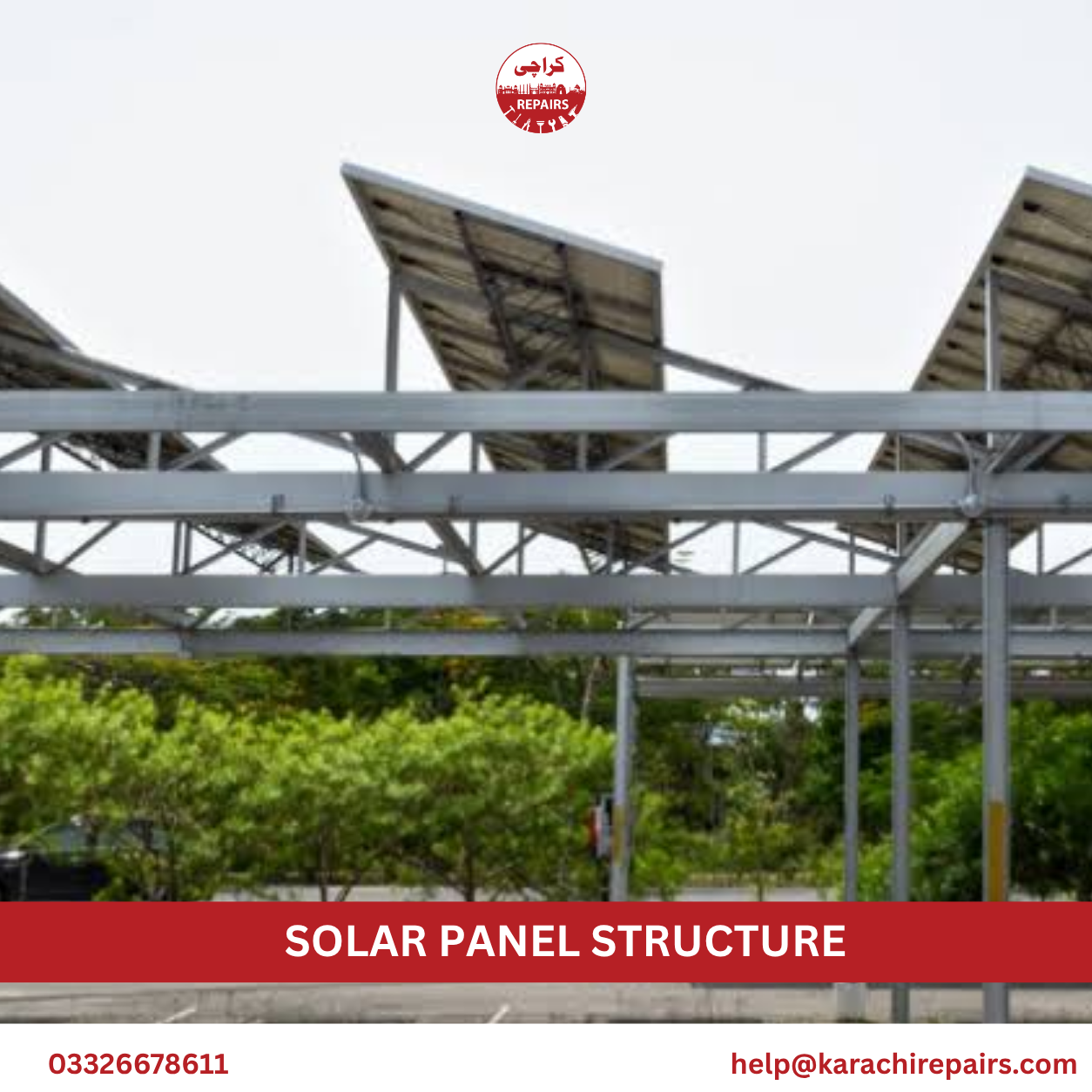
Why the Structure Matters
More Than People Realize
A lot of solar buyers focus almost entirely on the panels and inverter, treating the mounting structure as an afterthought or something any local welder can throw together cheaply. This thinking causes more long term problems than almost anything else in a solar installation. An undersized or poorly welded structure can flex under wind load, which over time stresses the panel glass at the mounting points and can cause micro cracks that reduce panel efficiency without being immediately visible. Loose or corroded clamps can allow panels to shift slightly, changing their angle and reducing energy output. In the worst cases, a structure that was never properly anchored can come loose entirely during a strong storm, damaging the panels, the roof, or anything below.
None of this is meant to scare anyone away from solar, quite the opposite. It is simply why the structure deserves the same level of attention as the panels and inverter themselves, since a proper structure protects your entire investment for the full lifespan of the system, which is often twenty five years or more for the panels alone.
Benefits of a Professionally Fabricated Solar Structure
Maximum energy output: Correct tilt angle and spacing ensures your panels capture as much sunlight as possible throughout the year.
Long term durability: Properly welded, galvanized or painted structures resist rust and wind damage for many years with minimal upkeep.
Storm resistance: A well anchored, correctly braced structure holds up through Karachi's strong pre-monsoon winds instead of shifting or lifting.
Protected investment: Since panels and inverters represent a significant cost, a solid structure protects that investment from avoidable damage.
Space efficiency & Consistent performance: Elevated structures save space, and a rigid, properly leveled structure keeps every panel at the correct angle, avoiding output loss.
Materials, Tilt Angles &
Custom Fabrication
Materials We Use for Solar Structures: For most residential and commercial jobs, we use hot dip galvanized or properly primed and painted mild steel, including square pipe, C-channel and angle iron depending on the design requirements. For larger commercial installations that need maximum corrosion resistance, we recommend hot dip galvanized structures, since this coating penetrates the metal far more thoroughly than surface paint and holds up significantly better against Karachi's salty coastal air over the long term. Fasteners and clamps are always corrosion resistant, typically stainless steel or coated hardware, since these small components are often what fails first on cheaper installations. A structure can have perfectly solid main framing but still develop problems if the clamps holding the panels start rusting and losing grip within a year or two.
Tilt Angle and Orientation: Getting the Physics Right: Karachi sits at a latitude where solar panels generally perform best with a tilt angle somewhere in the range of fifteen to twenty five degrees, facing roughly south, though exact positioning depends on your specific roof layout and any shading obstacles nearby. Too flat an angle and dust accumulates faster since rain cannot wash it off as effectively. Too steep an angle and you lose some efficiency during summer months when the sun sits higher overhead. We also plan row spacing carefully on multi-row rooftop and ground mount installations. If rows are placed too close together, the front row casts a shadow on the row behind it during certain hours, particularly in winter when the sun angle is lower. Getting this spacing right during the design stage is far more efficient than trying to fix shading problems after installation.
Solar Structure Fabrication vs Pre-Made Mounting Kits: Some solar installers offer generic pre-made aluminum mounting kits imported for standard roof types. These can work fine for very simple, small installations on completely flat, obstruction free roofs. The problem is that most Karachi rooftops are not that simple. Water tanks, parapet walls, uneven surfaces, staircases and existing structures all complicate standard kit installations, often requiring awkward workarounds that compromise the final result. Custom fabricated structures, on the other hand, are designed specifically around your actual roof layout, obstacles and panel count. This means better use of available space, correct load distribution based on your roof's actual condition, and a structure that fits your site instead of forcing your site to fit a generic kit. For anything beyond the simplest small residential setup, custom fabrication almost always delivers a more reliable, better fitting result.
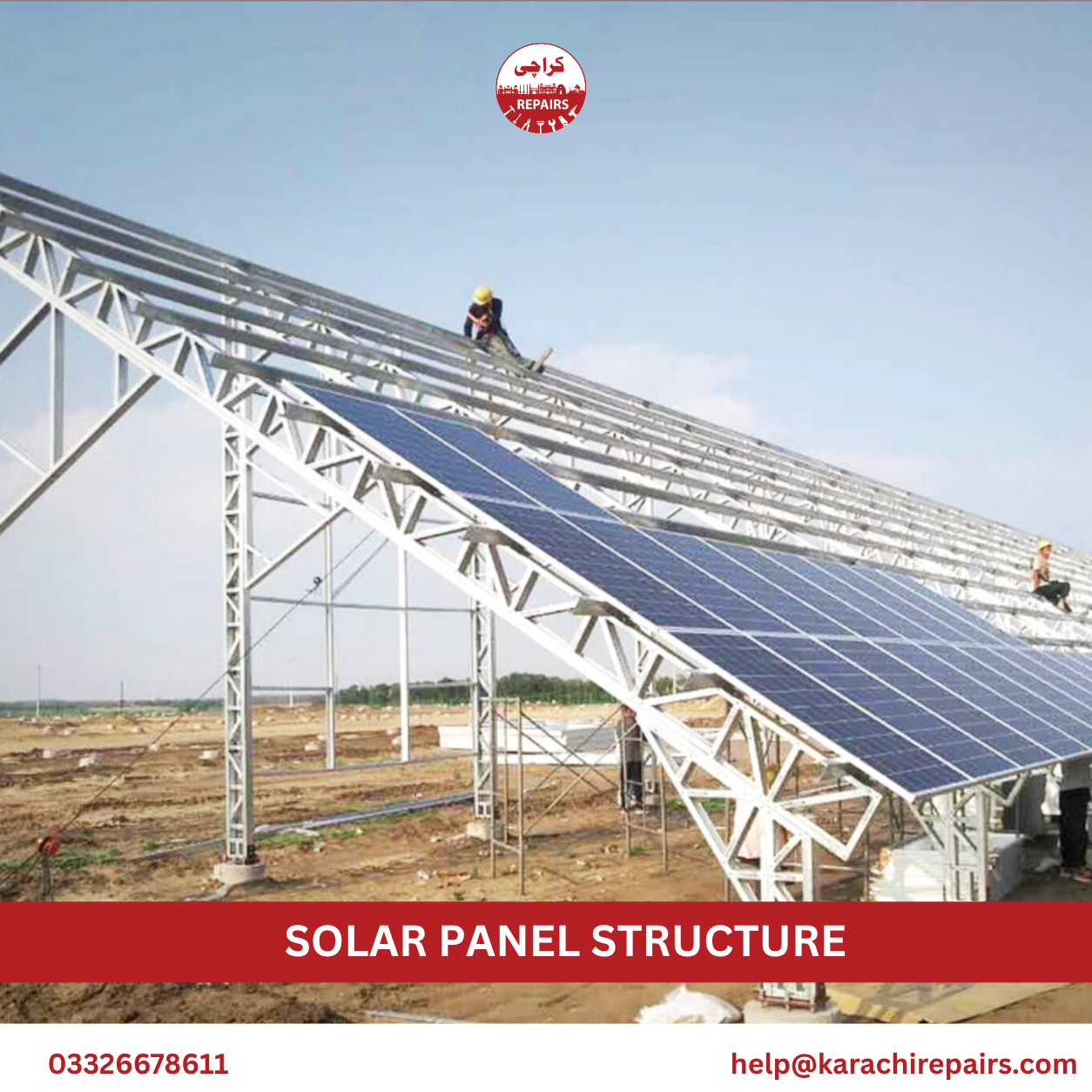
Our Solar Panel Structure Fabrication Process
Step 1: Site Visit and Assessment
Our technician visits your property to assess the roof type, orientation, available space, structural condition, and any shading obstacles like water tanks, parapet walls or neighboring buildings that could affect sunlight exposure.
Step 2: Load and Layout Planning
Based on your panel count and specifications, we plan the layout, tilt angle and spacing between rows to avoid one row shading another, while also calculating the load the roof or ground footing needs to support.
Step 3: Design and Material Selection
We select the appropriate pipe gauge, angle iron or C-channel sections based on the structure type, panel weight, and wind exposure at your specific location. Coastal and elevated areas typically need stronger bracing than sheltered inland sites.
Step 4: Quotation
We provide a clear, itemized quote covering material, fabrication, installation and any additional work like roof waterproofing around anchor points, so there are no surprises once work begins.
Step 5: Fabrication
Our welders cut and weld the frame sections, either in our workshop for standard modules or directly on site for larger, custom structures. Every joint is fully welded, not just tack welded, since this framework will be bearing constant load and wind stress for years.
Step 6: Anchoring and Installation
The frame is anchored to the roof using appropriate fasteners and waterproof sealing around penetration points, or set into concrete footings for ground mount structures. We check level and alignment carefully across every row to make sure the finished array looks and performs consistently.
Step 7: Primer and Anti-Rust Coating
Every exposed metal surface gets a proper anti-rust primer coat followed by weather resistant paint or hot dip galvanizing for larger commercial jobs. This step is critical for structures that will sit exposed to sun, rain and salty coastal air for years without regular attention.
Step 8: Panel Mounting and Clamping
Panels are placed onto the frame and secured using proper clamps rated for your specific panel thickness, positioned according to manufacturer spacing guidelines to avoid stress points on the panel glass.
Step 9: Final Inspection
We do a full walkthrough checking every anchor point, clamp, and weld joint, along with a wobble test on the structure to confirm everything is rigid and secure before considering the job complete.
Planning Ahead &
Maintenance Tips
A solar structure is a long term investment, and a handful of decisions made early on affect how well the system performs for years to come, so it is worth thinking through these before work starts rather than after panels are already mounted. Future Expansion: If there is a chance you might add more panels later, mention this during the initial planning stage. We can design the structure with extra capacity or leave room for a second row, which is far more cost effective than retrofitting an expansion onto a structure that was not planned for it. Roof Access for Maintenance: Panels and structures both need occasional cleaning and inspection. We plan walkways or access paths where needed so maintenance can happen safely without walking directly on panels or unsupported frame sections. Combining Solar With Other Roof Uses: If your rooftop also serves as a sitting area, storage space, or is used for anything else, let us know during planning so we can design an elevated structure that leaves that space usable rather than blocking it off entirely. Coordinating With Your Solar Installer: We regularly coordinate directly with solar panel and inverter installation teams to make sure the structure specifications match panel dimensions, clamp requirements and electrical routing needs exactly, avoiding mismatched components or last minute adjustments on installation day.
Maintenance Tips for Your Solar Panel Structure
- Inspect all bolts, clamps and anchor points every few months to catch any loosening before it becomes a bigger issue.
- Check for early rust spots after monsoon season, especially at weld joints and cut edges, and touch up paint promptly if found.
- Keep drainage paths clear around ground mount footings so water does not pool and weaken the base over time.
- Have the structure professionally inspected after any unusually strong storm to confirm nothing has shifted or loosened.
- Avoid walking directly on panels or frame rails during cleaning, as this can stress mounting points not designed for foot traffic.
Common Structural Problems We Fix: We regularly get called to inspect and repair solar structures that were installed by other contractors, often as part of a broader solar system troubleshooting request. The issues we see most often include undersized frames that flex visibly in wind, rusted joints from skipped primer coats, loose clamps causing panels to shift slightly out of alignment, and improperly sealed roof penetration points causing water leaks into the property below. If you notice any of these signs on your existing installation, it is worth having a professional structural inspection before the problem worsens or causes panel damage.
Cost Factors & Property Types
What Affects the Cost of Solar Panel Structures? Since every solar installation is different, we recommend a free site visit for an accurate, itemized quote rather than relying on a rough estimate over the phone.
Number of Panels
More panels naturally require more frame material and labor. Total array size affects the final cost directly.
Structure Type
Ground mount and elevated carport structures generally cost more than simple flat rooftop tilted frames due to additional material and footing work.
Coating Type
Hot dip galvanizing costs more upfront than standard primer and paint but offers significantly longer corrosion resistance.
Site Complexity
Roofs with obstacles, uneven surfaces, or difficult access add to fabrication and installation time.
Wind Exposure
Coastal or elevated locations may need stronger bracing and thicker gauge material, which affects overall material cost.
Coastal Areas
In coastal belts like Clifton and Defence, salty humid air accelerates corrosion, so we lean more heavily toward galvanized coatings and stainless fasteners.
Wind Exposed Zones
In more open, wind exposed areas such as Malir and Gadap, we increase bracing and use thicker gauge pipe to handle stronger gusts during storm season.
Dense Residential
In neighborhoods like Nazimabad and PECHS, roof space is often limited by existing structures like water tanks. Careful on site planning becomes essential.
Industrial Rooftops
For commercial and industrial clients in areas like SITE and Korangi, we focus heavily on load distribution across the roof to respect specific weight limits.
Fabrication Time
How Long Does Solar Structure Fabrication Take? For a standard residential system, 2-4 days. Larger commercial installations can take 1-3 weeks. We provide realistic timelines.
Why Choose Karachi Repairs For Solar Structure Fabrication?
Experienced Fabricators
Experienced fabricators who understand load calculations, wind bracing and Karachi's specific weather challenges, not generic copy paste designs.
Fast Response Teams
Fast response teams positioned across the city, typically reaching clients within about 30 minutes.
Transparent Quotations
Transparent, itemized quotations with no hidden charges added after fabrication begins.
Proper Materials & Coatings
Proper gauge steel, correctly welded joints, and anti-rust primer or hot dip galvanizing used on every project.
Custom Designs
Custom designs built around your actual roof layout and obstacles, not generic mounting kits.
Ongoing Support
Ongoing support for inspections, adjustments and repairs after the original installation is complete.
Solar panel structure fabrication is one part of the wider fabrication work we handle across Karachi. If your property also needs gates, main doors, staircases, fiber shades, or other structural welding, take a look at our complete Welding and Fabrication Service page to see everything we offer under one roof.
Our Teams Are Spread Across Karachi, Ready Within 30 Minutes
One thing clients consistently mention about working with Karachi Repairs is how quickly we respond. Instead of running everything from one central office, we keep dedicated teams stationed across different areas of the city. This means whether you are in Gulshan-e-Iqbal, North Nazimabad, DHA, Clifton, Malir, Korangi, Gulistan-e-Johar, PECHS, Nazimabad, Federal B Area, Johar Town, Bahadurabad, Saddar or nearby neighborhoods, a nearby team from our network can typically reach your property within around 30 minutes of your call.
For solar structures specifically, this speed matters when a storm has passed through and you want an urgent inspection to make sure nothing has shifted, or when you simply do not want to wait days for a technician to become available. Our area based team setup means faster site visits, quicker quotations, and installation schedules that work around your timeline instead of ours.
Booking Your Solar Structure Fabrication With Karachi Repairs
Getting started is simple. Call or message us on 0332-6678611, let us know your panel count and roof type, and we will schedule a free site visit to assess your property and discuss the best structure design for your specific situation. Once you approve the design and quote, we schedule fabrication and installation, keeping you updated at every stage until your panels are securely mounted and ready to generate power.
A solar system is a significant investment meant to serve you for decades, and the structure underneath it deserves the same careful engineering as the panels themselves. Reach out today and let our team build something that will hold up through every storm season Karachi throws at it, giving you one less thing to worry about once the system is up and running.
Frequently Asked Questions About Solar Panel Structure Fabrication
How long does a properly fabricated solar structure last?
With correct gauge steel, proper welding and either galvanizing or a good primer and paint finish, a solar structure can easily last twenty years or more with only occasional maintenance checks.
What is the best tilt angle for solar panels in Karachi?
Generally somewhere between fifteen and twenty five degrees works well for Karachi's latitude, though exact angle depends on your roof orientation and any shading obstacles nearby, which we assess during the site visit.
Do you provide a free site visit before quoting a solar structure?
Yes, we visit your property to assess roof condition, space, orientation and obstacles before providing a clear, itemized quotation based on your actual site rather than a generic estimate.
Should I choose hot dip galvanizing or standard paint for my structure?
Hot dip galvanizing offers longer term corrosion resistance and is especially recommended for coastal areas or larger commercial installations, while standard primer and paint is more affordable and still durable when applied properly for typical residential setups.
How fast can your team reach my area in Karachi?
We keep teams positioned across different areas of the city, so we can typically reach your location within around 30 minutes of your call, depending on your exact area.
Can you build a structure that also works as a car porch?
Yes, we regularly design combined carport and solar structures that provide vehicle shade underneath while keeping panels at the correct angle above.
Will my roof need reinforcement before installing a solar structure?
It depends on the roof's current condition and the total system weight. We assess this during the site visit and will let you know honestly if any reinforcement is needed before fabrication begins.
Do you fix solar structures installed by other contractors?
Yes, we regularly inspect and repair structures with issues like loose clamps, rusted joints, flexing frames or improperly sealed roof penetrations, regardless of who originally installed them.
What affects the cost of a solar panel structure?
Cost depends on panel count, structure type, coating choice, site complexity and wind exposure at your location, so we recommend a free site visit for an accurate quote.
Do you coordinate with my solar panel installer?
Yes, we regularly work alongside solar installation teams to make sure the structure design matches panel specifications and electrical routing needs precisely.
Areas We Cover
Across Karachi
Our fabrication teams are spread across the city to provide rapid response, accurate measurements and quick installation.